
GIFT SETS
SHOP NOW

Popular searches

Cart
Your cart is empty
Your gifting options
Make your gift extra special with our luxury packaging options. Select a gift bag, gift box or a combination to create the perfect presentation.

Luxury Gift Box, Gift Bag & Wrapping Kit (€8,99)

Meaning Card (€2,50)
Add more meaning to your gift with a meaning card included with your order.
15 variations available

Gift Bag, Ribbon & Wrapping (€5,99)
The full CRAFTD gifting experience.
Includes: Premium CRAFTD gift bag, Ribbon & Wrapping Paper.
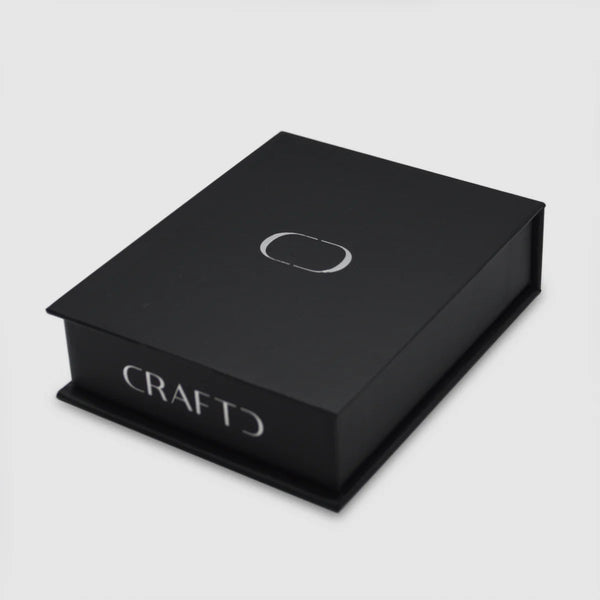
Luxury Gift Box (€5,99)
Choose your option
To My Boyfriend

To My Husband

To My Soulmate

To My Son

To My Grandson

To My Brother

To My True Friend

To My Dad

A Symbol Of Strength

A Symbol of Luck

A Symbol Of Safe Travel

A Symbol Of Self Belief

A Symbol Of Adventure

For more than thirty years, Jonathan Mannion has shaped how hip-hop is remembered, photographing the artists and moments that became part of the culture’s visual history.
Most people know the finished image. The portrait, the album cover, the frame that follows an artist into the world. What they don’t always see is everything around it: the contact sheets and the boxes, the photographs that never made the cover, and the moments just before someone became the version of themselves the world remembers.
That’s exactly where Jonathan Mannion took us.


Documentary stills. Inside the archive in Jersey City.
Inside his Jersey City archive, surrounded by more than three decades of hip-hop history, it becomes clear pretty quickly that his work isn’t just about taking photographs. It’s about holding onto the stories behind them, and protecting moments that could never happen twice.
“All this exists because I chose to protect it.”
That line stayed with us because when you stand in a room like that, surrounded by images of some of the most influential artists in modern culture, you feel the weight of it. These aren’t just photographs. They’re moments in time. Moments of ambition, vulnerability, style and belief that shaped an era, and Mannion has kept hold of it all.

Documentary still. Materials explored during filming.
Jonathan Mannion has photographed hundreds of artists, athletes and cultural figures, shaping the way people remember hip-hop, R&B and the artists who pushed those worlds forward.
But inside the archive, the story feels more personal. The work isn’t just filed away, it’s curated and cared for. Boxes are meticulously stacked, labelled by year and subject, each one holding moments Mannion knew were worth protecting.

“Ask anybody in the room. Protecting it is like you’re protecting music. You’re protecting history.”
That’s probably the best way to understand his work. He wasn’t just close to the culture, he helped shape the way it was seen.
But for someone whose images have become part of hip-hop’s visual language, Mannion doesn’t move like a man trying to remind you who he is. There’s no performance to it. He’s far more interested in the responsibility of the work than the status that comes with it, and that comes through in every story he tells.

“First and foremost, I just love to be a good human being. What I do is not who I am. It helps that who I am enables what I do.”
That distinction matters because when Mannion talks about photography, he rarely makes it sound technical. He talks about trust, energy, timing and the feeling in the room. The things that can’t be bought or rushed, only earned.
The camera is there, of course, but the real work happens before the shutter clicks. It’s in the way he reads a person, gives them enough space to show something real, and understands that a portrait only works when the subject feels seen, not styled into someone else’s idea of them.


Documentary stills. Jonathan in the studio.
Mannion arrived in New York in 1993, young, hungry and learning fast, having just started under Richard Avedon, one of the most important portrait photographers of the last century. At the same time, hip-hop was moving into a new era.
Nas. Wu-Tang. Biggie. DMX. OutKast.

Image courtesy of Jonathan Mannion’s archive.
The music was changing, the style was changing, and the way artists wanted to be seen was changing with it. Mannion was there while it was still taking shape, and he still talks about those years with the energy of someone who was right in the room. Biggie on stage killing it. The crowd wild and dressed up. Lil’ Kim grabbing her wigs. “Pure energy,” as he remembers it.
A lot of culture only makes sense once someone has turned it into history. Mannion was working before that happened, before the images entered the canon, before anyone understood how much those days would come to mean.
He wasn't documenting nostalgia. He was documenting now.


Images courtesy of Jonathan Mannion’s archive.
The more Mannion talks, the more you realise his images were never just about making someone look good. They had to be honest. That meant taking the sound of an album, the life of an artist, the pressure and the belief inside them, and holding it all in one frame. Mannion understood the weight of that. He knew what it meant to put someone’s story on a record sleeve.

Documentary still. Inside the studio in Jersey City.
When he talks about DMX and It’s Dark and Hell Is Hot, he doesn’t talk about it as a simple image. He talks about intensity, anger, prayer, protection and purpose. He talks about the white space and the red, the feeling that this wasn’t just a cover, but a visual expression of who DMX was in that moment. That kind of translation carries weight, and you can hear it in the way he tells the story.
“You’re documenting moments that’ll never be the same again.”
That's the thing with a great image. You can rebuild the set, return to the same street and ask someone to stand the same way, but you can never recreate who they were that day.
Spend enough time looking through Mannion’s work and jewellery becomes impossible to separate from the story. For him, it was never just something placed on a subject before a shoot. It was a starting point.
A chain becomes something different once it is on the person wearing it. In hip-hop, jewellery has always carried more than shine. It can tell you where someone is from, what they value, what they have survived and how they want to say it without explaining themselves.
Mannion understood that because he was close enough to see it properly. A rope chain took him to Rakim. An Angel pendant took him to From Nothin’ to Somethin’. These weren't just random references. They belonged to certain artists, certain moments and certain versions of the culture.


Pieces from the CRAFTD collection. The Jesus piece, the Rope chain, the Angel pendant.
But jewellery didn't just remind him of style. It took him straight back to a photograph, a person, a city or a feeling.
A Cash Money chain wasn't just a label piece. It was pride. A sign that a crew from New Orleans was building something bigger than themselves. Mannion spoke about chasing those artists around the country, being in New Orleans, feeling the buzz around Slim, Baby, Mannie Fresh, Lil Wayne, Juvenile and Turk as they made their move.
That's the part that often gets missed with jewellery. In the right moment, on the right person, it becomes a marker of time.


Documentary still. Pieces explored during filming.
It’s easy to flatten jewellery into status, to make it about who had the biggest chain, who spent the most, or who made the loudest entrance. But Mannion talks about it differently. He talks about artistry, personal choice and the feeling a piece gives you when it becomes part of how you carry yourself.
He understands that feeling because he’s felt it himself. He remembers the first chain his uncle bought him on his way up, and for someone getting into the rap game, it meant something. It made him feel part of the world he was contributing to. That’s what makes his view feel so grounded. It’s not just about how a piece looks, but what it represents to the person wearing it.

“It’s gone past the chain for chain’s sake. Let’s get into the artistry now.”
That line feels like the heart of it, because the best jewellery isn't just worn. It's chosen.
A simple choker on DMX. A Cash Money chain in New Orleans. Slick Rick’s jewellery laid out and photographed like cultural artefacts. These pieces mattered because they belonged to people who wore them with intent, and Mannion photographed them with the same care.

Photograph by Jonathan Mannion. Selected frame from the archive.
That’s where Mannion’s world and jewellery meet. The meaning doesn’t always need to be obvious to everyone else. Sometimes it’s better when it isn’t. Jewellery can often be seen by everyone and still belong only to the person wearing it.


Documentary still. Inside the studio in Jersey City.
His mother used to tell him something he carried with him: “There’s givers and takers. I’m here to give.” In a way, that explains the archive as much as anything. The images exist because people trusted him. The archive exists because he protected what they gave him. And the moments still matter because he knew they were worth holding onto before the rest of the world understood what they would become.
That’s the real story.
Not just a photographer, but an artist who held onto the culture’s memory.
These images last because they hold what a caption never could: the person, the moment, the feeling, kept exactly as they were.
Mannion didn’t just photograph an era. He helped a culture remember itself.

Selected imagery courtesy of Jonathan Mannion. Featured for documentary and editorial purposes in collaboration with CRAFTD Stories.

Leo Neugebauer: From Olympic Silver to European Champion
What does it take to win on three different global stages? Leo Neugebauer has gone from Olympic silver in Paris to world gold in Tokyo, and now European gold in Birmingham. Here's the story behind it.
Read more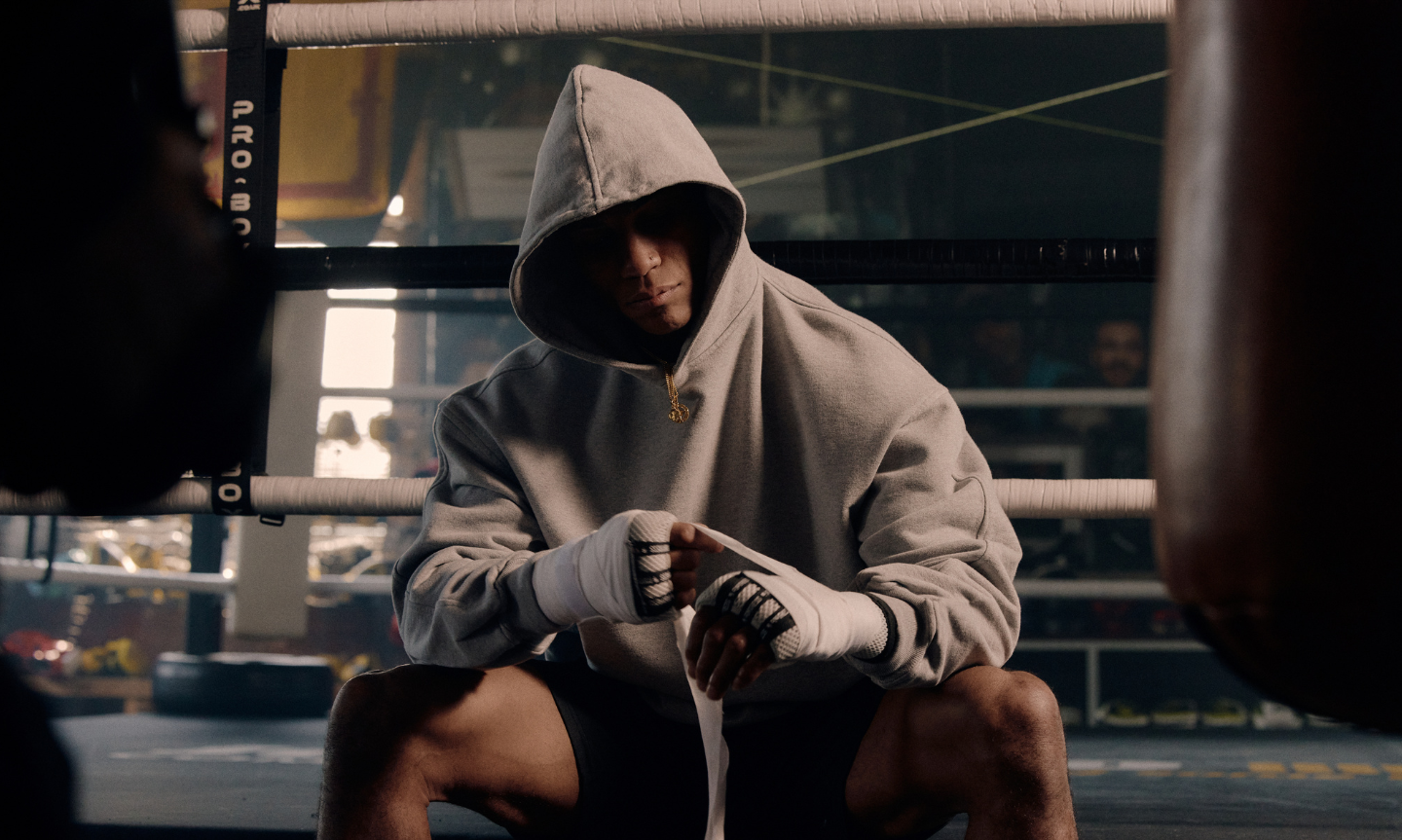
Bilal Fawaz: The Fighter Who Found Home in the Ring
From a case file number to national champion, Bilal Fawaz’s story is one of survival, self-belief and the ring that gave him somewhere to call home.
Read more

Leave a comment
This site is protected by hCaptcha and the hCaptcha Privacy Policy and Terms of Service apply.