
Most gifted
Shop now


Cart
Your cart is empty
Your gifting options
Make your gift extra special with our luxury packaging options. Select a gift bag, gift box or a combination to create the perfect presentation.

Luxury Gift Box, Gift Bag & Wrapping Kit (€8,99)

Meaning Card (€2,50)
Add more meaning to your gift with a meaning card included with your order.
15 variations available

Gift Bag, Ribbon & Wrapping (€5,99)
The full CRAFTD gifting experience.
Includes: Premium CRAFTD gift bag, Ribbon & Wrapping Paper.
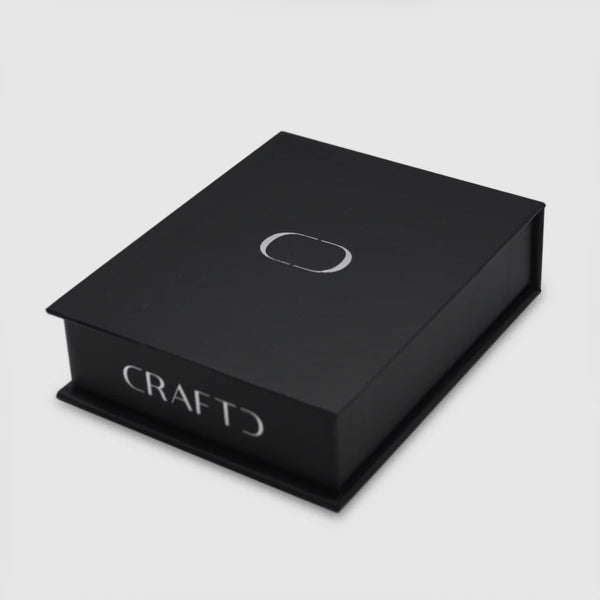
Luxury Gift Box (€5,99)
Choose your option
To My Boyfriend

To My Husband

To My Soulmate

To My Son

To My Grandson

To My Brother

To My True Friend

To My Dad

A Symbol Of Strength

A Symbol Of Faith

A Symbol Of Protection

A Symbol of Luck

A Symbol Of Safe Travel

A Symbol Of Self Belief

A Symbol Of Adventure
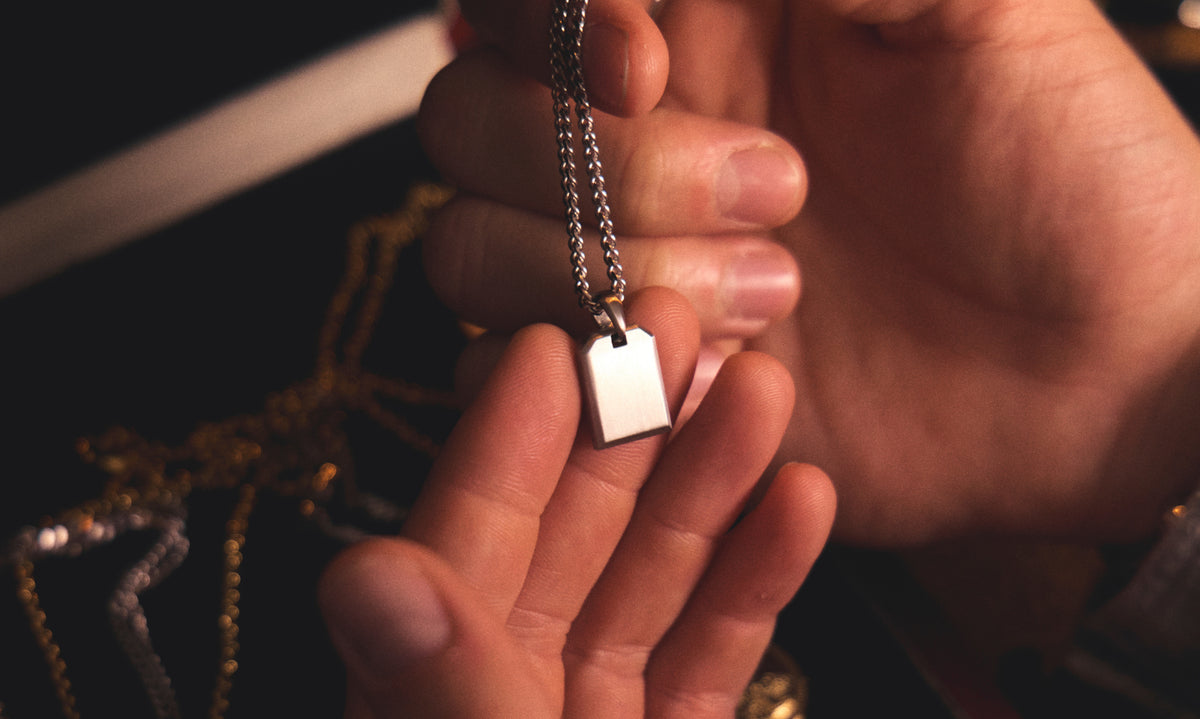
You put the chain on and check the mirror. It looks good. You like it. But then a familiar voice pipes up in your head: who does he think he is?
Nobody's actually said anything. Nobody's even seen you wearing it yet. But you can already imagine the comments from your mates, the raised eyebrow at work or the inevitable "ooh, look at you" across the table. So you take the chain off, put it back in the box and head out wearing the same thing you always do.
Sound familiar? It's a strangely British habit, this instinct to avoid drawing too much attention to ourselves, even when we're doing something as ordinary as wearing something we like. But where does it come from? And more importantly, is our love of understatement a sign of good taste, or is it quietly holding some of us back?

The chain that almost stayed in the box.
The instinct to bring someone down a peg or two is hardly unique to Britain. In the Roman historian Livy's account of early Rome, King Tarquinius Superbus receives a message from his son Sextus, asking how to take control of the town of Gabii. Rather than answer, the king walks through his garden, knocking the heads off the tallest poppies. When the messenger describes what happened, Sextus understands the message: remove the most prominent people, and the rest will fall into line. It's an ancient story associated with the idea behind tall poppy syndrome, the tendency to cut down those who stand out or become too successful.
Scandinavia has its own version. In 1933, author Aksel Sandemose introduced the fictional town of Jante, where life was governed by a set of unwritten rules. The first was simple: don't think you're anything special. Known as the Law of Jante, the idea became shorthand for the social pressure to conform and avoid placing yourself above others.
Britain has never needed an official set of rules. We pick them up as we go. Don't get too big for your boots. Don't get ideas above your station. And whatever you do, don't look like you're trying too hard. In her book Watching the English, anthropologist Kate Fox explores how deeply humour, understatement and self-deprecation are woven into English social behaviour. We have a particular talent for taking the mick out of anyone who appears to take themselves too seriously.
And most of the time, it's harmless. But spend long enough expecting someone to make a joke whenever you stand out, and eventually you might start making the decision for them. Nobody needs to tell you not to wear the chain. You've already talked yourself out of it.
Of course, there's plenty to be said for the British approach. Not taking yourself too seriously is a good quality. Being able to laugh at yourself is an even better one. And when it comes to personal style, there's something appealing about a man who looks effortlessly put together without making a big deal of it. Some of the best-dressed men you'll ever meet are the ones who appear to have given their outfits the least thought.
There's real taste in restraint, too. A simple chain worn well can say more than an entire collection of pieces chosen purely to attract attention. Confidence doesn't have to be loud, and being comfortable with understated style is no less an expression of individuality than wearing something bold.
If that's genuinely how you like to dress, there's absolutely nothing wrong with it. The question is whether it's really your choice.

Understated works, as long as you chose it.
Because there's a difference between a man who wears a simple chain because that's what he likes and a man who owns a heavier Cuban chain he loves but never wears outside the house. From the outside, they might look exactly the same. But one is dressing for himself. The other is dressing for an audience that hasn't even turned up yet.
And that's where understatement becomes something else. You're no longer choosing what looks or feels right to you. You're making decisions based on what someone else might say, someone who probably hasn't given your outfit a second thought. And even if they do? A bit of stick from your mates is hardly the end of the world. Chances are they'll have moved on to something else before you've finished your next pint.
Yet it's surprising how much influence those imaginary conversations can have over what we wear. We talk ourselves out of trying new things. We put pieces back in their boxes. We decide something isn't really "us" before we've even given ourselves a chance to wear it. And slowly, the things we're comfortable wearing become less about what we actually like and more about what we think we can get away with.
That's a shame, really, because personal style should be one of the few things in life where you get to make the rules.
It's something we've always believed at CRAFTD. Backing yourself doesn't always mean making some enormous, life-changing decision. Sometimes it's as simple as putting on something you like and deciding not to worry about what everyone else thinks.
Maybe you've always worn a subtle chain and fancy trying something heavier. Maybe there's a ring you've had your eye on but can't quite picture yourself wearing. Or perhaps you love the look of our ICED collection but have convinced yourself it's a little too bold. There's nothing wrong with trying something different, and there's equally nothing wrong with deciding it isn't for you. The important thing is that you make that decision yourself.

Your call, nobody else's.
You don't need to become the loudest man in the room. You don't need to abandon everything you've worn for the last ten years or start dressing like someone you're not. You just need to feel comfortable making your own choices, even when they might attract a little attention. Because there's a difference between not wanting to stand out and being afraid to.
So, do British men play it too safe with style? Sometimes, yes. Not because there's anything wrong with understated dressing, but because it's easy to mistake what feels familiar for what we genuinely prefer. We get so used to avoiding attention that eventually we stop questioning why, and perhaps that's the real issue.
There's no reason to lose the dry humour, the self-deprecation or our ability to laugh at ourselves. They're some of the best things about British culture. But appreciating those qualities doesn't mean we have to let them dictate every decision we make. Wear the simple chain if that's what you love. Wear the oversized one if that's more your thing. And if someone takes the mick? Let them.
Because the only thing worse than someone else deciding what you should wear is getting so used to their opinion that you start making their decisions for them. Next time you're standing in front of the mirror and that familiar voice pipes up, ask yourself one question: whose voice is it, and why does it get a say?

The Art of Finding Your Signature Piece
Some men are recognised by a single detail. Is finding your look and sticking with it a sign you know yourself, or just playing it safe?
Read more
Why Wait for Someone Else to Buy You Jewellery?
A chain for your 18th. A watch to mark a milestone. Men's jewellery often comes as a gift. But why should someone else decide which moments in your life are worth celebrating?
Read more
 Ready to give.
 Hand-finished chains.
 Pendants with meaning.
 Neck and wrist, done.
 The clover collection.
 Make Your Own Set (Gold)
 Make Your Own Set (Silver)
 Make A Pendant Set (Gold)
 Make A Pendant Set (Silver)

Leave a comment
This site is protected by hCaptcha and the hCaptcha Privacy Policy and Terms of Service apply.