
Most gifted
Shop now


Cart
Your cart is empty
Your gifting options
Make your gift extra special with our luxury packaging options. Select a gift bag, gift box or a combination to create the perfect presentation.

Luxury Gift Box, Gift Bag & Wrapping Kit (€8,99)

Meaning Card (€2,50)
Add more meaning to your gift with a meaning card included with your order.
15 variations available

Gift Bag, Ribbon & Wrapping (€5,99)
The full CRAFTD gifting experience.
Includes: Premium CRAFTD gift bag, Ribbon & Wrapping Paper.
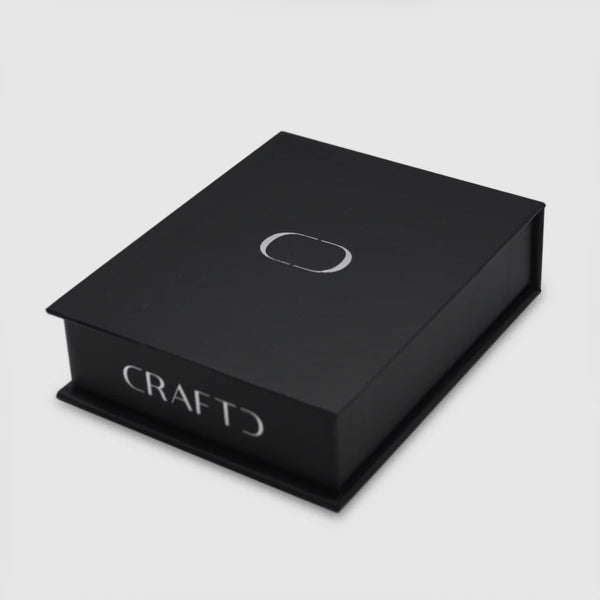
Luxury Gift Box (€5,99)
Choose your option
To My Boyfriend

To My Husband

To My Soulmate

To My Son

To My Grandson

To My Brother

To My True Friend

To My Dad

A Symbol Of Strength

A Symbol Of Faith

A Symbol Of Protection

A Symbol of Luck

A Symbol Of Safe Travel

A Symbol Of Self Belief

A Symbol Of Adventure
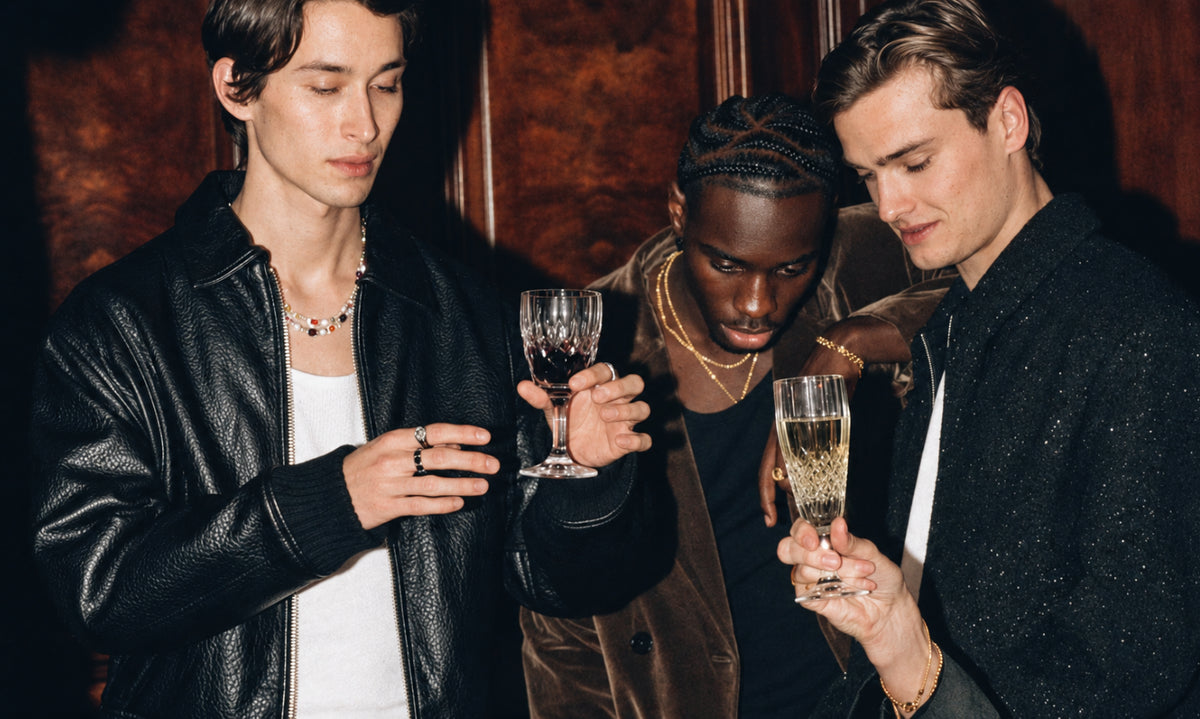
It's the morning of the wedding. Five of you in a hotel room, half-dressed, someone ironing a shirt that's already been ironed twice. Then the groom hands round five small boxes, each with the same piece inside. There's a pause, a joke about boy bands, someone asks if matching tattoos are next. And then, quietly, every one of you puts it on.
Matching jewellery among mates splits opinion. To some men it's one of the few honest ways to show loyalty. To others it's the kind of thing you'd only do for a laugh, and even then you'd take it off before anyone saw. So which is it: brotherhood, or a bit naff?

The kind of friendship built on turning up every week.
Think about how most male friendships work. The five-a-side you've played every Thursday for years. The pint after work. The annual trip you've somehow managed to keep going since your twenties. For plenty of men, friendship is built around doing things together rather than constantly talking about how much those friendships mean.
And there's actually some research behind that. A study involving Oxford anthropologist Robin Dunbar found that, among the people studied, men's friendships tended to be maintained more through shared activities, while women's were more strongly maintained through regular contact and conversation. Of course, that doesn't mean men don't talk about their feelings or women don't bond over shared experiences. But it does highlight something familiar about the way many men maintain friendships. Sometimes, the things we do together say more than the things we say.
And perhaps that's why a shared piece of jewellery can mean something. Nobody has to make a speech. Nobody has to get overly sentimental. It's just something you all wear that reminds you of a moment you shared.
It's hardly a new idea, either. The tradition of class rings in America is generally traced back to the United States Military Academy at West Point, where members of the class of 1835 wore rings to represent their shared experience and connection to the institution. And since the first Super Bowl in 1967, championship rings have become one of American sport's most recognisable traditions, celebrating the achievement of winning together.
Different people. Different experiences. One shared symbol. The point isn't that everyone looks the same. It's that everyone was part of something.
That's not to say every matching piece lands. Done without much thought, it can feel a little forced, more about the photo than the friendship. And some men understandably prefer to keep their style their own rather than wear something the group has picked for them.
It's also worth thinking about who's included. The mate who couldn't make the trip, or the friend who joined the group later, shouldn't be left feeling like they missed out. A shared piece works best when it brings people closer, not when it draws a line around them.
But those aren't reasons to avoid matching jewellery. They're just reasons to do it properly.
So what does doing it properly look like? The value of matching jewellery isn't really about the jewellery being identical. It's about what the pieces represent.
Think about a group of mates who've played football together for fifteen years. The wedding where you all stood beside someone you've known since school. The trip you've been talking about for years that finally happened. Or something more personal: a difficult year when one of you needed the others more than usual, a moment you all helped someone through, an experience that changed the friendship in ways you didn't necessarily talk about afterwards.
Those are the things that give a shared piece its meaning. And when there's a genuine story behind it, suddenly the idea of wearing matching jewellery doesn't feel quite so strange. Because you're not wearing it to look like everyone else. You're wearing it because of something you all share.
The distinction matters. If everyone wears the same chain for one photograph and forgets about it the following morning, chances are it was more about the occasion than the friendship. But if it's something you'd happily wear on any normal day, long after the event has passed, that's a different story.

The best ones become part of your everyday.
That's where we think matching jewellery works best: not as a uniform, but as something that fits naturally into what you already wear. A simple bracelet or signet ring can carry a shared meaning without taking away from anyone's individuality.

One shared piece, worn your own way.
One mate might wear his alongside a watch. Another might pair it with a couple of rings. Someone else might wear it as the only piece of jewellery he owns. Same piece. Different men. Different styles. And that's part of what makes it interesting.
It's also the thinking behind our guide to groomsmen gifts they'll wear long after the wedding. Because the best gift for a group of mates isn't necessarily something that looks great in the wedding photographs. It's something they'll actually want to keep wearing afterwards. Not because they have to, but because it reminds them of something worth remembering.
So, is wearing matching jewellery with your mates a bit naff? Not when there's something real behind it. Done well, it's a surprisingly meaningful way of recognising a friendship, a shared achievement or a moment that deserves remembering.
A matching ring won't make someone your mate, and it doesn't need to. But if a piece reminds you of the people who've been there through the good years and the difficult ones, it's well worth carrying with you.
Because years later, when the photos have been forgotten and everyone has gone their separate ways, it's not the fact that you all wore matching jewellery you'll remember. It's everything that made you want to wear it in the first place.
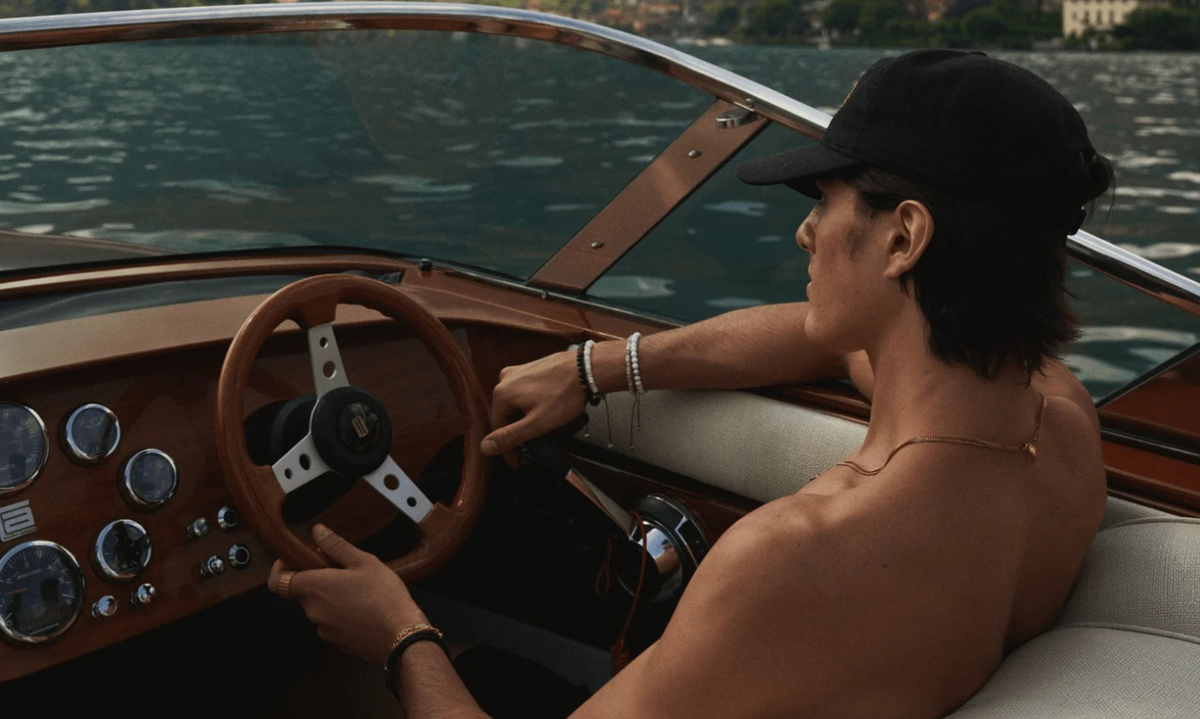
Is It OK to Book a Day Off for GTA 6?
“GTA release, deny it and I quit.” Thousands have booked launch day off. Is loving a game, a toy or a hobby childish, or just knowing what you enjoy?
Read more
Does Jewellery Have to Cost More to Mean More?
The piece you’d grab first is rarely the most expensive one you own. Why meaning comes from wearing, not the price tag, and why the right material still matters.
Read more
 Ready to give.
 Hand-finished chains.
 Pendants with meaning.
 Neck and wrist, done.
 The clover collection.
 Make Your Own Set (Gold)
 Make Your Own Set (Silver)
 Make A Pendant Set (Gold)
 Make A Pendant Set (Silver)

Leave a comment
This site is protected by hCaptcha and the hCaptcha Privacy Policy and Terms of Service apply.