

GEMSTONES




What Is a Figaro Chain? The Story Behind an Italian Classic
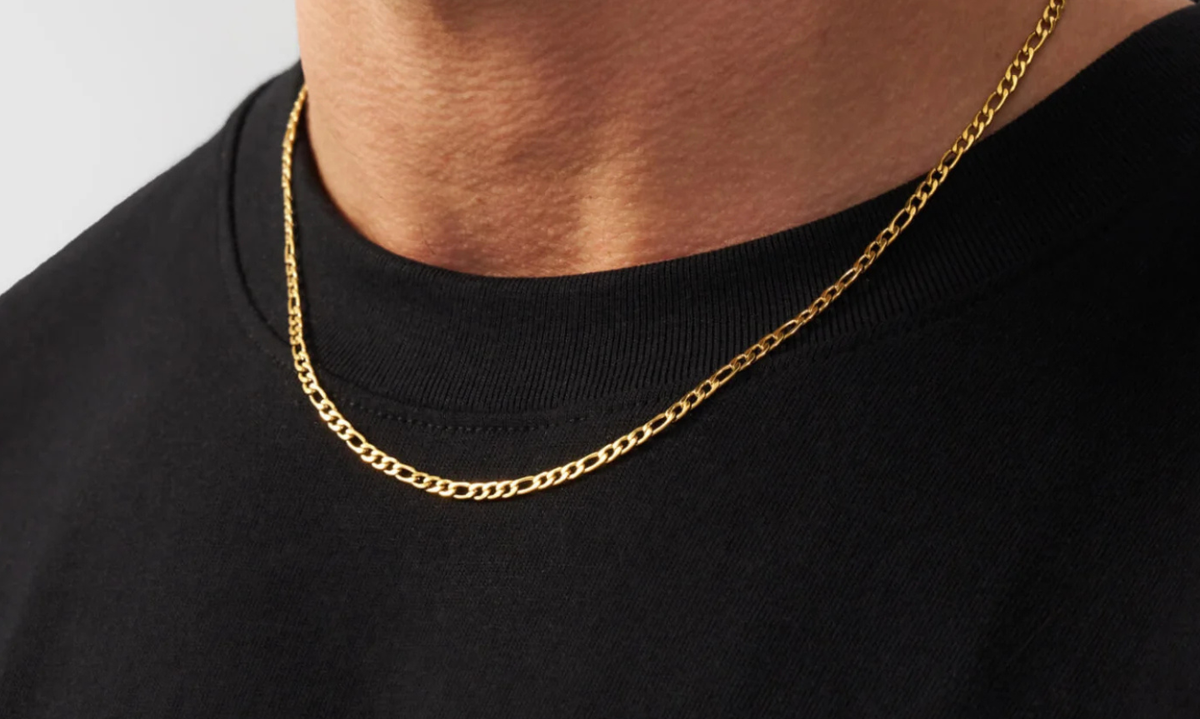
A figaro chain is a men's necklace built on a repeating three-short-one-long link pattern. Three small flat links followed by one longer flat link, in that order, all the way along the chain. That rhythm is what defines it, and it's what separates a figaro from every other chain style you'll see men wearing.
Below, we'll cover what actually defines a figaro, where the name traces to, how the pattern wears in real life, how it differs from a Cuban or curb, and where to start if you want one that carries character on its own.
Jump to:
- What Is a Figaro Chain?
- How Figaro Chains Are Made
- Where the Figaro Name Comes From
- The CRAFTD Figaro
- How to Style a Figaro Chain
- Figaro Chain Bracelets
- Figaro vs Cuban, Curb, and Rope
- Which Figaro Suits You?
- How to Care for a Figaro Chain
- FAQs
What Is a Figaro Chain?
A figaro chain is a flat-link chain built on a repeating pattern: three small round links, then one elongated oval link, then three small, then one long, on and on. All the links are flat and twisted so the chain lies flush against the neck, same principle as a curb or Cuban. The pattern is the whole point.
Because the chain has visible rhythm along its length, it reads more distinctive than a plain link chain like the Connell or a heavier curb like the Cuban. The eye picks up the alternation, and the chain becomes something with character rather than something plain enough to disappear.
The figaro sits in the flat-link family alongside the curb and Cuban, but the repeating pattern gives it a completely different feel. For the broader view of how it compares to the other main chain styles, see our Types of Men's Chains guide.
How Figaro Chains Are Made
Figaro chains are made the same way as any flat-link chain: individual links are formed, soldered, and passed through a rolling mill to flatten them. The pattern is set at the linking stage, where the machine or jeweler assembles three short links between each long link along the full length of the chain.
Three things worth knowing when you're comparing figaros from different makers:
Ratio consistency. A good figaro keeps the same three-to-one link ratio all the way through. Cheaper chains sometimes drift, running four short links between long ones or shortening the long links to save metal. Both make the chain read wrong to the eye without the wearer quite knowing why.
Long link length. The long link tends to run roughly twice the length of the short links. Shorter long-links make the pattern read subtler, longer ones make it more pronounced.
Diamond-cut finish. Some figaros get an extra diamond-cut step after milling, faceting the flat faces to catch more light. It's a finish, not a different chain. Non-diamond-cut figaros wear a little softer.
Where the Figaro Name Comes From
The figaro chain takes its name from Figaro, the barber character at the center of two eighteenth-century plays by the French writer Pierre Beaumarchais. Figaro shows up first in The Barber of Seville in 1775, then again in The Marriage of Figaro in 1784. Both were adapted into operas: Mozart's Marriage of Figaro in 1786 and Rossini's Barber of Seville in 1816.
How exactly Italian jewelers came to attach the name to a specific chain pattern is less well-documented. Different sources tell slightly different stories. The chain style itself is Italian in origin, and the association with Figaro appears to have taken hold in the twentieth century, sitting somewhere between design shorthand and marketing convenience.
What's not in doubt is that the pattern predates the name. Flat-link chains with alternating link sizes have been made in Italy since long before anyone thought to attach an operatic character to them.
The CRAFTD Figaro
Our figaro comes in two widths: 3mm for everyday wear, and 5mm for when you want the pattern to carry a little more presence. Both are made in silver and gold, and both hold the same three-to-one link ratio all the way through.
The 3mm figaro is the width most men land on. Slim enough to slip under a shirt collar, wide enough for the pattern to read clearly against a plain tee. It's the version that works across both weekday and weekend wardrobes without needing to think about it.
The 5mm figaro is the statement version. Worn over a tee or a fine knit, the wider pattern reads clearly from across a room. Not for the man who wants a chain to sit quietly.
See the full figaro chain collection for both widths and finishes.
How to Style a Figaro Chain
The figaro is a solo-first chain. The pattern is doing the styling, so the chain doesn't need help from a pendant or a second chain to earn its place. Wear it plain and let the rhythm carry the piece.
Over a plain white or black tee, the figaro reads immediately as considered. The alternating links catch light along the length in a way a Cuban or curb doesn't, and the eye reads the chain before it reads anything else about the outfit. That's the whole appeal.
Under a shirt collar, the 3mm width slips cleanly. The 5mm sits closer to the collar edge and reads more visibly under a partly-buttoned shirt, which some men want and some don't. If you're buying for under-shirt wear specifically, 3mm is safer.
Pendants pair less naturally with a figaro than with a curb or Cuban. The chain's pattern already carries visual weight, and adding a pendant tends to make the eye choose between the two rather than take both in together. If you do want a pendant on a figaro, keep it small.
Layering is possible but tricky. The figaro clashes visually with any other chain that also carries a pattern, so if you want to stack, pair it with something plain like a Connell or a snake. Even then, keep the figaro as the shorter of the two so its pattern reads clearly at the top of the stack.
Figaro Chain Bracelets
The figaro bracelet carries the same three-to-one pattern scaled for the wrist. Worn solo it reads as a considered wrist piece, and worn as a set with the necklace it reads as intentional across the wrist and neck without needing anything else to tie the outfit together.
Wrist sizing sits between 18 and 22cm for most men. The figaro bracelet set pairs the 3mm chain with a matching bracelet in the same finish, which is the cleanest starting point if you want the figaro across both.
One styling note: a figaro bracelet plays particularly badly with other patterned bracelets on the same wrist. If you wear it alongside another piece, keep that piece plain: a smooth band, a simple curb bracelet, or nothing at all.
Figaro vs Cuban, Curb, and Rope
The figaro sits in the flat-link family with the Cuban and the curb, but the three-to-one link pattern separates it clearly. Short answers on each comparison:
Figaro vs Cuban. The Cuban has uniform, heavier, sculpted links. The figaro has patterned, lighter, alternating links. Cuban leads with weight, figaro leads with pattern. Different tools for different jobs.
Figaro vs Curb. Curb chains (like our Connell) have uniform flat twisted links all the way along. Figaros have the same link style but broken into a repeating pattern. Curb reads as one continuous edge, figaro reads as a repeating rhythm.
Figaro vs Rope. Different families entirely. Rope has a twisted, woven, three-dimensional link that catches light from every angle. Figaro has flat links that catch light in defined pulses along their length. Both have character, but the character is different.
Which Figaro Suits You?
Most men come to the figaro after they've already owned a plain chain or two. It's rarely a first chain because it carries more character than most men want when they're starting out.
For your second or third chain, the 3mm figaro in gold is the classic pick. Warm finish, patterned enough to read as intentional, slim enough to wear alongside a workday shirt. It's the width and finish most figaro buyers return to.
For a statement chain, the 5mm sits at the edge of the range. It reads clearly from across a room and doesn't apologize for the pattern. Best worn over a tee or a fine knit, and not layered with anything else.
For a gift, silver is the safer answer than gold. Gold figaros read distinctly Italian in a way that suits some wearers and not others; silver reads more universal and lets the pattern lead without the finish making a separate statement.
How to Care for a Figaro Chain
A figaro takes marginally more care than a plain chain because there are more link joints for residue to settle into. The three-short-one-long structure means more small transitions per inch of chain than on a Cuban, and each transition is a potential spot for skin oil, sweat, or cologne to collect.
After each wear. Cloth wipe, ten seconds. This alone will keep a figaro looking sharp for years. Skip it and the chain dulls faster than you'd expect.
Every couple of weeks. Warm water, one drop of soap, five minutes of soaking, then a soft-bristled brush along the pattern. Pay particular attention to the joints between short and long links, where residue collects more than on the flat faces. Rinse, pat dry, done.
Water and sweat. The figaro handles regular water, sweat, and workouts without complaint. Salt water is the exception; a freshwater rinse after the sea extends the finish life meaningfully.
Storage. Flat, uncoiled. A figaro left knotted in a drawer for months develops kinks in the long links that a light untangle can't fix.
Silver. Sterling silver figaros tarnish when they're not worn regularly. A silver polishing cloth once a month keeps the finish sharp.
FAQs
What Is a Figaro Chain?
A figaro chain is a flat-link necklace with a repeating three-short-one-long link pattern. Three small links, one longer link, repeat. The pattern is what separates a figaro from a plain curb or Cuban chain of the same width.
Where Does the Figaro Name Come From?
The chain takes its name from Figaro, the barber character in Beaumarchais's eighteenth-century plays and the operas by Mozart and Rossini that followed. The chain shape itself is Italian in origin; how exactly the operatic association took hold isn't precisely documented, but the pairing appears to have become standard among Italian jewelers in the twentieth century.
What Width Figaro Chain Should I Get?
3mm is the everyday width, and the version most figaro buyers land on. It reads clearly against a tee, slips under a shirt collar, and works across weekday and weekend wear. 5mm is the statement version, best worn solo over a tee or a fine knit.
What Length Figaro Chain Should I Choose?
Most men land in the 50 to 55cm range. Shorter reads as sitting higher on the neck, longer drops onto the chest. Between two lengths, go longer, because a figaro cinched tight tends to lose the pattern rhythm as the chain bunches.
Can You Wear a Figaro Chain With a Pendant?
You can, but the figaro is a chain that generally reads better solo. The pattern already carries visual weight, so a pendant on top tends to compete rather than complement. If you do want a pendant, keep it small and understated.
Are Figaro Chains for Men or Women?
Both wear them. In wider widths the figaro reads distinctly masculine; in slimmer widths it sits neutral and works across both. 3mm and 5mm are the widths most associated with men's wear.
Is a Figaro Chain the Same as a Curb Chain?
No. Both use flat twisted links, but a curb chain uses uniform links all the way along; a figaro breaks the links into a repeating three-short-one-long pattern. Same link geometry, completely different visual rhythm.
Are Figaro Chains Still in Style?
Yes. Figaros have been in continuous rotation in men's jewellery since Italian jewelers started producing them in earnest in the mid-twentieth century. The pattern doesn't chase trends, which is part of why the chain outlasts the trend cycles other styles get caught up in.
Can You Layer a Figaro Chain?
Carefully. The figaro's pattern clashes with other patterned chains, so if you want to layer, pair it with something plain like a Connell or a snake. Keep the figaro as the shorter of the two so the pattern reads at the top of the stack.
How Do I Tell if a Figaro Chain Is Well-Made?
Look at the ratio. A well-made figaro keeps the same three-to-one link ratio all the way along its length, with the long link running roughly twice the length of the short ones. Cheaper chains drift on the ratio or shorten the long links to save metal, and both mistakes show visibly once you know to look.
Where to Go From Here
If you're new to the figaro, the 3mm in gold is the classic entry. Match it with the bracelet set if you want the pattern across the wrist and neck together.
For the wider view of how the figaro sits alongside the other main chain styles, our Types of Men's Chains guide walks through each one. And the full chain collection is here.
This guide was put together by the CRAFTD team, from years of fitting, sizing, and shipping figaros to men who want a chain with character.
Read more

Named after an English boxing champion, the Belcher chain is a round-open-link necklace that predates most of the styles men wear today. What it is, how to spot one, and how it differs from a Connell.
Read more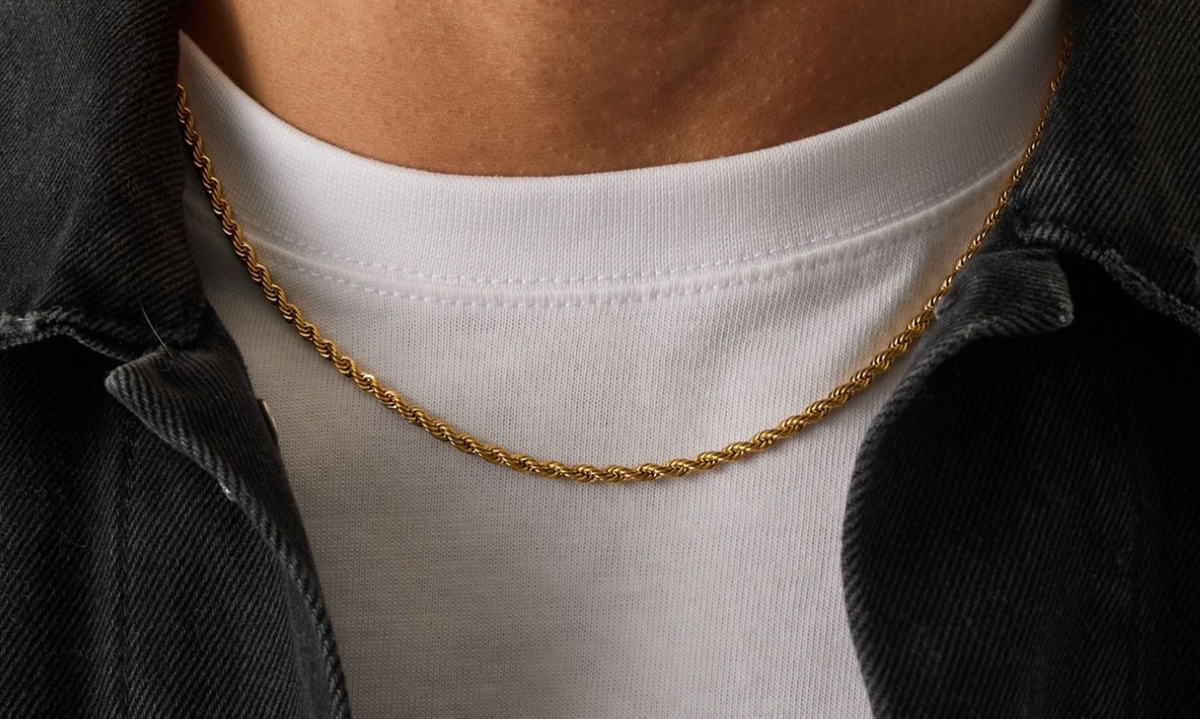
What Is a Rope Chain? And Are They Really That Strong?
The rope chain is defined by twisted links woven together to create its signature texture and shine. Here’s what makes it different, how strong it really is and how to wear one well.
Read more
Leave a comment
This site is protected by hCaptcha and the hCaptcha Privacy Policy and Terms of Service apply.