

GEMSTONES




What Is a Diamond Chain? What the Term Really Means
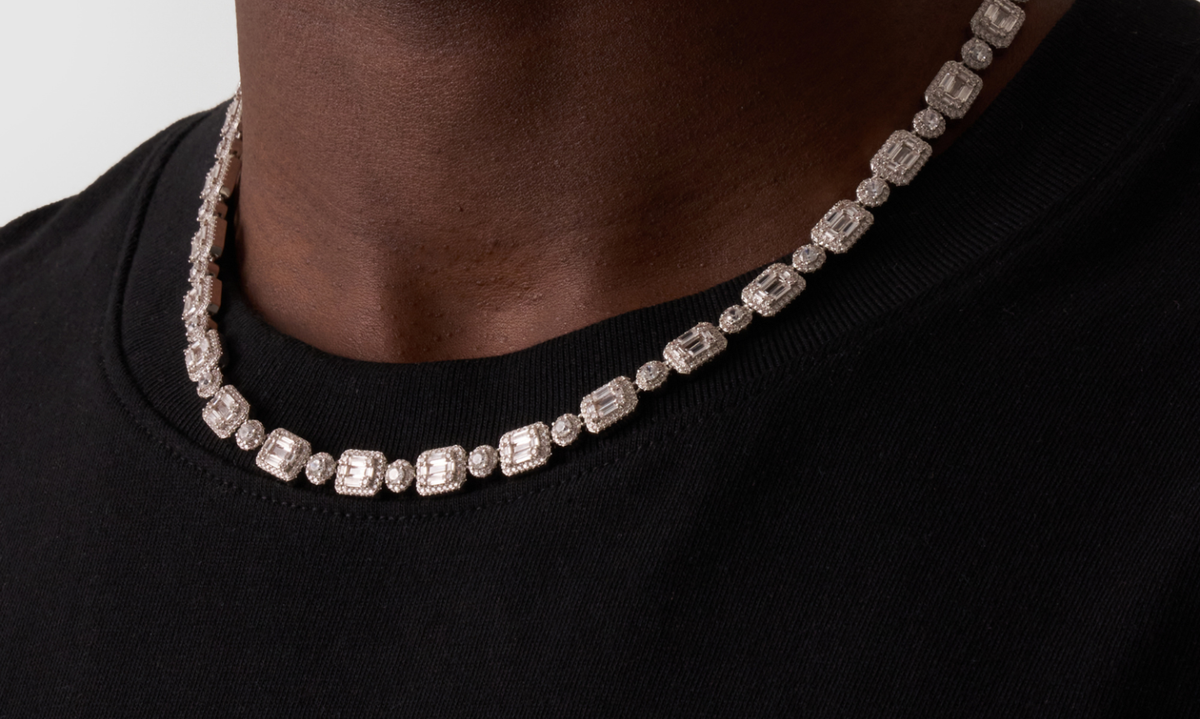
"Diamond chain" isn't a single chain style. It's a category. When most men search for one, they mean a men's necklace with diamonds or diamond-look stones set into it: enough shine to lead an outfit, worn as everyday statement rather than special-occasion jewellery. The two shapes that dominate the category are the tennis chain and the iced Cuban, and choosing between them comes down to what kind of shine you want and how much chain you want under it.
Below, we'll cover what "diamond chain" actually means, the real vs simulated stone question that most jewelers dance around, how diamond-cut differs from diamond-set, and where to look inside our range if you want a piece that catches light.
Jump to:
- What Is a Diamond Chain?
- Real Diamonds vs Simulated Stones
- Diamond-Cut vs Diamond-Set: Different Things
- The CRAFTD Diamond Chains
- How to Style a Diamond Chain
- Which Diamond Chain Suits You?
- How to Care for a Diamond Chain
- FAQs
What Is a Diamond Chain?
"Diamond chain" is used as an umbrella term in men's jewellery for any chain worn with diamonds or diamond-look stones set along its length. It's not a specific shape the way a Cuban, a curb, or a rope is; it's a category that covers several distinct chain constructions, unified by the fact that stones do the visual work rather than metal.
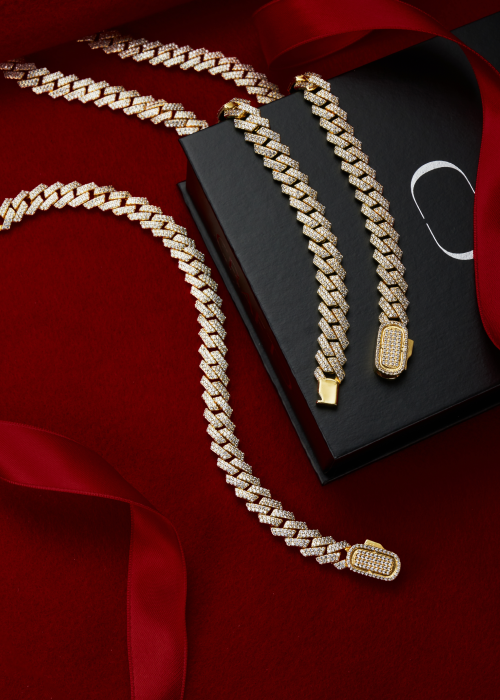
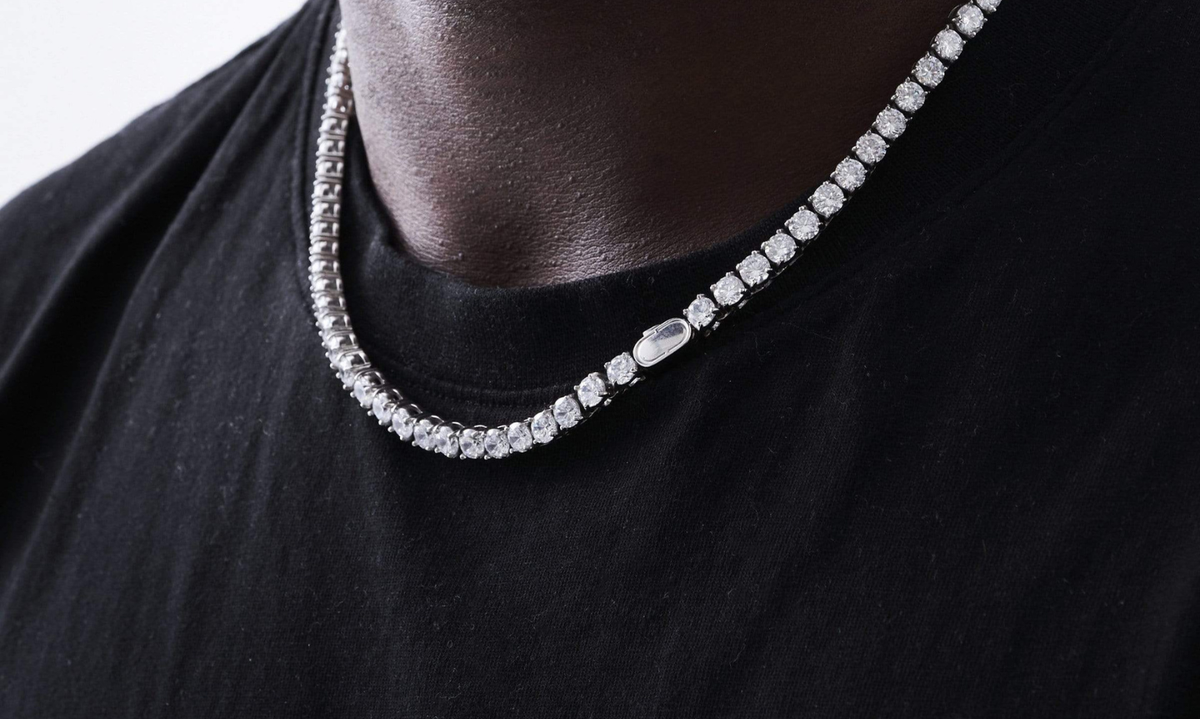
Two shapes dominate. The tennis chain runs a continuous line of prong-set stones down a slim metal spine, so the piece reads as an uninterrupted stripe of light. The iced Cuban is a Cuban chain with stones set into the flat face of each link, so the chain shape stays visible underneath and the stones add shine on top. Both get called "diamond chain" in casual language, and both sit in the same broader category despite reading very differently in the hand.
For the wider view of how these fit alongside the eight other main chain shapes we make, our Types of Men's Chains guide walks through each at a glance.
Real Diamonds vs Simulated Stones
This is the honest question most jewelers skip. Not every "diamond chain" you'll see online uses real earth-mined diamonds. Most don't.
A real-diamond chain in the widths and stone counts you typically see on men's necklaces (3mm to 12mm, hundreds of stones) starts at tens of thousands of dollars and climbs quickly from there. The pieces sitting under £200 that get labelled "diamond chain" almost always use simulated stones. Common options include:
Cubic zirconia (CZ). The workhorse of the simulated-stone category. Cut identically to how diamonds are cut, catches light in the same way to the naked eye, and costs a fraction of the price. The overwhelming majority of "diamond chains" in men's fashion jewellery use CZ.
Moissanite. A more expensive simulant that catches light with slightly more fire than a diamond. Usually reserved for higher-end simulated pieces.
Lab-grown diamonds. Chemically identical to earth-mined diamonds but grown in a lab. Cheaper than mined, more expensive than CZ, and increasingly common in modern men's jewellery.
Our own chains use hand-set premium crystals. Cut to catch light identically to a diamond at wearable distance, priced to sit in an everyday-jewellery range rather than a fine-jewellery one, and honest about what they are. If you want real earth-mined diamonds specifically, a specialist fine jeweler is where that conversation goes.
Diamond-Cut vs Diamond-Set: Different Things
The two terms sound similar and get confused often. They mean different things.
Diamond-cut is a finish, not a stone. Any chain (curb, rope, wheat, box) can be diamond-cut, which means the outer faces of the metal links are lightly faceted with a diamond-tipped tool during finishing. The chain has no diamonds on it; the faceting just catches light in a way that mimics a diamond's sparkle. A diamond-cut Cuban is still a Cuban.
Diamond-set is the opposite. The chain has actual stones (diamonds or simulants) physically set into it, either along a spine (tennis) or into the links (iced Cuban). The stones are the point.
If you search "diamond chain" and land on a piece with no visible stones, it's probably a diamond-cut chain. If you land on a piece where the stones are the main visual feature, it's diamond-set.
The CRAFTD Diamond Chains
We make two diamond-set chains in the range, both hand-set with premium crystals cut to the same standard used for high-end simulated fine jewellery.
The tennis chain. A continuous line of prong-set stones running the full length of a slim metal spine. Reads as one uninterrupted stripe of light. The most refined of the two, and the piece to reach for if you want shine without bulk. Made in silver, gold, and a distinctive blue variant. For the full detail on how it's made, styled, and cared for, see our tennis chain guide, or shop directly at the tennis chain collection.
The prong-link iced Cuban. A Cuban chain with stones set into every link. The chain shape stays visible, and the stones add shine on top of it. Reads chunkier and more statement than a tennis chain, and best suited to men who want the iced-out look at full presence. Available in the prong-link iced Cuban at 12mm.
Both pieces sit in the same category from a search perspective ("diamond chain") but read completely differently in the hand. Which one is right depends on how much shine you want and how visible you want the chain shape underneath it.
How to Style a Diamond Chain
Both diamond-set pieces respond to the same styling principle: keep the outfit quiet and let the shine do the work.
Solo, over a plain black or white tee, either shape reads as a considered accent when the rest of the outfit is stripped back. Denim, sneakers, a neutral watch. The chain catches light against flat cotton and there's nothing else in the frame competing for the eye.
Under a shirt collar, the tennis chain slips cleaner than the iced Cuban because it's slimmer. If your day involves shirts and jackets, tennis is the safer everyday pick. The iced Cuban reads better worn openly over a tee than tucked under formalwear.
Layered, the tennis pairs well below a plain heavier chain (a 4mm Cuban above, tennis below). The iced Cuban is heavy enough that layering it under anything else tends to feel excessive; it wears best solo.
Pendants aren't the natural pair for either shape. The stones are already doing pendant-level visual work, and hanging a piece off a diamond-set chain tends to interrupt the light along its length. If you want a pendant, wear it on a plain chain on a different day.
Which Diamond Chain Suits You?
Two clear paths, depending on how you want the shine to sit.
If you want refined shine that reads across smart-casual and casual outfits, the tennis chain is the piece. It's the shape that works with a jacket, works over a tee, works under a shirt collar. Its shine spreads evenly along the chain rather than concentrating in visual weight, which makes it the more versatile of the two. Most men buying their first diamond-set piece land here.
If you want statement shine with more visible chain weight underneath it, the iced Cuban is the piece. It reads more traditional-hip-hop, more visibly a "big chain", and wears best when the outfit around it isn't trying to compete. Less versatile than the tennis, but higher-impact when the moment calls for it.
Finish decides tone. Silver reads cool and everyday; gold reads warmer and slightly dressier. If you already wear gold jewellery elsewhere, a gold diamond-set piece keeps the palette consistent. If you own mixed metals or predominantly silver, silver is the safer choice.
How to Care for a Diamond Chain
Diamond-set chains need slightly more care than plain metal chains because the stones and their prong settings need looking after alongside the finish. None of it is complicated.
Post-wear. Wipe the stones and the chain body with a soft microfibre cloth. Skin oil and cologne dull the stones' facets over months, and a ten-second wipe removes them before they set.
Every couple of weeks. Warm water, a drop of mild dish soap, five minutes soak, then a soft brush worked gently along the length. Rinse thoroughly so no soap sits between the prongs, and pat dry with a lint-free cloth.
Check the prongs monthly. Run a soft cloth along the length of the chain. If it snags at any point, that prong may have lifted. A short trip to a jeweler resets the prong quickly, provided you notice it early. If a lifted prong goes unnoticed, that's how stones fall out.
Water and sweat. Everyday water, sweat, and swimming are fine. Chlorinated pool water and salt water are the exceptions; both accelerate wear on the setting. Rinse the chain in fresh water and pat dry after either.
Storage. Keep the chain lying flat, either in a dedicated jewellery pouch or a small compartment of its own. Storing a diamond-set piece tangled with other chains lets the prongs hook and lift, and lifted prongs mean weakened settings over time.
FAQs
What Is a Diamond Chain?
"Diamond chain" is an umbrella term used in men's jewellery for any chain set with diamonds or diamond-look stones along its length. It's not a specific chain shape. The two shapes that dominate the category are the tennis chain (a continuous line of stones on a slim spine) and the iced Cuban (stones set into a Cuban chain's links).
Are the Stones on a Diamond Chain Real Diamonds?
Usually not, at the widths and stone counts men's chains use. A genuine earth-mined-diamond chain at typical men's-necklace widths starts in the tens of thousands and climbs quickly. Chains sitting under £200 with "diamond" in the name almost always use cubic zirconia, moissanite, or lab-grown diamonds. Our pieces use hand-set premium crystals cut to catch light like a diamond at wearable distance.
What's the Difference Between Diamond-Cut and Diamond-Set?
Diamond-cut is a finish. The chain's metal faces are lightly faceted with a diamond-tipped tool to catch more light. There are no stones on the chain. Diamond-set is the opposite: actual stones are physically set into the chain, either along a spine (tennis) or in each link (iced Cuban). Diamond-cut catches light through the metal; diamond-set catches light through stones.
Which Is Better, Tennis Chain or Iced Cuban?
Neither is objectively better; they're built for different jobs. The tennis is slimmer, more versatile, works with jackets and under collars. The iced Cuban is heavier, more statement, and better solo. If you're buying a first diamond-set piece for daily rotation, tennis. If you want maximum presence, iced Cuban.
How Much Does a Diamond Chain Cost?
Real diamond chains in men's widths start in the tens of thousands. Cubic zirconia and premium crystal chains sit in the sub-£200 to low-hundreds range depending on width, setting quality, and brand. Moissanite chains sit between the two. Price is the fastest sanity check for whether a piece is using real stones or simulants.
How Do I Spot a Fake Diamond Chain?
Look at price first, weight second. If the piece costs under a few thousand dollars at any meaningful width, the stones aren't earth-mined diamonds. Second signal: solid gold or platinum settings have real weight; costume settings feel noticeably lighter. Third signal: the setting quality itself; well-made simulant chains have identical stone facing and prong tension across every stone, cheap chains don't.
Are Diamond Chains for Men or Women?
Both wear them. The tennis started as a women's bracelet and moved into men's chains in the 1980s and 90s. The iced Cuban is more strongly associated with men's jewellery and hip-hop culture. Width and length shift how the piece reads more than gender does.
Do Diamond Chains Lose Stones?
Well-set ones very rarely. Every stone sits in four to six tiny prongs, and if the prongs are set evenly and firmly, they'll hold the stones through daily wear indefinitely. Stones fall out when a prong has lifted over time and gone unnoticed. A quick prong inspection once a month is enough to spot a loose setting before you lose a stone.
Can You Wear a Diamond Chain With a Pendant?
Technically yes, in reality rarely a good look. The chain itself is already carrying the visual weight a pendant usually adds, so adding one on top competes rather than complements. Save the pendant for a plain chain and let the diamond piece stand alone.
Are Diamond Chains a Good Investment?
Real earth-mined diamond chains at high carat weights hold some resale value in fine-jewellery markets, though almost never recover their retail price. Simulant chains (CZ, moissanite, crystal) don't hold resale value; they're bought as jewellery to wear rather than assets to store. Think of them as clothing rather than gold bars.
Where to Go From Here
If you want refined, everyday-friendly shine, start with our tennis chain in silver. It's the piece most first-time diamond-chain buyers land on and the most versatile of the two shapes.
If you want the statement iced look with more visible chain weight, the prong-link iced Cuban is the piece.
For everything stone-set in one place, browse the full ICED collection.
For a wider read on how these compare to the other main chain shapes, our Types of Men's Chains guide walks through each. And the full chain collection is here if you'd rather browse everything at once.
This guide was put together by the CRAFTD team, from years of fitting, sizing, and shipping stone-set chains to men who want their jewellery to catch light without breaking the bank.
Read more
What Is a Tennis Chain? The Story Behind the Stones
Defined by an uninterrupted line of individually set stones, the tennis chain has become one of jewellery’s most recognisable styles. Here’s the story behind its name, how it’s made and how to wear...
Read more
What Is a Toggle Necklace and How Do You Wear It?
A toggle chain necklace is defined by its closure rather than its links, with a T-bar clasp designed to be worn on show. Here’s how it works, where the style came from and what makes it distinctive.
Read more
Leave a comment
This site is protected by hCaptcha and the hCaptcha Privacy Policy and Terms of Service apply.