

GEMSTONES



Article: What Does It Mean When a Man Wears a Signet Ring?

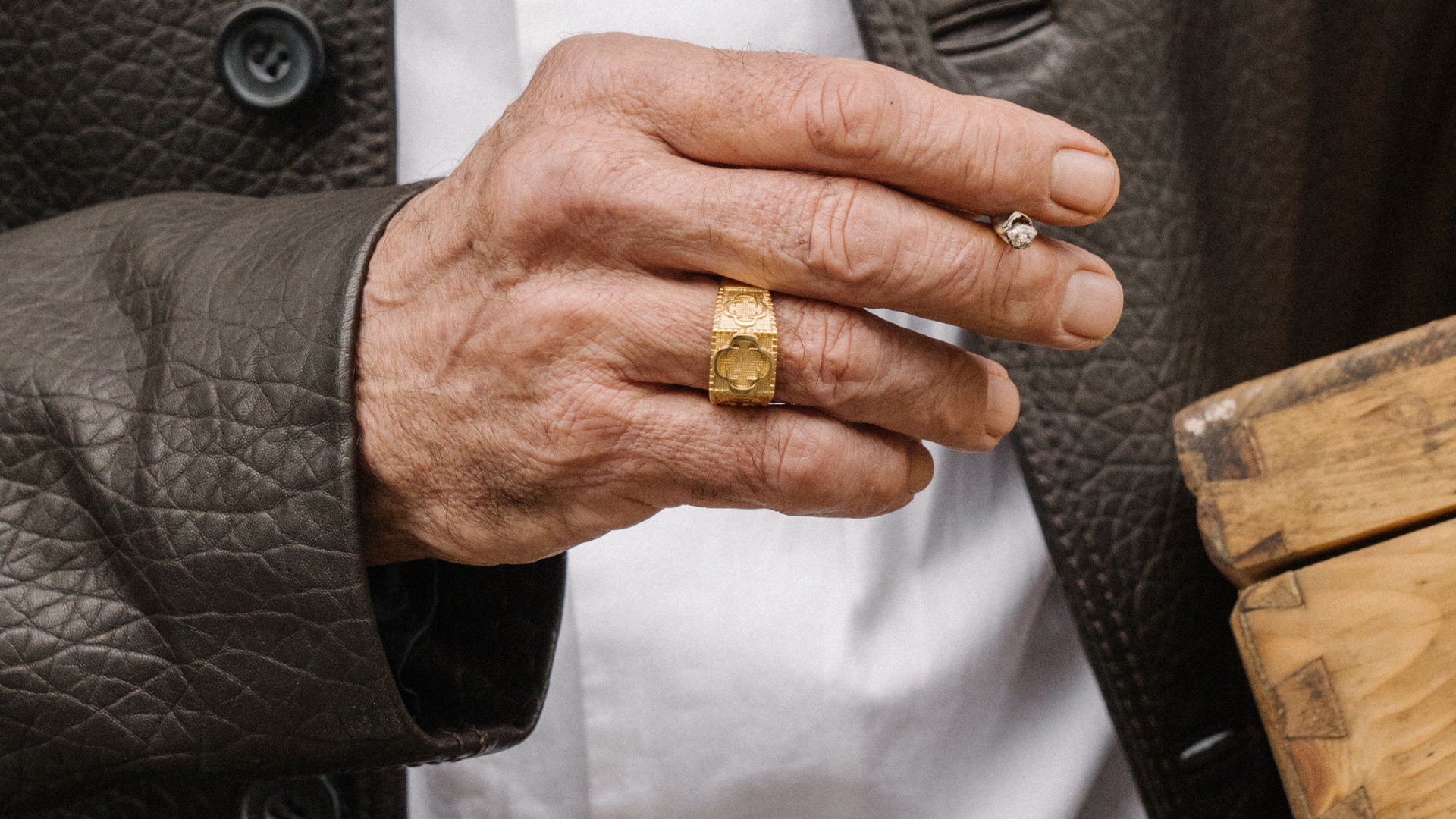
What Does It Mean When a Man Wears a Signet Ring?
Some men don't need to explain who they are. It shows in what they choose to wear, and what they don't. Long before it became a style staple, one ring did more of that talking than almost anything else a man could put on.
That ring is the signet. Here's where that meaning comes from, what it means to wear one today, and how to choose the version that says it for you.
Jump to:
- What does a signet ring mean?
- Where does the signet ring come from?
- The signet ring that still gets destroyed today
- What a signet ring actually authenticates now
- Why do men still wear signet rings?
- Types of men's signet ring
- Does the finger you wear it on matter?
- FAQs
What Does a Signet Ring Mean?
A signet ring has always meant the same thing at its core: this is genuinely mine, and I stand behind it. What that "this" refers to has changed over the centuries. Once it was a name and a family line. Today it's far more often a belief, a milestone, or a value a man's chosen for himself. The ring didn't lose its meaning when the wax disappeared. It just started authenticating something more personal.

Shop the CRAFTD Signet Ring Collection
Where Does the Signet Ring Come From?
The idea is older than most people realise. Engraved seals used to authenticate documents and property go back to ancient Mesopotamia, where cylinder seals were rolled across wet clay as far back as 3500 BCE. Ancient Egyptians wore scarab-shaped signet rings for a similar purpose, and by the Roman era, gold rings had become such a clear marker of rank that Roman law restricted who was actually permitted to wear one.
By medieval Europe, the signet ring had settled into the job it's best known for. A man's ring carried his family crest, engraved in reverse into the metal, so it could be pressed into hot wax and stamped onto a letter or a document. It worked like a signature, at a time when most people couldn't write one and forgery was a genuine, practical risk. It wasn't proving his taste. It was proving his name.

Shop the CRAFTD Signet Ring Collection
Even the word carries that weight. "Signet" comes from the Latin "signum," meaning mark, or seal. Kings used them. So did merchants and guildsmen, and anyone else whose word needed to carry real authority on a page.
The Signet Ring That Still Gets Destroyed Today
Here's how seriously that authority was taken: when the man holding a signet ring died, the ring itself often didn't survive him. Left active, it could be used to forge documents in his name. So it was guarded closely, passed down with care, and in some cases deliberately destroyed the moment he was gone.

Shop the CRAFTD Signet Ring Collection
That practice hasn't entirely disappeared. The Pope's own signet, known as the Ring of the Fisherman, is used to seal official documents throughout his time in office. By long-standing tradition, the moment a papacy ends, that ring is deliberately defaced so it can never be used again, before a new one is made for his successor. Centuries on from wax and letters, the same instinct still holds: a ring that carries real authority doesn't get left lying around.
What a Signet Ring Actually Authenticates Now
The need to prove a legal name with a ring disappeared long ago. But the idea underneath it never really left. A signet ring still authenticates something. It's just not a name on a document anymore. It's identity, chosen rather than inherited. Faith. Heritage. A milestone he's reached, or one he's still working toward. Nothing he needs a document, or anyone else, to verify.
Whether it was sealing a letter six hundred years ago or catching the light at dinner tonight, a signet ring has only ever had one job: mark something as genuinely yours. The method changed. The wax disappeared. The job never has.
Why Do Men Still Wear Signet Rings?
A signet ring tends to suit the man who already knows what he stands for and doesn't feel the need to explain it. Not chasing attention. Not performing anything. Just carrying something with a bit of weight, in every sense of the word.
That's the part most men who wear one already understand, even if they've never put it into words. A signet ring doesn't ask you to explain yourself. It just quietly confirms what's already true.

Shop the CRAFTD Signet Ring Collection
It also tends to become one of the few rings a man stops noticing he's wearing. Most jewellery gets thought about, at least a little, every time it goes on. A signet ring, once it earns its place, stops feeling like something you put on and starts feeling like part of your hand.
Types of Men's Signet Ring
We've built our signet rings around that same idea: something personal, worn with intent rather than habit. Here's our top picks for you:
St. Christopher Signet Ring (Silver)
This one leans into the piece's oldest job: carrying meaning you can actually see. The St. Christopher signet ring features St. Christopher, patron saint of travellers, set into a polished silver signet face. It doesn't authenticate a name. It authenticates a belief. Finished with our signature scratch and fade-resistant plating, so the detail holds up the same way the meaning does.

Featured Ring: St. Christopher Signet Ring (Silver)
Best for: Men who find comfort in faith, tradition, or a reminder that the journey matters as much as the destination.
Square Signet Ring (Gold)
A solid signet belongs in every man's collection. Where the St. Christopher carries a specific story, the square signet ring carries none at all, by design. A bold, polished square face on a smooth 18K gold shank, built for the man who'd rather the ring speak for him without needing an explanation. It doesn't authenticate a story. It authenticates confidence, plain and simple.

Featured Ring: Square Signet Ring (Gold)
Best for: Everyday wear, and the man who wants his signet to make a statement through restraint rather than detail.
Vintage Stone Signet Ring (Silver)
Some signet rings look like they've already lived a life before they reach you. The vintage stone signet ring does exactly that: a square-cut emerald, two princess-cut cubic zirconia stones, and a larger rounded crystal, hand-set to look inherited rather than bought yesterday. Also available in gold. It authenticates character, the kind that usually takes years to earn.

Featured Ring: Vintage Stone Signet Ring (Silver)
Whichever metal you choose, keeping the signet face looking sharp is straightforward. Our guide to cleaning rings covers proper care for both silver and gold signets.
You'll find the full range, along with sizing and material options, on our signet ring collection page.
Does the Finger You Wear It On Matter?
Traditionally, yes; signet rings were worn on the pinky, largely so the seal sat clear of the rest of the hand and stayed easy to press into wax. That's actually where a lot of pinky ring tradition comes from in the first place; if you want the full story, our guide on what a pinky ring means on a man covers it properly. Today, wearing a signet is far more flexible. Plenty of men wear theirs on the index or ring finger instead, and it reads just as intentional either way.
If you want the full breakdown on hand, finger, and how to stack a signet ring with the rest of your rings, that's covered properly in our guide on the best way to style a men's signet ring.
FAQs
What Does It Mean When a Man Wears a Signet Ring?
Historically, it marked family, status, and identity, since the crest on the ring was pressed into wax as a personal seal. Today, it's more often a personal statement rather than an inherited one, standing for something the wearer values rather than the family he was born into.
How Old Is the Signet Ring, Really?
Much older than most people expect. Engraved seals used to authenticate documents go back to ancient Mesopotamia, with cylinder seals in use as far back as 3500 BCE. Egyptian scarab rings and Roman gold rings followed, long before the medieval wax-seal signet most people picture today.
Is It Still Traditional to Wear a Signet Ring on the Pinky?
It's the traditional placement, largely for practical reasons, but it's no longer the rule. Plenty of men wear theirs on the index or ring finger and it reads just as intentional.
Does a Signet Ring Have to Have a Family Crest?
No. Most signet rings worn today don't carry an inherited crest at all. They're more commonly chosen for a personal symbol, whether that's faith, heritage, or simply a design the wearer connects with.
What's the Difference Between a Signet Ring and a Sovereign Ring?
Both have flat, engraved faces, but they come from different traditions. Signet rings were used as personal wax seals; sovereign rings took their design from gold sovereign coins. Visually similar, different histories.
Why Were Signet Rings Sometimes Destroyed When Their Owner Died?
To stop anyone else using the seal in their name. The tradition still exists today: the Pope's Ring of the Fisherman is deliberately defaced at the end of his papacy for exactly this reason, before a new ring is made for his successor.
Is a Signet Ring Still Meaningful Today, or Just a Trend?
Still meaningful. The wax-seal function disappeared, but the idea it was built on didn't: a signet ring marks something as genuinely yours. Today that's identity rather than a legal name, which is exactly why it hasn't dated the way trend-led jewellery does.
Find Yours
A signet ring stopped verifying a name on paper a long time ago. What it authenticates now is you. Once you know that, choosing one gets a lot simpler: less about the design, more about what you want it to confirm. When you're ready, our guide on styling a men's signet ring will help you pick and wear the right one.
Read more
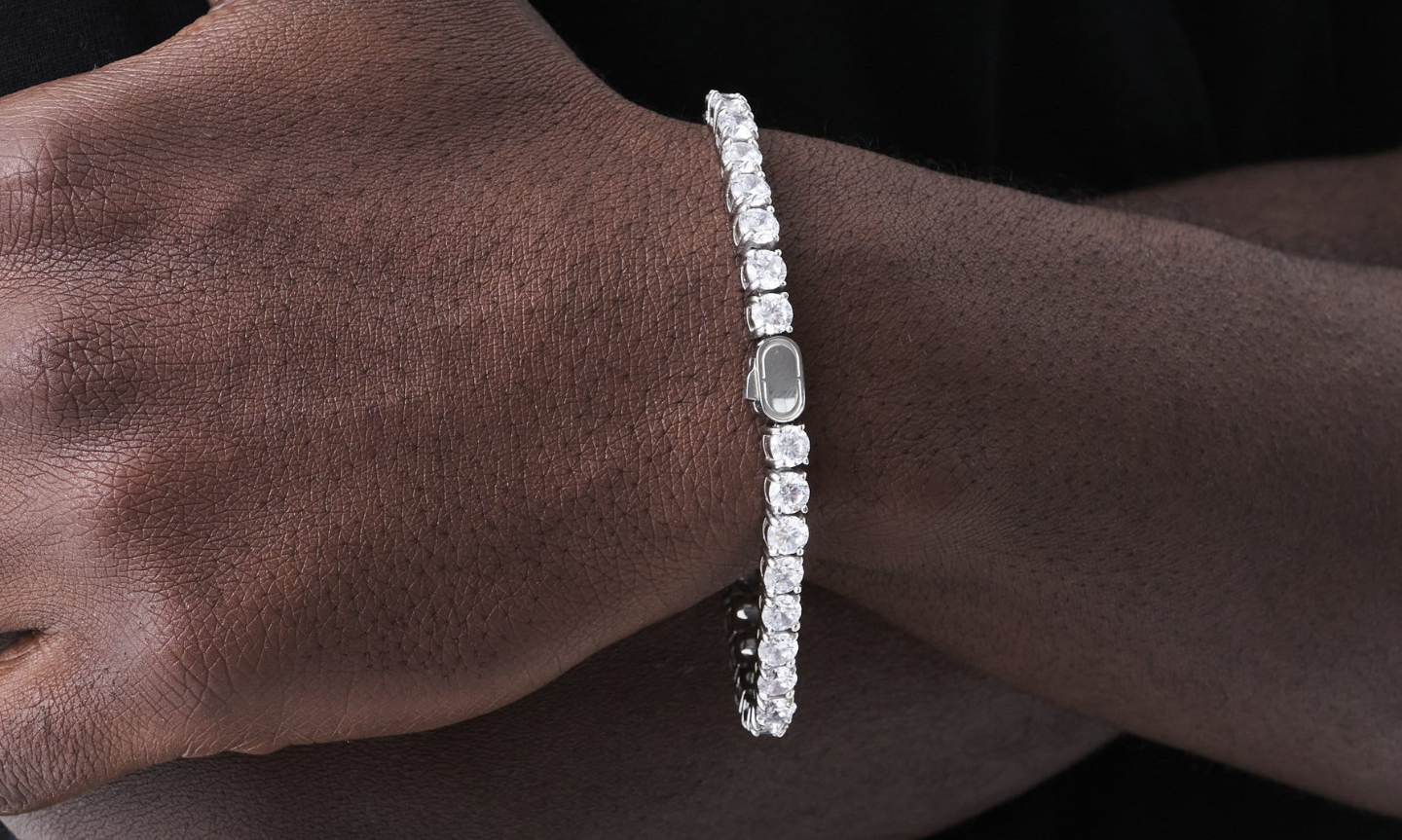
The tennis bracelet is defined by a single, continuous row of matched stones, creating a clean line of sparkle around the wrist. Here’s where the name came from, how it’s made and how to wear one.
Read more
Leave a comment
This site is protected by hCaptcha and the hCaptcha Privacy Policy and Terms of Service apply.