

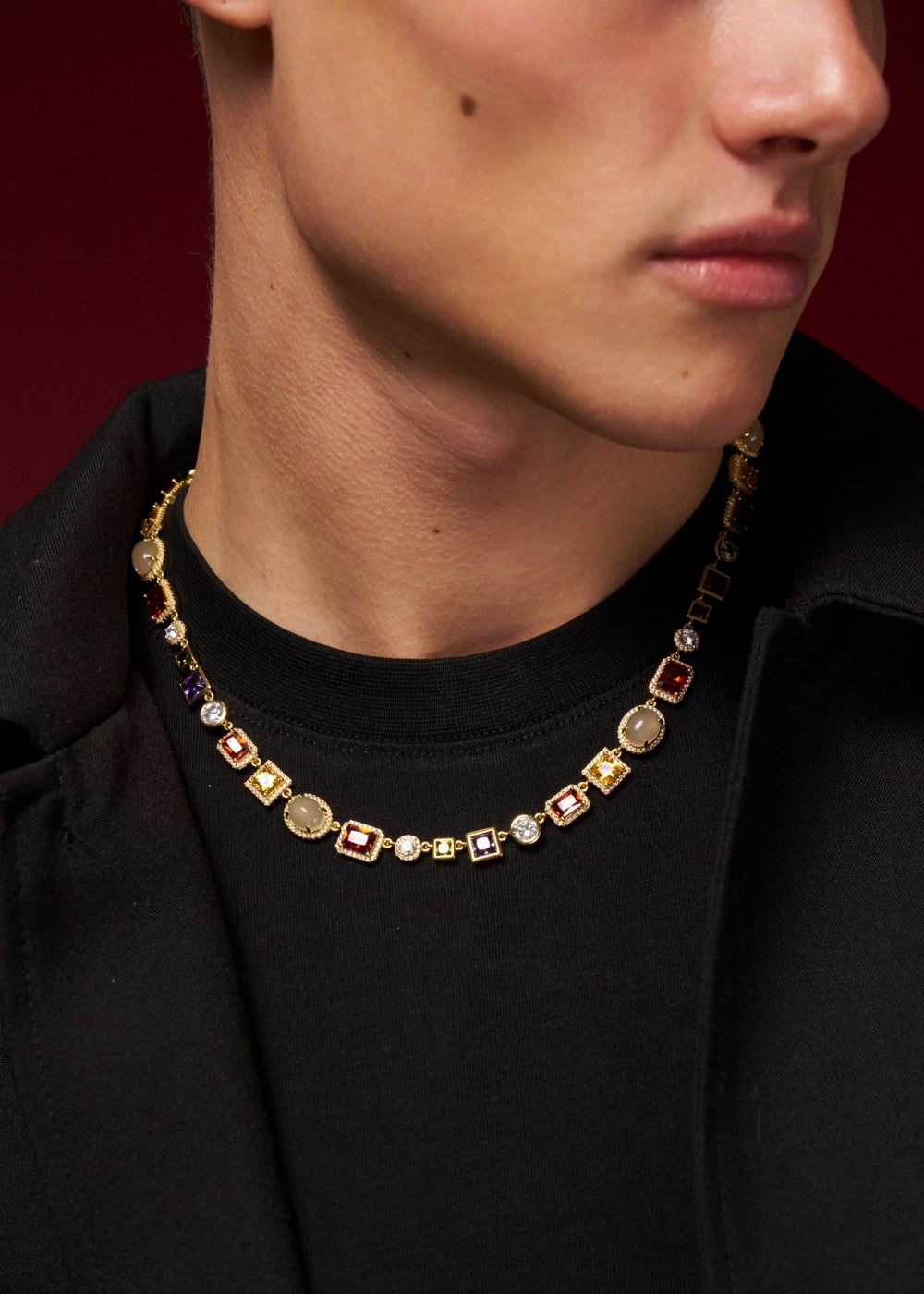
GEMSTONES




Does Silver Tarnish? What It Means and What It Doesn't
Yes, sterling silver tarnishes. It is supposed to.
That is the short answer, and on its own it is not very useful, because the interesting part is what tarnish actually tells you. People treat a darkening chain as a fault, a sign they bought badly, or evidence the silver is fake. It is none of those things, and one of the most common assumptions about it is backwards.
Tarnish is a thin chemical film on the surface of the metal. It is not corrosion, it is not rust, nothing is being lost, and it comes off completely. Whether a piece tarnishes at all depends entirely on what it is made of, and that turns out to be a more useful question than how to stop it.
Below: why it happens, which metals do it and which cannot, how fast to expect it, and what tarnish does and does not prove about a piece.

Solid sterling silver tarnishes, and it cleans back to this. Featured: the 3mm Rope chain in sterling silver.
Jump to:
- Why Silver Tarnishes, and Why It Isn't Rust
- Which Metals Tarnish and Which Can't
- How Fast, and What Speeds It Up
- Is Tarnish Damage?
- Does Tarnishing Mean It's Fake?
- Which of Our Pieces Tarnish
- How to Slow It Down
- FAQs
Why Silver Tarnishes, and Why It Isn't Rust
Almost every article on this subject calls tarnish oxidation. That is loose, and the correct answer is more useful.
Silver tarnish is silver sulphide. Silver reacts with sulphur compounds in the air, principally hydrogen sulphide, and the product is a thin dark film that sits on the surface. Oxygen is barely involved, which is why the word oxidation misleads people into thinking air exposure is the whole story.
Two things follow, and they explain most of the behaviour people find confusing.
A piece tarnishes in a closed drawer. If tarnish needed circulating air it would not, but sulphur compounds are present in very small quantities almost everywhere. Wool, rubber bands, latex, certain paints and the air in a bathroom are all sources, which is why silver stored next to any of them darkens faster than silver left out.
The copper is doing a lot of the work. Sterling is 92.5% silver and 7.5% other metals, usually copper. Pure silver is too soft to make jewellery from, so the alloy exists for structural reasons, and the copper in it reacts readily. That is why sterling tarnishes noticeably while near-pure silver barely does. What 925 means on jewellery covers the hallmark and the alloy in full.
And the contrast with rust matters. Rust is iron oxide. It eats into metal and it is destructive. Tarnish is a film on top of metal that leaves what is underneath completely intact. They are not the same process and they do not have the same consequences.

The same metal, the same care. Featured: the 3mm Cuban chain in sterling silver.
Which Metals Tarnish and Which Can't
This is the part worth knowing before you buy anything, because it is decided by the material rather than by the care.
| Metal | Tarnishes? | Why | How fast |
|---|---|---|---|
| Fine silver (999) | Barely | Almost pure silver, very little else to react | Months to years, and lightly. Too soft for most jewellery |
| Sterling silver (925) | Yes | The 7.5% copper reacts alongside the silver | Weeks to months, depending on how it is stored and worn |
| Silver plated | Yes, and then worse | The thin silver layer tarnishes, then wears through to the base | Fast, and eventually it stops being a tarnish problem |
| Rhodium-finished steel | No | Rhodium is one of the most corrosion-resistant metals there is | Not applicable |
| 316L stainless steel | No | Chromium forms an invisible oxide layer that seals the surface | Not applicable |
| Gold plated over steel | No | Gold does not react with air, and the steel underneath is sealed | Not applicable, though the plating can wear |
| Solid gold | No | Pure gold is unreactive. Lower-karat gold can dull from its alloy metals | Years, and it is dulling rather than tarnish |
| Nickel silver / alpaca | Yes | Contains no silver at all. It is copper, nickel and zinc | Fast, and it usually greens your skin too |
Two rows in that table are worth pausing on.
Silver plated is the worst case, because it has both problems. The thin silver layer tarnishes like any silver, and then it wears through to whatever is underneath, at which point cleaning stops helping. A plated piece has a finite life in a way solid sterling does not. Our guide to silver plated vs sterling silver shows how to tell the two apart before you buy.
Nickel silver contains no silver whatsoever. It is copper, nickel and zinc, sold under names like alpaca and German silver, and it tarnishes readily and turns skin green. It is the clearest evidence that tarnishing on its own tells you nothing about whether a piece is really silver.
How Fast, and What Speeds It Up
There is no fixed answer, and the range is wider than most people expect: a few weeks at one end, a year or more at the other, on identical pieces.
Storage matters more than wear. That surprises people, but silver worn regularly tarnishes more slowly than silver sitting in a drawer, because the friction of contact keeps the film from settling and building. A piece you wear most days and a piece you wear twice a year will not age at the same rate, and the one in the drawer usually looks worse.
What accelerates it:
- Humidity. Bathrooms are the worst place to keep silver, and it is the damp rather than the air.
- Sulphur sources nearby. Wool, felt, rubber bands, latex, some cardboard and some paints.
- Skin chemistry. Sweat composition and pH vary between people enough that the same ring behaves differently on two hands. Diet and medication shift it too.
- Cosmetics and hairspray. Anything applied over a piece rather than before it.
- Pools and the sea. Chlorine is aggressive on silver specifically, and salt water speeds it up too. A shower is fine as long as you dry the piece afterwards. Our guide to which jewellery can get wet covers every metal.
None of that changes whether a piece will eventually tarnish. It only changes when.

Silver you wear most days tarnishes more slowly than silver left in a drawer. Featured: the 3mm Wheat chain in sterling silver.
Is Tarnish Damage?
No, and this is the most useful thing to understand about it.
Tarnish is a film that forms on top of the metal. The silver underneath is unchanged, whatever colour the surface has gone. A piece that has gone almost black has exactly as much silver in it as the day it was made, and removing the film returns it to how it looked. That is not true of rust, which consumes the metal it forms on, and it is not true of plating wear, where something has genuinely gone.
Which means tarnish is fully reversible, and usually in minutes. The method worth knowing uses aluminium foil and bicarbonate of soda in hot water, and rather than scrubbing the tarnish off it converts it back into silver on the piece. Our guide to cleaning sterling silver covers that and every other method, including three that do nothing at all.
The one case where cleaning will not help is a plated piece whose silver layer has worn through. That is not tarnish, and nothing brings it back.
It is also why solid sterling lasts as long as it does. Our guide to how long sterling silver lasts covers what five, ten and twenty years of wear actually look like.
Does Tarnishing Mean It's Fake?
This comes up constantly, usually from someone who has just watched a new chain go dull and concluded they were sold something cheap. The answer cuts both ways, and both halves are worth knowing.
Tarnishing does not mean a piece is poor quality. It is normal, expected behaviour for real sterling silver. Fine jewellers' sterling tarnishes. Antique sterling tarnishes. A silver piece that darkens is doing what the metal does.
But tarnishing is not proof it is real silver either, and this is the half people get wrong. Nickel silver, alpaca and plenty of other copper alloys contain no silver at all and tarnish just as readily, sometimes faster. If you are trying to work out whether something is genuine, tarnish tells you nothing useful in either direction.
And a piece that never tarnishes is not necessarily fake. It might be rhodium-plated, lacquered, or a tarnish-resistant metal entirely. Plenty of legitimate silver-tone jewellery is made specifically not to tarnish.
What actually tells you is the hallmark, and whether a maker's mark sits beside it. What 925 means on jewellery covers the marks, and our guide on how to tell if jewellery is real silver goes through the at-home tests that are worth anything.

The colour won't tell you whether it's real. The mark will. Featured: the 4mm Cuban chain in sterling silver.
Which of Our Pieces Tarnish
Worth saying plainly, because it is a real difference across the range rather than a marketing distinction.
Our 925 Collection is genuine solid sterling silver, and it will tarnish. That is not a flaw in it. It is the same metal fine jewellery is made from, and it cleans back to new indefinitely because the silver is solid all the way through rather than a layer on top of something else.

From the 925 Collection: solid sterling silver all the way through. Featured: the Resilience pendant.
The rest of our silver-tone range is finished in rhodium, and it will not. Most of it is rhodium over 316L stainless steel. Rhodium is exceptionally corrosion-resistant, and the steel underneath carries a chromium oxide layer that seals it. No tarnishing, no darkening, nothing to clean off. Rhodium is the same finish used on white gold, which our guide to white gold vs silver explains.
Our 18K gold over stainless steel does not tarnish either. Gold does not react with the air, and the steel core does not rust, tarnish or fade.

Rhodium-finished steel: the silver look with nothing to tarnish. Featured: the 4mm Cuban chain.
Neither is the better choice in the abstract. Solid sterling has the weight, the material and the longevity, and asks for occasional care in return. The steel range asks for nothing at all. It depends entirely on whether you would rather own the metal or forget about it. Our guide to sterling silver vs stainless steel weighs the two properly, and why every man should own a sterling silver Cuban makes the case for the metal.
How to Slow It Down
You cannot stop it on real silver, but the habits that slow it are simple and cost nothing.

Closed, dry and away from wool is the best place for silver you're not wearing. Featured: the 3mm Cuban chain in sterling silver.
Store it sealed. A sealed bag with the air pressed out is far better than an open jewellery box. An anti-tarnish strip or a silica gel sachet inside it helps further.
Keep it out of the bathroom. Humidity is the biggest single accelerant, and a bathroom shelf is the worst place in most homes.
Wear it. Regular contact genuinely slows the film forming, so the pieces you wear are looking after themselves.
Wipe it when you take it off. Ten seconds with a soft cloth removes the sweat and oils that speed everything up.
Keep it away from wool and rubber. Both are sulphur sources, and a wool-lined box is doing the opposite of what you want.
For the full treatment, including what to do once it has tarnished, our guide to cleaning sterling silver goes through every method. For a chain specifically, how to clean a silver chain covers the links and the clasp.
Does Silver Tarnish? FAQs
Does sterling silver tarnish?
Yes. Sterling is 92.5% silver and 7.5% other metals, usually copper, and both react with sulphur compounds in the air to form a dark film on the surface. It is normal, it is expected, and it comes off completely. A piece sold as sterling that never darkens at all has almost certainly been rhodium-plated or lacquered.
Does CRAFTD jewellery tarnish?
It depends on the piece. Our 925 Collection is solid sterling silver, so it will tarnish over time like any real silver, and it cleans back to new. Our rhodium-finished silver-tone pieces and our 18K gold over stainless steel do not tarnish.
Is tarnish the same as rust?
No. Rust is iron oxide, it only forms on iron and non-stainless steels, and it eats into the metal. Tarnish is a surface film, on silver it is silver sulphide, and the metal underneath is completely untouched. Silver cannot rust. Nothing is being lost when a silver piece darkens.
Does tarnishing mean my silver is fake or low quality?
No, and the opposite assumption is a mistake too. Tarnishing is normal behaviour for real sterling, so it is not a sign of poor quality. But it is not proof of authenticity either, because copper alloys with no silver in them tarnish just as readily. The mark is what tells you, not the tarnish.
How long does it take for silver to tarnish?
Anywhere from a few weeks to a year, and storage matters more than wear. A piece kept in a sealed bag can stay bright for a very long time. The same piece left in an open box in a bathroom can darken noticeably within a month. Humidity and sulphur sources in the air drive it far more than how often you put it on.
Why does silver tarnish faster on some people?
Skin chemistry varies. Sweat composition, pH and what you put on your hands all change how quickly the reaction runs, which is why the same ring can darken on one person in a fortnight and stay bright on another for months. Medication and diet can shift it too. It says nothing about the piece.
Does silver tarnish in a sealed bag?
Much more slowly, which is why a sealed bag is the best storage there is. Tarnishing needs sulphur compounds from the air, so removing the air removes most of the supply. It is not perfect, because a little air is always trapped, but it is the single most effective thing you can do.
Does stainless steel or rhodium tarnish?
No to both. Stainless steel carries a layer of chromium oxide that seals the surface and repairs itself when scratched. Rhodium is one of the most corrosion-resistant metals there is, which is why it is used as a finish over silver and white gold. Our silver-tone steel pieces are rhodium-finished stainless steel, and they will not tarnish.
Can tarnished silver be restored?
Completely, and usually in minutes. The tarnish is a film on the surface, not damage to the metal, so removing it returns the piece to how it was. The best method uses aluminium foil and bicarbonate of soda, which converts the tarnish back into silver rather than scrubbing it off.
What silver doesn't tarnish?
No real silver is completely tarnish-proof, though fine silver (999) tarnishes far more slowly than sterling. Silver-coloured jewellery that never tarnishes is usually rhodium-finished, rhodium-plated sterling, or stainless steel, which carries a chromium oxide layer that seals its surface.
Does sterling silver turn your skin green?
Rarely. Sterling can occasionally leave a faint grey or green mark, where the copper in the alloy reacts with sweat. It washes off and does no harm. A strong green mark is more often a sign of a copper-heavy base metal, such as nickel silver or worn plating.
Where to Go From Here
Sterling tarnishes and cleans back up. Stainless steel and rhodium do not tarnish at all. Neither fact says anything about quality, and tarnish on its own proves nothing about whether a piece is really silver.

Tarnish settles first in engraved detail, and cleans out of it just as easily. Featured: the Resilience pendant.
If you want solid sterling, our 925 Collection is where it sits. If you would rather never think about it, the rest of the silver-tone range is rhodium-finished steel. Our guide to cleaning sterling silver covers the care either way, and how to clean metal jewellery covers everything else you own.
Read more

Can Gold-Plated Jewellery Get Wet? Showers, Pools and the Sea
Can you shower in gold-plated jewellery, or swim in it? It depends on what's under the gold. Here's how each common metal handles showers, pools and the sea, and exactly where our own pieces stand.
Read more
How to Store Necklaces: The Best Way to Keep Chains Safe and Untangled
Most tangles, scratches and tarnish happen while a necklace is put away, not while you're wearing it. Here's the best way to store every kind of chain, at home and when you travel.
Read more
Leave a comment
This site is protected by hCaptcha and the hCaptcha Privacy Policy and Terms of Service apply.