
GIFT SETS
SHOP NOW

Popular searches

Cart
Your cart is empty
Your gifting options
Make your gift extra special with our luxury packaging options. Select a gift bag, gift box or a combination to create the perfect presentation.

Luxury Gift Box, Gift Bag & Wrapping Kit (100,00 kr)

Meaning Card (28,00 kr)
Add more meaning to your gift with a meaning card included with your order.
15 variations available

Gift Bag, Ribbon & Wrapping (67,00 kr)
The full CRAFTD gifting experience.
Includes: Premium CRAFTD gift bag, Ribbon & Wrapping Paper.
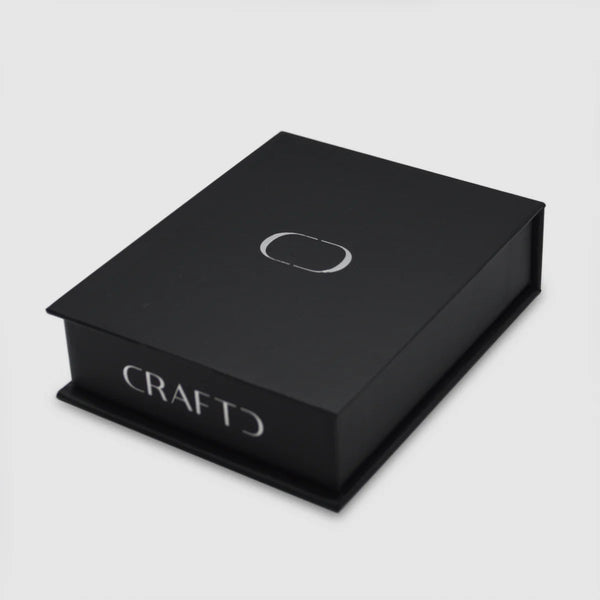
Luxury Gift Box (67,00 kr)
Choose your option
To My Boyfriend

To My Soulmate

To My Grandson

To My Brother

To My True Friend

To My Dad

A Symbol Of Strength

A Symbol of Luck

A Symbol Of Safe Travel

A Symbol Of Self Belief

A Symbol Of Adventure
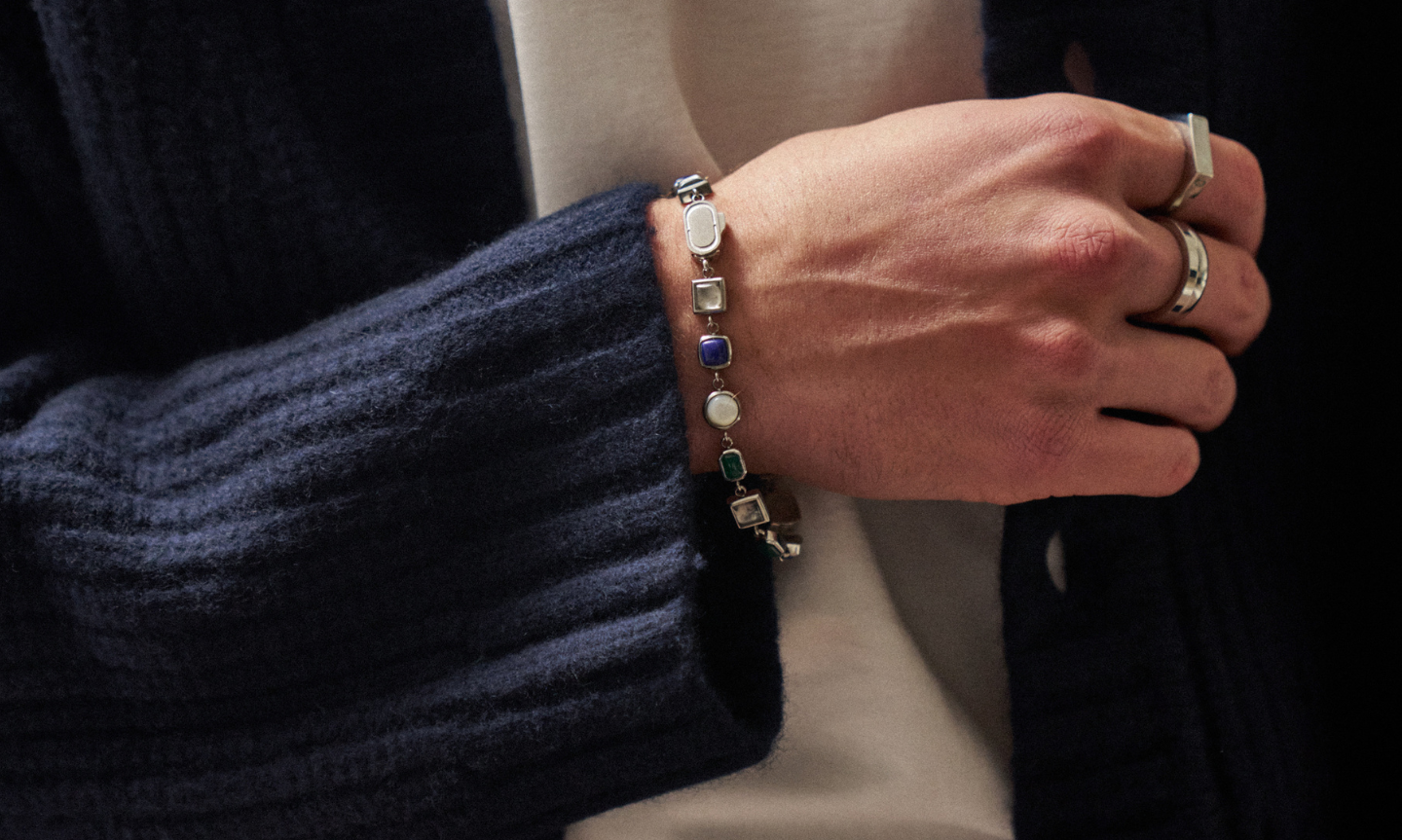
Getting your bracelet size right is simple. A simple strip of paper, phone charger cable, or a tape measure is enough to get it done in less than a minute.
This guide shows you exactly where to measure, how much room to leave, and how your bracelet should feel once it's on, so you can choose the right size without second guessing it.
Jump to:
A bracelet should feel easy. Once it's on, you shouldn't have to keep thinking about it, moving it around, or taking it off because it's getting in the way.
Too tight, and it starts to dig in or leave a mark. Too loose, and it slides up your arm, catches on your sleeve, or feels like it's not sitting where it should. The best fit is somewhere in between: secure enough to stay in place, relaxed enough to move naturally with your wrist.
Whether you prefer a classic fixed-size fit, an adjustable style, or something more flexible, CRAFTD bracelets are designed to sit comfortably on your wrist. Either way, it's worth taking a minute to measure properly, because the right fit makes the whole piece feel better from the first wear.
And if you ever land between two sizes, size up. A little extra room will always feel easier than a bracelet that sits too tight.
First, choose the wrist you'll actually wear the bracelet on. One wrist is often slightly bigger than the other, so measure the side it's going on, usually your weaker hand.
What you'll need:
No tape or string handy? Our downloadable bracelet sizer does the same job, just print it and wrap it around your wrist.
Download the printable bracelet sizer (PDF) →
Tip: print it at 100% (actual size), not "fit to page", so the scale stays accurate.
How to measure, step by step:
That number is your wrist size. Next, you'll add a little room depending on the style of bracelet, which we'll break down below.
Wearing more than one bracelet together? Measure the spot where each one will sit. Your wrist gets slightly wider towards the forearm, so a bracelet worn higher up may need a little more room.
Your wrist measurement is the starting point, but it isn't always the size you order. A bracelet needs a little room to sit properly, and how much depends on the style:
The simplest rule: if you're between sizes, go up. A bracelet with a little extra room feels relaxed. One that's too tight gets annoying quickly.
Most bracelets come in just two lengths, so the choice is simple:
19cm is our most popular size, and it fits most wrists comfortably.
Prefer not to pick a fixed size at all? A few styles are made to flex:
Use the chart below to match your wrist measurement to the right size. It's based on a standard chain bracelet fit, so if you're choosing a cuff, bead, or adjustable style, read it alongside the fit notes in the next section.
| Your wrist measurement | Recommended CRAFTD size | How it should sit |
|---|---|---|
| Under 17 cm (under 6.7 in) |
19cm | Comfortable everyday fit |
| 17 to 18.5 cm (6.7 to 7.3 in) |
19cm for a closer fit, or an adjustable style | Between our two main sizes |
| 18.5 to 20 cm (7.3 to 7.9 in) |
22cm | Comfortable everyday fit |
| Over 20 cm (over 7.9 in) |
22cm, or an adjustable style | More relaxed with extra room |
Right between two sizes? Choose the larger one, or go for an adjustable style. It takes the pressure off and gives you more control over the fit.
A good fit is easy to spot. The bracelet should:
The ideal fit shifts a little by style:
If you're wearing more than one bracelet together, aim for balance. You don't want every piece sliding into each other all day, so a slightly closer fit keeps the stack cleaner, especially if you're mixing textures, widths and finishes. For more on this, see our guide on how to wear bracelets for guys.
If you don't know their wrist size, don't guess a fixed length unless you're fairly sure. A flexible style is the safer choice, and saves you asking them to measure their wrist and giving the game away:
If you'd rather pick a fixed size, think about their build and how they usually wear jewellery:
Measure your wrist just below the wrist bone, then add a little room depending on the style: around 2cm for chain and link bracelets, around 1cm for cuffs and bangles. Most CRAFTD bracelets come in 19cm and 22cm, so once you know your wrist measurement, the chart above will point you to the right one.
Your wrist size is the measurement around your wrist. Your bracelet size is that number plus a little extra room: around 2cm for chain bracelets, around 1cm for cuffs. If you're between sizes, choose the larger one for a more comfortable fit.
Wrap a flexible tape measure, a piece of string, or a phone charger cable around the thickest part of your wrist, just below the wrist bone. Mark where it meets, then measure that length against a ruler in centimetres. That gives you your wrist size.
Most men wear bracelets between 19cm and 22cm. A 19cm bracelet usually suits smaller to medium wrists, while 22cm suits larger wrists or anyone who prefers a more relaxed fit.
Choose 19cm for a closer fit or 22cm for a more relaxed one. If you'd rather not decide, go for an adjustable style like the Adjustable Curb Bracelet, which sets anywhere between 19cm and 22cm.
It should sit around the wrist bone with enough room to slide one finger underneath. It should move slightly, but it shouldn't slide too far up your arm, catch on your sleeve, or dig into your wrist.
Yes. Use a piece of string, a strip of paper, a phone charger cable, or a bracelet you already own. Wrap it around your wrist, mark where it meets, then measure it against a ruler. Our downloadable bracelet sizer works too.
With your size sorted, the rest is the easy part. Explore the full bracelet collection, or read our guide to types of men's bracelets to find the style that suits you best. And if you wear chains too, our guide to types of men's chains breaks those down the same way.
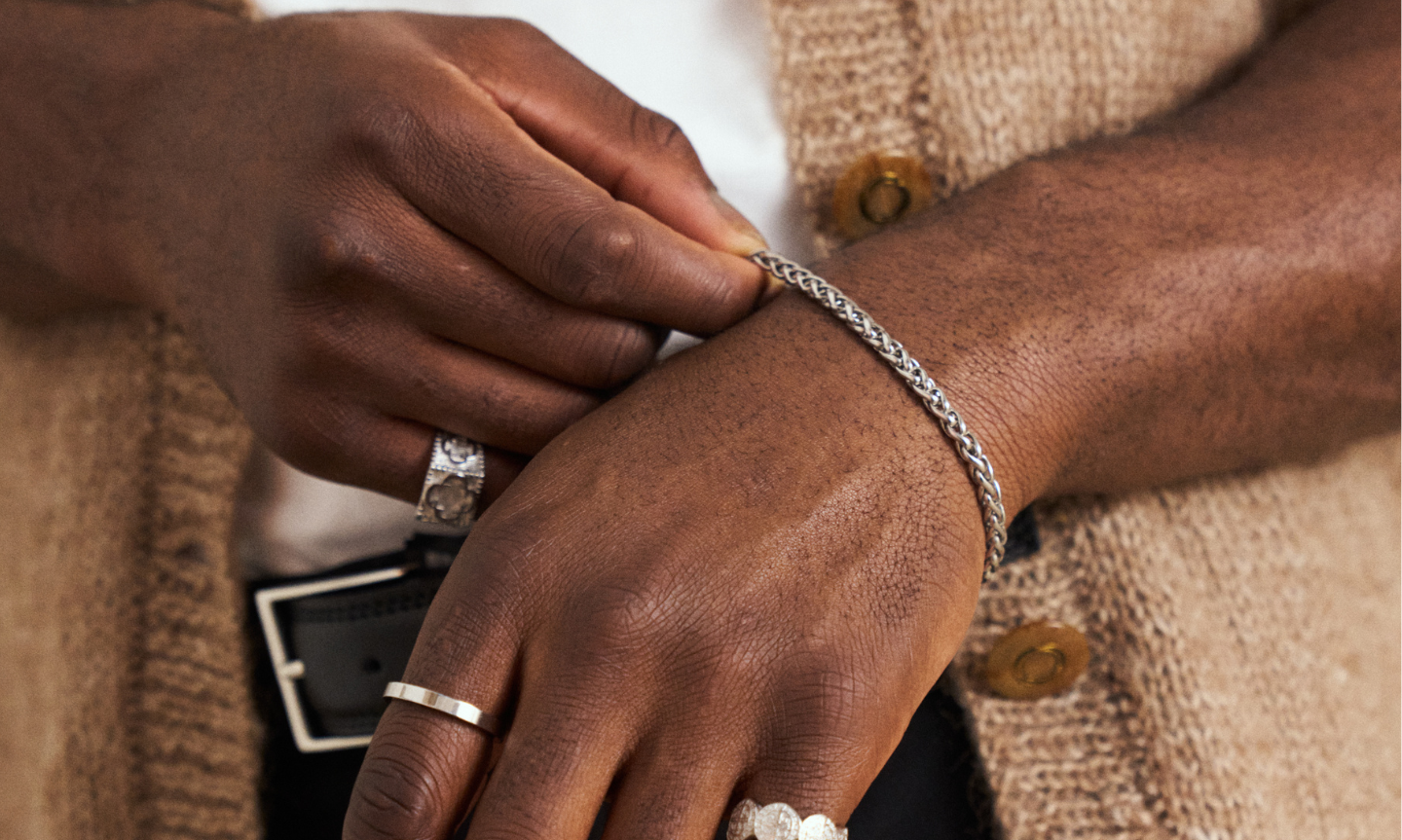
How to Wear Men's Bracelets: A Complete Styling Guide
Bracelets are easily one of the most addictive pieces of jewellery you can wear. Here's some simple tips, with real styling examples and outfit ideas to get you started.
Read more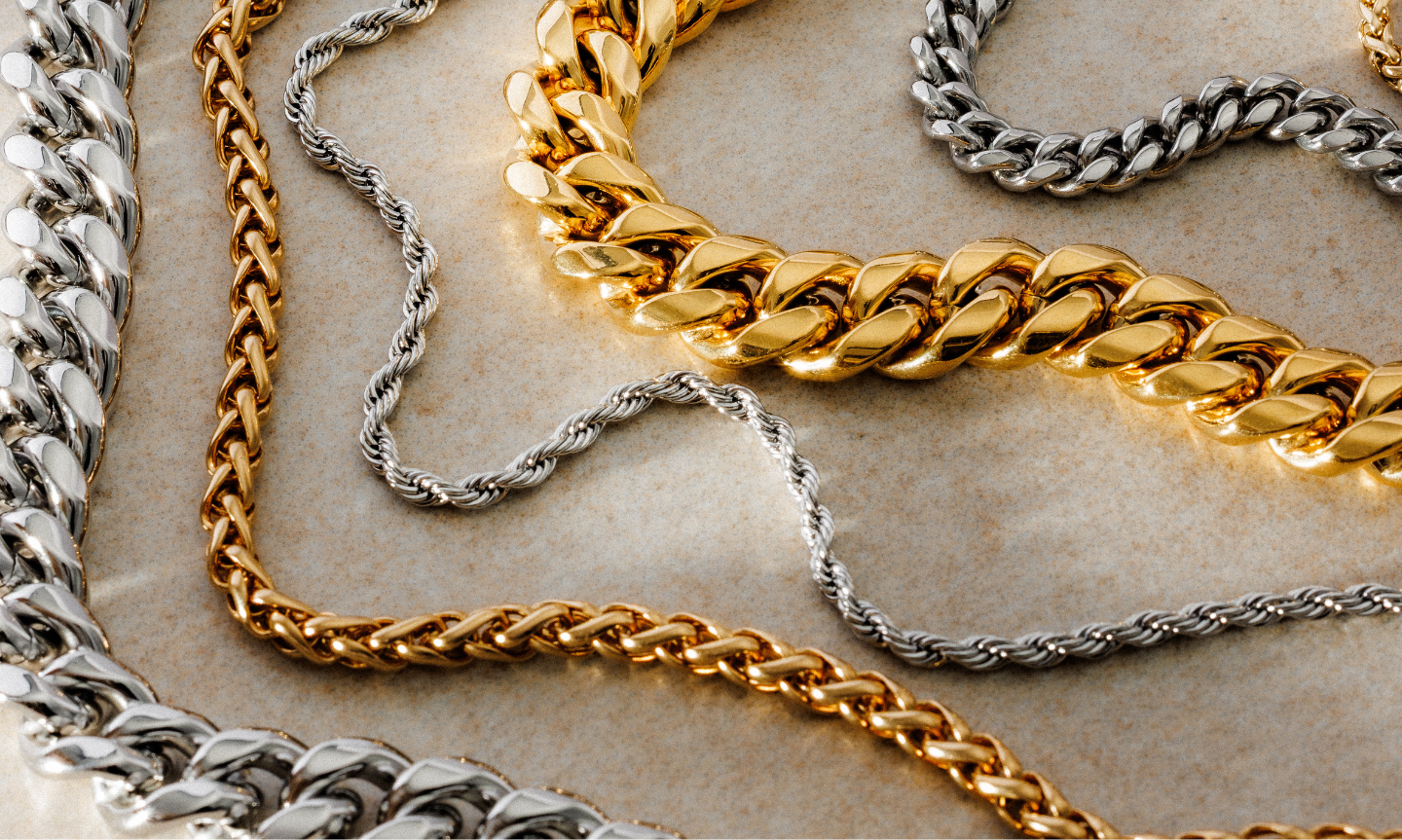
Types of Men's Bracelets: How to Pick the Right One for You
New to bracelets, or just not sure which suits you? Here's every men's bracelet style we make, what each one is, how to wear it, and how to land on the right one.
Read more

Leave a comment
This site is protected by hCaptcha and the hCaptcha Privacy Policy and Terms of Service apply.