
GIFT SETS
SHOP NOW

Popular searches

Cart
Your cart is empty
Your gifting options
Make your gift extra special with our luxury packaging options. Select a gift bag, gift box or a combination to create the perfect presentation.

Luxury Gift Box, Gift Bag & Wrapping Kit (100,00 kr)

Meaning Card (28,00 kr)
Add more meaning to your gift with a meaning card included with your order.
15 variations available

Gift Bag, Ribbon & Wrapping (67,00 kr)
The full CRAFTD gifting experience.
Includes: Premium CRAFTD gift bag, Ribbon & Wrapping Paper.
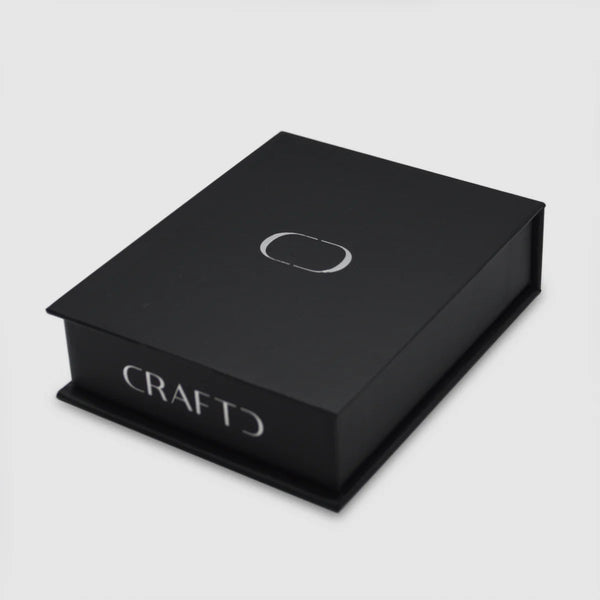
Luxury Gift Box (67,00 kr)
Choose your option
To My Boyfriend

To My Soulmate

To My Grandson

To My Brother

To My True Friend

To My Dad

A Symbol Of Strength

A Symbol of Luck

A Symbol Of Safe Travel

A Symbol Of Self Belief

A Symbol Of Adventure
A knotted chain always looks worse than it is.
What you're usually looking at is two or three crossings pulled tight, not a genuine knot, and almost all of them come out with patience and the right approach. Very few chains are actually ruined. The ones that are, are usually ruined by someone pulling at them.
So work through the methods below in order, gentlest first. Most chains give up somewhere in the first three.
Jump to:
Neither takes a minute, and between them they solve a surprising number of tangles before you've properly started.
Open the clasp. This is the single most useful thing in this article and almost nobody does it.
A fastened necklace is a closed loop, and a knot in a closed loop can only be worked loose from the middle. Open the clasp and you've got a free end, which means you can feed the chain back out of the tangle the same way it went in. It turns an awkward problem into a simple one.
Lay it flat, under a light. On a table, not in your hands, not over a sink. A pale surface helps, a tea towel stops it sliding around, and good light lets you see which strand goes where. Working a knot you can't properly see is how a small tangle becomes a tight one.
Take ten seconds to look at it before you touch it. Find where the chain enters the knot and where it comes out. That's usually the whole puzzle.
Push, don't pull.
When you pull on the two ends of a tangled chain, you're taking the slack out of the knot. The loops get smaller, the links bind against each other, and the knot gets tighter and harder. That's the mechanism behind almost every chain that ends up genuinely stuck.
Doing the opposite works. Push the ends gently toward the knot and you feed slack into it. The loops open up, the links stop gripping, and there's suddenly room to work.
It feels counterintuitive, and it's the difference between a chain that comes free in two minutes and one that doesn't come free at all.
Start at the top. Only move down if the one above hasn't worked.
Hold the chain by one end and let the tangled part dangle. Give it a gentle shake.
It sounds too simple to be worth doing, and it unpicks loose tangles surprisingly often, because the weight of the chain below the knot does the pushing for you.
Lay it flat. Find the knot's centre and push the surrounding chain inward to loosen it. Then use a fingernail to widen the loop and ease one strand back through.
Work one crossing at a time and stop the moment something resists. A tangle that has given up one crossing usually gives up the next more easily.
If the links are gripping each other, reduce the friction.
A single drop of baby oil or olive oil on the knot, or a pinch of baby powder or cornflour, is usually enough. The lubricant gets between the links and lets them slide past each other instead of binding.
Give it a minute to work in, then go back to method two. Wash the chain properly afterwards, since oil left on a chain collects dust and dulls the finish. How to clean a silver chain covers doing that without damaging it.
A safety pin, a sewing needle or a cocktail stick. Something with a fine point.
Slide the point into the middle of the knot and lift rather than prise. You're trying to open the loop, not force the strands apart. Small movements, and stop if the chain resists.
For anything still holding after the first four.
One pin in each hand, both into the centre of the knot, then draw them slowly apart. Two points let you open a loop evenly from both sides, which is what a single pin can't do.
This is as far as you should go at home. If it's still knotted after this, see when to stop below.
The advice above works for most chains. These are the ones that need something different.
Fine chains and snake chains are the ones to be careful with. A snake chain has no visible links at all, which is what gives it that smooth unbroken line, and it also means it has very little give. A sharp bend in one can set. With these, go slow, skip the pins entirely if you can, and go to a jeweller earlier than you would with anything else.
Box chains hold their shape well and are more forgiving than they look, but the square links can catch on each other at the corners. Lubricant helps here more than force does. Worth knowing the difference between round and square box chains if you're not sure which you have.
Rope and wheat chains tangle with themselves more than most, because the twisted construction gives the chain something to catch on along its whole length. The good news is they're robust, and a rope chain will usually take a proper working without complaint.
Cuban and thicker chains are the easiest of the lot. The links are large and rigid, so what looks like a knot is almost always one loop passed through another rather than anything tight. Open the clasp, find the loop, feed it back. These rarely need a pin at all.
Anything with a pendant is a different job, because the pendant's weight pulls the knot tighter every time the chain moves. Take the pendant off first if you can, then untangle the bare chain. That's the next section.
A question that comes up almost as often as untangling itself, and it has three answers depending on how the pendant is attached.
If the chain has a clasp, which most do, just open it and slide the pendant off the end. That's it. No tools.
If the pendant is on a jump ring, the small circle of wire joining the pendant to its bail, look closely at it. A jump ring has a split you can see. To open one properly you need two pairs of pliers, and you twist the two ends sideways past each other rather than pulling them apart. Pulling deforms the ring so it never closes cleanly again.
If you don't have two pairs of pliers, this is a job for a jeweller and it takes them seconds.
If the pendant has a fixed bail with no opening, it isn't coming off. The bail was closed around the chain during manufacture, and that's permanent by design. Nothing has gone wrong.
Most tangles come out. A few shouldn't be forced, and knowing which is which saves chains.
Stop and get help if:
A jeweller will usually free a knotted chain in minutes, and if a link has gone, soldering a single link is one of the cheapest repairs there is. Far cheaper than replacing the chain.
Tangling isn't bad luck. It's movement plus slack, and you can remove both.
Fasten the clasp before you put it down. A closed loop can still tangle, but it can't thread its own end through itself, which is what creates the tight knots. This is the single best habit and it costs nothing.
Store it flat or hanging, never coiled. A coiled chain in a pocket or a pouch is a tangle waiting for a car journey. Flat in a drawer, or hanging from a hook, and it stays as it is.
One chain per compartment. Two chains stored together will find each other. If you're layering more than one, give each its own pouch or a divided box.
For travel, thread it through a drinking straw. Fasten the clasp, feed the chain through a straw cut to length, and it physically cannot knot. It looks daft and it works perfectly.
Don't store chains of very different widths together. A fine chain will work its way between the links of a heavier one, and that's the tangle that takes longest to undo.
Open the clasp first, lay the chain flat under good light, then push the ends toward the knot rather than pulling them apart. That alone loosens most tangles. If it needs more, add a drop of oil or a pinch of powder and work the knot with a fingernail or a fine pin.
Slide the point into the centre of the knot and lift gently to open the loop, rather than prising the strands apart. Two pins work better than one, because you can open the loop evenly from both sides. Stop if the chain resists.
Yes. Baby powder, cornflour or a single drop of oil all reduce the friction between links so they slide past each other instead of gripping. Clean the chain properly afterwards so nothing is left sitting in the links.
Lay it flat, find the centre of the knot, and push the chain inward to create slack rather than pulling the ends. Then widen the loop with a fingernail and ease one strand back through, one crossing at a time.
Movement and slack. An unfastened chain in a pocket or a bag has a free end that can thread through its own loops, and that's what makes tight knots. Fastening the clasp and storing it flat removes most of the problem.
Rarely by the tangle, quite often by the untangling. Pulling on the ends tightens the knot and stretches links. If a chain is genuinely stuck after gentle methods, a jeweller will free it in minutes.
Open the clasp and slide it off. If the pendant is on a jump ring, open the ring by twisting the ends sideways past each other with two pairs of pliers, never by pulling them apart. If the bail is fixed and has no opening, the pendant is permanently attached.
Fasten the clasp, store each chain flat or hanging rather than coiled, and give each one its own compartment. For travel, thread the fastened chain through a drinking straw.
Most chains come back from far worse than they look. Work through the methods in order, keep the pressure off, and stop before frustration takes over.
If yours has finally had enough, thicker links tangle far less than fine ones, which is worth knowing when you choose the next one. Have a look through the chains, or types of men's chains if you want to compare how the styles behave before you decide.

How to Clean Gold-Plated Jewellery Without Damaging It
Gold-plated jewellery needs a gentler approach than solid gold. Learn how to clean it safely, what to avoid, how often to clean it and how to tell when your plating is wearing rather than simply di...
Read more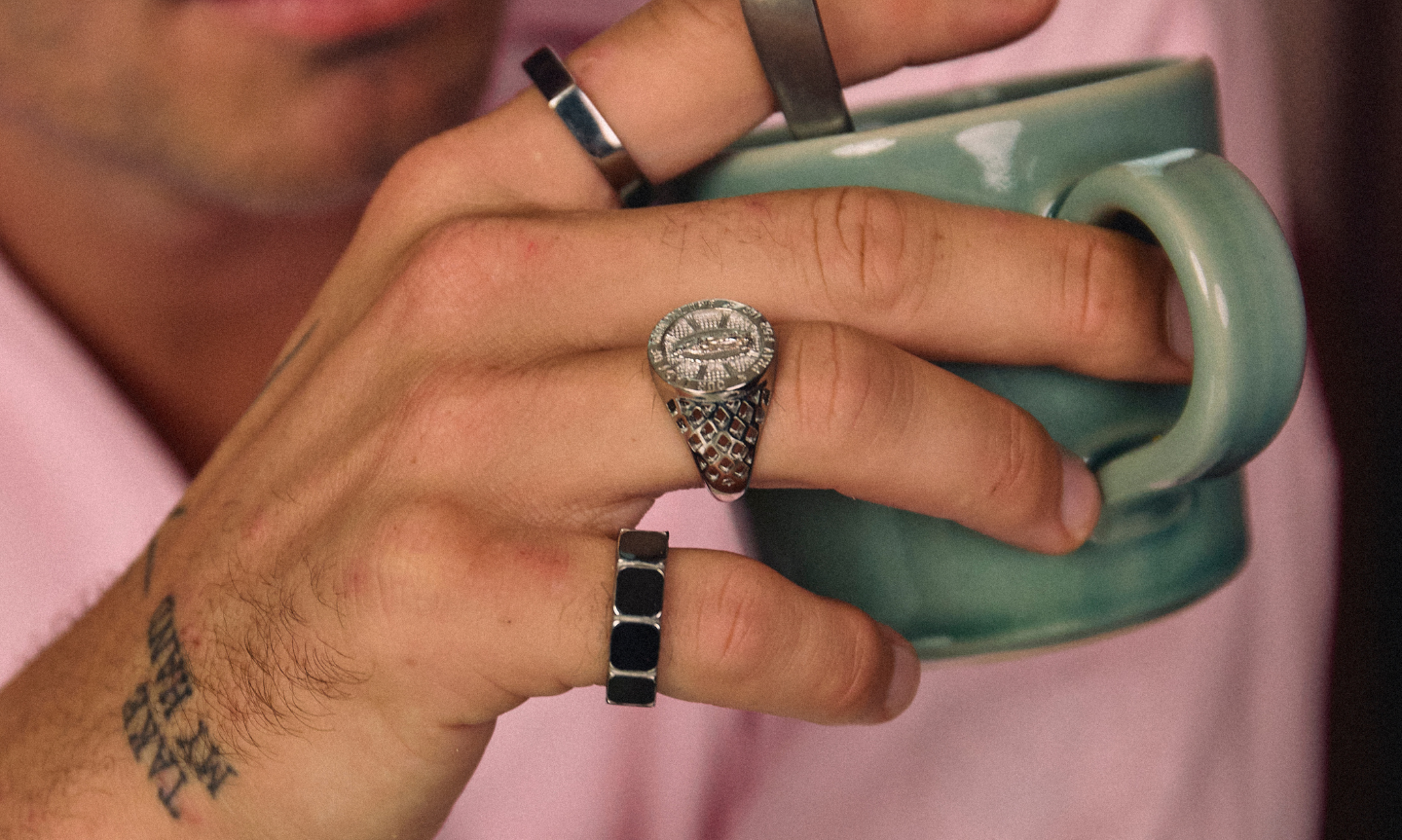
How to Clean Rings (Whatever They're Made Of)
Not sure how to clean a ring without damaging it? Our guide covers sterling silver, gold vermeil, gold-plated stainless steel, tungsten, and gemstone rings, the right method for each, plus what to ...
Read more

Leave a comment
This site is protected by hCaptcha and the hCaptcha Privacy Policy and Terms of Service apply.