

GEMSTONES




White Gold vs Rose Gold: Which Should You Wear?
Both are the same gold. The difference is what's mixed in with it, and where the colour actually lives.
Rose gold gets its colour from copper in the alloy, which means the colour runs through the metal. White gold gets its colour from a rhodium coating on the surface, which means the colour sits on top of the metal. That single distinction decides almost everything that follows, and it's the one most comparisons skip.
Below we'll cover what each one actually is, the difference that decides it, how they age, and which suits you.
Jump to:
- What Rose Gold Actually Is
- What White Gold Actually Is
- The Difference That Actually Decides It
- Side by Side
- Which One Holds Up Better
- Skin, Nickel and the Law
- What They Cost
- So Which Should You Wear?
- What We Make
- FAQs
What Rose Gold Actually Is
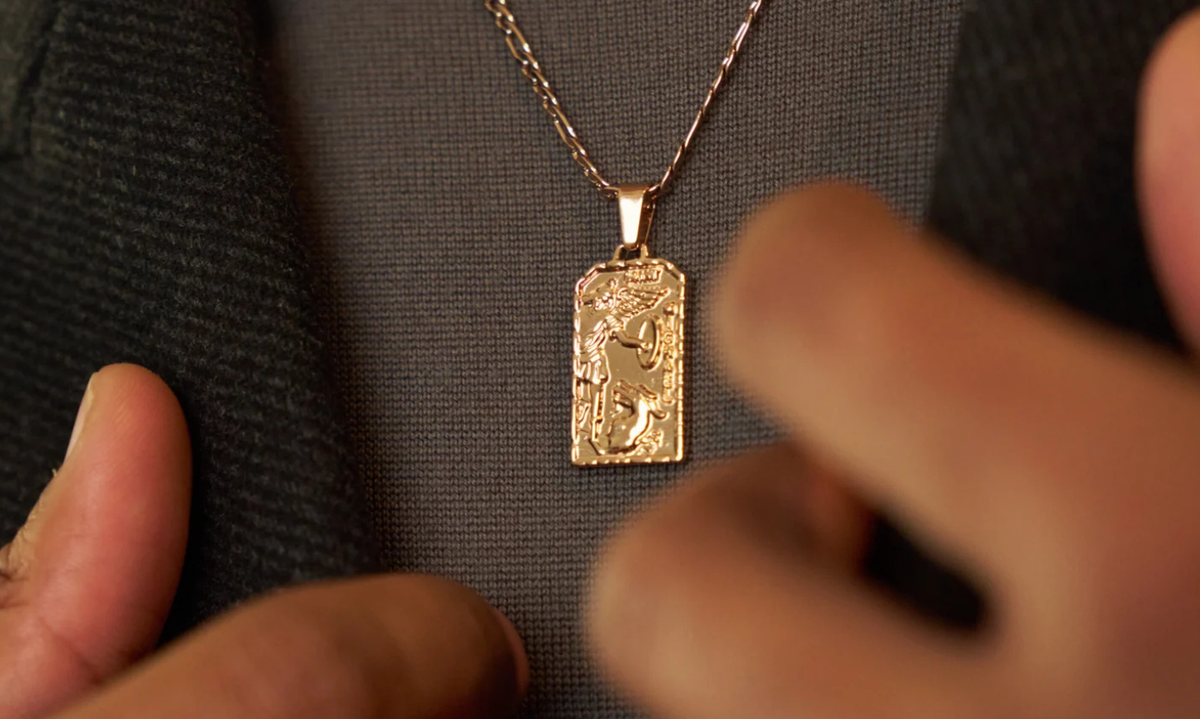
Rose gold is gold alloyed with a higher proportion of copper than yellow gold carries. That's the whole recipe. The copper is what turns it pink, and how much of it goes in decides how pink.
That's why rose, pink and red gold are the same idea at different strengths rather than three different materials. More copper, redder result.
The important part: the colour is the metal. There's no coating, no plating and no finish. Cut a rose gold chain in half and the inside is the same colour as the outside, which is not true of every gold you'll be shown.
An 18ct rose gold piece contains exactly as much gold as an 18ct yellow or white gold one, 75% either way. The copper replaces the other alloy metals rather than replacing any gold, which surprises people who assume the pink ones are a cheaper option. The different types of gold lays out how the colours, carats and constructions fit together.
What White Gold Actually Is
White gold starts as yellow gold too. It's alloyed with pale metals, usually palladium, nickel, silver or zinc, to take the yellow out.
But alloying doesn't make gold white. It makes it less yellow. On its own, white gold is an off-white with a grey or faintly warm cast, closer to old pewter than to anything bright.
So nearly every white gold piece sold at retail is plated in rhodium, a hard, brilliant, blue-white metal from the platinum family. The crisp cold white you see in a display case is that coating, not the gold.
We've gone into the alloys, the carats and the hallmarks properly in what is white gold.
The Difference That Actually Decides It
Here's the comparison in one line, and it isn't about colour at all.
Rose gold's colour is the alloy. White gold's colour is a coating.
Everything practical follows from that. Rose gold cannot fade, because there is nothing on the surface to wear off. Whatever happens to the piece, it stays the colour it was, and the only change over a long time is a slightly deeper patina as the copper ages, which most people either like or never notice.
White gold does change. The rhodium wears, and when it does the piece takes on a faint warm cast, unevenly, usually at the back of a band or on the high points first. Nothing is damaged and nothing is fake. It's the coating that's gone, and putting it back means a jeweller and a bill, repeated every few years for as long as you own it.
That's not an argument against white gold. It's the thing to know before you buy, because white gold is the one that looks lower-maintenance in the case and isn't. A bright mirror finish reads as permanent. A pink one is.
The same logic decides the other comparison people make, and white gold vs silver takes that one on.
Side by Side
| Rose gold | White gold | |
|---|---|---|
| Where the colour comes from | The alloy. Copper, mixed through the metal. | A rhodium coating on the surface. |
| Does the colour last | Permanently. It is the metal. | Until the plating wears, then it warms. |
| Upkeep | None beyond ordinary cleaning. | Re-plating at a jeweller, periodically. |
| Hardness | The hardest of the three golds, thanks to the copper. | Harder than yellow, softer than rose. |
| Gold content at the same carat | Identical. | Identical. |
| Nickel risk | None. Copper is the alloy. | Depends. Nickel white gold is common and rarely labelled. |
| Best with | Warm skin, earth tones, denim, and a warmer wardrobe. | Cool skin, black, grey, tailoring, and colourless stones. |
| Ages by | Developing a slightly deeper patina over years. | Losing its coating in patches. |
Which One Holds Up Better
Two different questions hide inside this, and they have different answers.
For hardness, rose gold wins. Copper is a harder metal than the palladium and silver used to whiten gold, so rose gold is the toughest of the three golds at the same carat. It resists scratching and denting better, which matters most on a ring, where a hand takes more abrasion in a week than a neck does in a year.
For appearance over time, rose gold wins more decisively, and for the reason above: there's no finish to lose. A ten-year-old rose gold band looks like a ten-year-old rose gold band. A ten-year-old white gold band that's never been re-plated looks tired in a way the owner usually can't diagnose.
The one thing worth knowing about rose gold is that a higher copper content, while harder, is also slightly more brittle at the extremes. In practice this affects very intricate settings rather than chains and bands, and it isn't something most people will ever meet.
Skin, Nickel and the Law
This is where the two genuinely differ on something that matters, and it's also where buying here is meaningfully safer than buying in America.
Rose gold is copper-alloyed, and copper is a rare allergen. For the large majority of people rose gold is simply unremarkable to wear.
White gold depends entirely on what's in it. Palladium white gold is expensive and well tolerated. Nickel white gold is cheaper, whitens strongly, and nickel is the most common contact allergy there is. The two are not distinguished on the label.
While the rhodium is intact it makes no difference, because rhodium is inert and nothing underneath touches skin. The problem arrives when the plating wears through on a nickel piece, which is exactly when people stop suspecting the jewellery, because they've worn it happily for two years.
Here, though, there is a legal backstop, and it's a real one. Under EU REACH, entry 27 of Annex XVII, an article intended for prolonged contact with skin may not release more than 0.5 micrograms of nickel per square centimetre per week. For posts inserted into pierced ears the limit is tighter still, at 0.2. That's a restriction on how much nickel actually reaches you rather than a ban on nickel in the alloy, so a compliant piece can still contain it. But the release rate is what causes the reaction, and it is capped by law.
The United States has no federal equivalent, only a voluntary industry standard. So the practical upshot differs by where you're buying: here, nickel white gold from a compliant seller is a much smaller gamble than the same piece bought unregulated. It's still worth asking which white gold you're being sold, and treating "white gold" on its own as an incomplete answer.
What They Cost
At the same carat they hold the same gold, so the material floor under the price is identical. Anyone telling you rose gold is the budget option is describing fashion rather than metal.
White gold often sits slightly higher at retail, for two reasons that have nothing to do with gold content: palladium is expensive, and rhodium plating is an extra manufacturing step.
Over time the gap widens, and in one direction. Rose gold's cost of ownership is nothing. White gold's is a re-plating bill that recurs for as long as you wear it. On a ring worn daily that can be every year or two; on a chain it can be many years. Either way it's a real number that never comes up at the counter.
So Which Should You Wear?
Choose rose gold if you want a colour that can't fade, you'd rather not have a maintenance schedule, your wardrobe leans warm, or you know you react to nickel. It's also the harder of the two, which makes it the sensible choice for a ring.
Choose white gold if you want the cool, bright, silver-toned look specifically, you're setting a colourless stone that a warm metal would fight, or you simply prefer how it looks. Ask whether it's nickel or palladium white before you commit, and factor in the re-plating.
And the practical test beats both of those. Put the same piece in both metals against your own skin and look at it. Thirty seconds settles what no rule can, because it accounts for your hair, your wardrobe and your complexion all at once. Silver or gold goes into why skin tone decides far less than everybody claims.
What We Make
We don't make white gold, so treat this as context rather than a pitch.
Our rose gold pieces are a blend of 18 carat gold and copper over a solid 316L stainless steel core, with rhodium as the barrier layer rather than the nickel much of the industry uses. Steel doesn't corrode or tarnish, so there's nothing reactive waiting underneath and no copper in the base to mark skin.
The gold range as a whole sits in men's gold jewellery, and if you want the construction question in full, what gold plated means covers what to ask before you spend.
FAQs
What's the difference between white gold and rose gold?
What they're alloyed with, and where the colour lives. Rose gold is gold mixed with a higher proportion of copper, so the colour runs through the metal. White gold is gold mixed with pale metals and then plated in rhodium, so the white you see is a coating on the surface.
Which is better, rose gold or white gold?
Rose gold is the lower-maintenance of the two, because its colour is the metal rather than a finish. White gold is the more traditional choice and flatters colourless stones better. Neither holds more gold at the same carat, so the decision is about colour and upkeep rather than value.
Is rose gold real gold?
Yes. An 18ct rose gold piece contains exactly as much gold as an 18ct white or yellow gold piece. The copper in the alloy is what makes it pink, and it replaces the metals that would otherwise be there rather than replacing any of the gold.
Does rose gold fade or tarnish?
No. There's no plating to wear off, so the colour can't fade. Over many years the copper can deepen slightly, which reads as a warm patina rather than damage, and plenty of people prefer it.
Does white gold turn yellow?
The rhodium plating wears through and the alloy underneath shows, which was always faintly warm. Nothing has changed chemically and nothing is fake. A jeweller can re-plate it, and will need to periodically.
Which is more expensive, rose gold or white gold?
They're close, since the gold content is the same at the same carat. White gold often costs slightly more, because palladium is expensive and the rhodium plating is an extra manufacturing step. Over time white gold costs more to keep, because re-plating recurs.
Is rose gold or white gold better for sensitive skin?
Rose gold, generally, because its alloy is copper and very few people react to copper. White gold may be alloyed with nickel, the most common contact allergen there is. British and European law limits how much nickel a piece in prolonged skin contact may release, which makes this much less of a gamble here than in the United States, but the label still rarely tells you which white gold you're buying.
Which suits my skin tone better?
Rose gold leans warm and tends to flatter warm and olive complexions, though it's the most forgiving of the three golds because it sits between yellow and white. Rhodium-plated white gold is cool and crisp and reads well against cooler skin. Both work on most people, and trying the same piece in each beats any rule.
Can you wear rose gold and white gold together?
Yes, and deliberately mixing them reads as more considered than matching does. The trick is repeating each metal at least twice so it looks like a decision rather than an accident.
Is rose gold still in style?
It isn't really a style question. Rose gold is an alloy that has been made since the nineteenth century, and it comes in and out of fashion without ever leaving. If you like it, that's a better reason to buy it than whether it's currently prominent.
Where to Go From Here
Same gold, different company, and one of them keeps its colour because the colour is the metal. That's the whole comparison, and it's a more useful basis for choosing than any chart of skin tones.
Have a look through the rose gold range, or what is white gold if you want the full detail on the other side of this.
Read more
Style Guides
What's the Difference Between Silver and Sterling Silver?
It's a trick question, and seeing that makes every other silver question easier. Sterling silver IS silver: a grade of it, 92.5% pure, alloyed because pure silver is too soft to wear. Here's why, w...
Read more
Style Guides
How to Clean Earrings: A Step-by-Step Guide
Earrings sit against skin all day, which is why they build up faster than anything else you wear, and why the post and the back are always dirtier than the part you can see. Here's the ten-minute m...
Read more
Leave a comment
This site is protected by hCaptcha and the hCaptcha Privacy Policy and Terms of Service apply.