

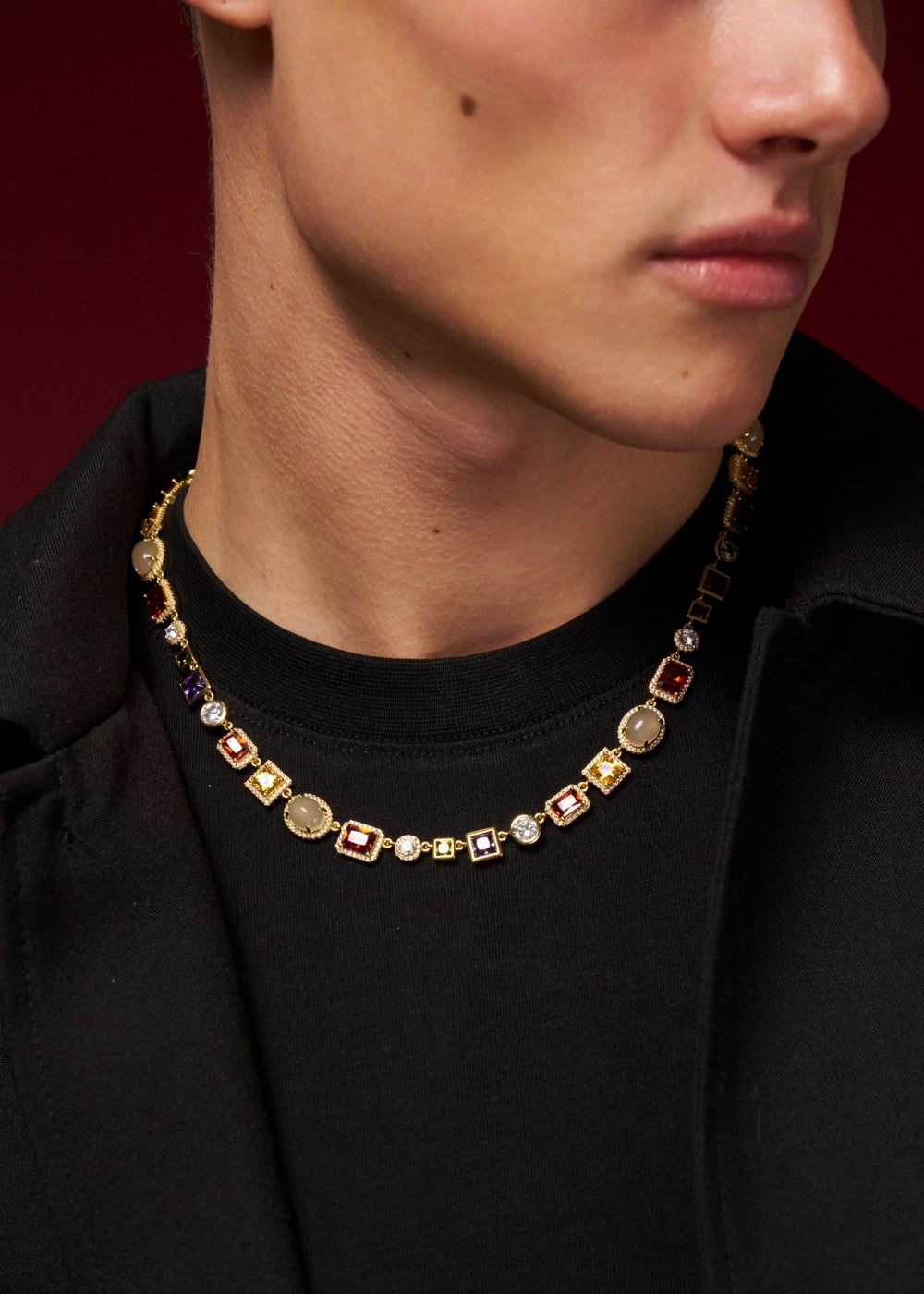
Edelsteine


Jewellery or Jewelry: How to Spell It in Britain
In the UK, it's jewellery. Two Ls, and an E in the middle.
Jewelry, with one L, is the American spelling. Both are correct in their own country, neither is a mistake, and the version you want depends entirely on who you're writing for.
There is a third spelling people worry about, and that one genuinely is wrong. More on it below, along with why the two versions exist, how to pronounce the British one, and which spelling every English-speaking country actually uses.
Jump to:
- The Short Answer
- Why There Are Two Spellings
- "Jewelery" Is the One That's Wrong
- Which Spelling Each Country Uses
- How Do You Pronounce Jewellery?
- Jeweller or Jeweler?
- Other British and American Jewellery Spellings
- Jewellery Words People Misspell
- Does It Matter When You're Shopping Online?
- FAQs
The Short Answer
British English: jewellery. Used in the UK, Ireland, Australia, New Zealand, South Africa and India.
American English: jewelry. Used in the United States, and commonly in Canada.
They mean exactly the same thing. Neither is a corruption of the other, and using the American spelling in Britain isn't an error so much as a signal that whoever wrote it is American, or writing for Americans.
If you're in the UK and writing for a UK audience, use jewellery. That's the whole rule.
Why There Are Two Spellings
The word came into English through Old French, from joel, and arrived in Middle English as jewel. Everything after that is about what happened when people started adding endings to it.
The British spelling is built from "jeweller". A person who makes or sells jewels is a jeweller, and their trade is jewellery. That double L comes from a standard British habit: when a word ends in a single L after a short vowel, British English doubles it before adding a suffix. It's the same instinct that gives you travel becoming travelled and traveller, or cancel becoming cancelled.
The American spelling dropped the extra letters. Noah Webster's dictionaries in the early 1800s deliberately simplified a range of English spellings on the grounds that they carried letters that did no work. Colour lost its U, centre flipped to center, and jeweller and jewellery became jeweler and jewelry.
So the difference isn't one of correctness. It's the result of a deliberate American reform that Britain never adopted, and it shows up across hundreds of words rather than just this one.
"Jewelery" Is the One That's Wrong
This is the spelling worth actually worrying about, because unlike the other two it isn't standard anywhere.
Jewelery, with two Es and one L, is a genuine misspelling in both British and American English. It's extremely common, because it's roughly how the word sounds when it's said quickly, and because it looks like a reasonable halfway house between the two correct versions.
It isn't one. There are only two accepted spellings:
- jewellery (British)
- jewelry (American)
A quick way to keep them straight: the British spelling has a double L because it comes from jeweller, which also has a double L. If you can spell the person, you can spell the trade. The American version drops one L in both words, consistently, so jeweler gives you jewelry.
Two other spellings you'll occasionally see, jewellry and jewelrey, are also mistakes. If it doesn't look like either of the two versions above, it's wrong.
Which Spelling Each Country Uses
| Country | Standard spelling |
|---|---|
| United Kingdom | jewellery |
| Ireland | jewellery |
| Australia | jewellery |
| New Zealand | jewellery |
| South Africa | jewellery |
| India | jewellery |
| United States | jewelry |
| Canada | Both are seen, with jewellery more common in formal and official writing |
Canada is the genuinely mixed one. Canadian English generally follows British spelling for words like colour and centre, but sits much closer to the US on this one thanks to sheer proximity and shared retail. Both spellings appear in Canadian publications, and neither will look wrong to a Canadian reader.
Everywhere else the rule is simple: if the country uses colour rather than color, it uses jewellery.
How Do You Pronounce Jewellery?
The British spelling has an extra syllable in it that a lot of people don't say, which is part of why it gets misspelled.
The standard British pronunciation is three syllables: JOO-uhl-ree. The middle syllable is light but it's there, and it's the elle in the middle of the written word.
In practice, most British speakers say two: JOOL-ree. That's completely normal in everyday speech and nobody will blink at it. The written word keeps the syllable the spoken word tends to drop, which is exactly the gap that produces jewelery.
The American pronunciation is JOO-uhl-ree too, matching their spelling more closely, since jewelry has fewer letters to account for.
If you're trying to remember how to spell it, saying the full three syllables in your head helps. Jew-ell-ery.
Jeweller or Jeweler?
Same rule, same split.
- Jeweller is British. Two Ls, matching jewellery.
- Jeweler is American. One L, matching jewelry.
The two always travel together, so a piece of writing that says jeweler and jewellery is mixing conventions. Pick one country's spelling and stay with it throughout.
The plural works normally in both: jewellers and jewelers.
Other British and American Jewellery Spellings
If you're writing about jewellery for a British audience, a few more words follow the same pattern.
| British | American |
|---|---|
| jewellery | jewelry |
| jeweller | jeweler |
| colour, coloured | color, colored |
| carat (gold purity) | karat (gold purity) |
| grey | gray |
| catalogue | catalog |
| enamelled, enamelling | enameled, enameling |
| favourite | favorite |
The carat one is worth a closer look, because it isn't just a spelling difference. In Britain, carat with a C does two jobs: it means gold purity (9 carat, 18 carat) and it means gemstone weight. In America those are split, with karat for gold purity and carat for gemstone weight.
So a British jeweller writing about a 0.5 carat diamond in an 18 carat gold ring is using the word correctly twice, in two different senses. An American would write 18 karat for the gold. Our guide to what is white gold uses the British convention throughout, and symbols stamped on jewellery has the full key to what every carat mark means on a piece.
Jewellery Words People Misspell
A handful of trade terms turn up misspelled constantly, usually because they came into English from French and kept their original shapes.
Vermeil. Pronounced VER-may, and it means a thick layer of gold over a solid sterling silver base. Not vermiel or vermail. Our guide to 18K gold vs gold vermeil covers what it actually is.
Milgrain. The tiny beaded metal detail along the edge of a setting. Also written millegrain, and both are accepted.
Assay. The testing process that establishes the purity of a precious metal. A British Assay Office is what applies a hallmark, and it's one word, two Ss. Our guide to symbols stamped on jewellery explains how to read one.
Cabochon. A stone polished into a smooth dome rather than cut with facets. Pronounced CAB-uh-shon.
Filigree. Fine twisted metal wire worked into a decorative pattern. One L, two Es at the end.
Facet. The flat polished surface on a cut stone. One T. Faceted, not facetted, in modern British usage.
Does It Matter When You're Shopping Online?
A bit, and in a way that's useful to know.
Search engines understand both spellings, so you'll get results either way. What changes is which results come first. Searching mens jewellery tends to surface British and Australian retailers, while mens jewelry leans towards American ones. If you want to buy from a UK site, with UK pricing, UK delivery and no customs surprises, the British spelling gets you there faster.
Retailers spell it the way their market does. A site using jewelry throughout is usually American, which matters for shipping costs, return windows and whether prices include VAT.
And it's a small signal of who wrote a page. A British site using American spelling isn't necessarily bad, but it often means the copy was written elsewhere. On a subject where the details matter, like hallmarks, carats and metal standards, that's worth noticing, since the standards themselves differ between the two countries.
We're a British brand and we spell it jewellery, which is also why our guides use carat rather than karat, and why they explain the British hallmarking system rather than the American one.
FAQs
Is it jewelry or jewellery?
Both are correct, in different places. Jewellery is the British spelling, used in the UK, Ireland, Australia, New Zealand, South Africa and India. Jewelry is the American spelling, used in the United States and commonly in Canada.
How do you spell jewellery in the UK?
Jewellery, with two Ls and an E in the middle. It comes from jeweller, which also has two Ls, so if you can spell the person you can spell the trade.
Is “jewelery” a word?
No. Jewelery, with two Es and one L, is a misspelling in both British and American English. It's common because it's close to how the word sounds, but the only accepted spellings are jewellery and jewelry.
Why do Americans spell it jewelry?
Noah Webster's dictionaries in the early 1800s deliberately simplified a range of English spellings, removing letters seen as unnecessary. The same reform gave American English color instead of colour and center instead of centre.
How do you pronounce jewellery?
The standard British pronunciation has three syllables, JOO-uhl-ree, though most British speakers say two in everyday speech, JOOL-ree. Saying the full three syllables helps if you're trying to remember the spelling.
Is it jeweller or jeweler?
Jeweller is British and jeweler is American, matching jewellery and jewelry respectively. The two always go together, so avoid mixing one country's spelling of one with the other country's spelling of the other.
Which spelling is used in Canada?
Both appear. Canadian English usually follows British spelling for words like colour, but sits closer to American usage here, so jewelry is widely used alongside jewellery. Neither looks wrong to a Canadian reader.
Is it carat or karat?
In Britain it's carat for both gold purity and gemstone weight, and you tell them apart by context. In America, karat means gold purity and carat means gemstone weight. A British writer would say an 18 carat gold ring, an American would say 18 karat.
Does it matter which spelling I search for?
Search engines understand both, but the results differ. Searching jewellery tends to bring up British and Australian retailers first, while jewelry leans American. If you want UK pricing and delivery, the British spelling gets you there faster.
Where does the word come from?
It arrived in English through Old French, from joel, becoming jewel in Middle English. Jewellery is built from jeweller, a person who deals in jewels, using the standard British habit of doubling a final L before adding a suffix.
Where to Go From Here
If you're writing for a British audience, it's jewellery. If you're writing for an American one, it's jewelry. If it has two Es and one L, it's neither.
And if you're reading a jewellery site rather than writing one, the spelling tells you which market you're in, which quietly tells you a lot about pricing, delivery and whose standards the page is describing.
While you're here, what 925 means covers the sterling silver hallmark, and types of men's chains is the place to start if you're looking rather than writing.
Read more

Symbols Stamped on Jewellery: What Every Mark Means
The marks stamped inside a ring are the only part of a piece that has to tell the truth. Here's what every number and letter means, how to read a full British hallmark, and what to do when there's ...
Weiterlesen
How Much Is a Gold Ingot (Bar) Worth?
A gold ingot is worth its weight in troy ounces times the gold price times its purity. Here's how to do the sum, why gold uses its own ounce, and why you'll never get the spot price.
Weiterlesen
Hinterlasse einen Kommentar
Diese Website ist durch hCaptcha geschützt und es gelten die allgemeinen Geschäftsbedingungen und Datenschutzbestimmungen von hCaptcha.