
GIFT SETS
SHOP NOW

Popular searches

Cart
Your cart is empty
Your gifting options
Make your gift extra special with our luxury packaging options. Select a gift bag, gift box or a combination to create the perfect presentation.

Luxury Gift Box, Gift Bag & Wrapping Kit (€8,99)

Meaning Card (€2,50)
Add more meaning to your gift with a meaning card included with your order.
15 variations available

Gift Bag, Ribbon & Wrapping (€5,99)
The full CRAFTD gifting experience.
Includes: Premium CRAFTD gift bag, Ribbon & Wrapping Paper.
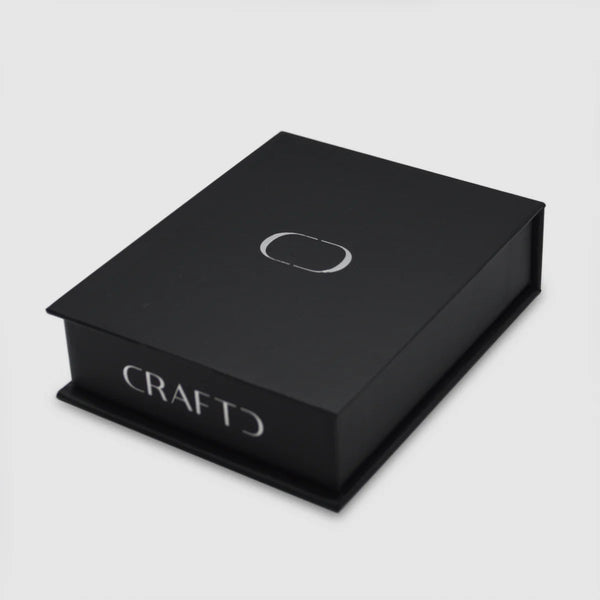
Luxury Gift Box (€5,99)
Choose your option
To My Boyfriend

To My Husband

To My Soulmate

To My Grandson

To My Brother

To My True Friend

To My Dad

A Symbol Of Strength

A Symbol of Luck

A Symbol Of Safe Travel

A Symbol Of Self Belief

A Symbol Of Adventure

The value of a gold ingot is its weight in troy ounces, multiplied by the current gold price, multiplied by its purity. That's the whole calculation.
What makes it feel complicated is that gold isn't weighed in normal ounces, the price changes every few seconds, and the number you can actually sell for is never quite the number you calculate.
Below is how to work it out properly, what the standard ingot sizes are, why you'll never get the spot price, and how any of it applies to gold jewellery you already own.
Jump to:
Three numbers, in this order.
1. The weight, in troy ounces. Ingots are usually sold by weight in grams or troy ounces. If yours is in grams, divide by 31.1035 to convert.
2. The current gold price. Gold is quoted per troy ounce, and it moves constantly through the trading day. The London Bullion Market Association publishes a benchmark price twice each working day, and any dealer will quote you a live figure.
3. The purity, as a decimal. A bar marked 999.9 is 99.99% gold, so multiply by 0.9999. A bar marked 995 is 99.5%, so multiply by 0.995.
Weight in troy ounces, times the gold price, times the purity. That gives you the metal value, and it's the number everything else is measured against.
We're not going to print a gold price here, and that's deliberate. Any figure written into an article is out of date within hours and badly wrong within a year. Look up the live price when you need it and do the sum yourself.
An ingot is a bar of refined metal cast or pressed into a standard shape and stamped with its weight and purity.
The word comes from Old English and describes the process rather than the object: something poured in, into a mould. It's the oldest way of storing metal in a form that's easy to weigh, stack and trade, and it hasn't changed much in several thousand years.
Ingot and bar mean the same thing in everyday use. The trade tends to say "bar" for the large cast ones and "ingot" for smaller pressed pieces, but nobody will misunderstand you either way.
Two things every legitimate ingot carries: its weight and its fineness, the purity expressed in parts per thousand. Most also carry a refiner's mark, and larger investment bars come with a serial number and an assay certificate confirming they've been independently tested.
There are two manufacturing types worth knowing apart. Cast bars are made by pouring molten gold into a mould, so they have slightly irregular surfaces and rounded edges. Minted bars are cut from a rolled sheet and pressed, giving sharp edges and a polished finish. Minted bars usually cost a little more to produce, which shows up in the price.
This is where most people's maths goes wrong.
Gold is weighed in troy ounces, not ordinary ounces. They aren't the same, and the difference is big enough to matter:
A troy ounce is about 10% heavier. So if you weigh a piece on kitchen scales and convert using the normal ounce, you'll undervalue it by roughly a tenth.
A few conversions worth having:
| Weight | In troy ounces |
|---|---|
| 1 gram | 0.0322 |
| 10 grams | 0.3215 |
| 31.1035 grams | 1 (one troy ounce) |
| 100 grams | 3.215 |
| 1 kilogram | 32.151 |
The troy system is a medieval survival, kept for precious metals long after everything else moved on. Gold, silver, platinum and palladium are all quoted this way.
Gold ingots are made in a wide range of sizes, from the size of a stamp to something you'd struggle to lift.
| Size | Notes |
|---|---|
| 1g to 5g | Small minted bars, often sold in card packaging. Highest premium per gram. |
| 10g to 20g | Common entry sizes. |
| 1 troy ounce (31.1g) | The most widely traded retail size worldwide. |
| 50g and 100g | Popular mid-range sizes. |
| 1 kilogram (32.15 troy oz) | The kilobar. A common wholesale unit. |
| 400 troy ounces (about 12.4kg) | The London Good Delivery bar, used for institutional settlement. |
The 400 ounce bar is the one people picture, because it's what fills vaults in films. In practice almost nobody outside central banks and bullion clearing houses handles one. They aren't exactly 400 ounces either: the specification allows a range, roughly 350 to 430 troy ounces, with each bar's actual weight recorded individually.
Purity standards differ by size. Small retail bars are typically 999.9 fine, near enough pure gold. Large Good Delivery bars have a minimum fineness of 995.0, which is lower than most people assume, and each carries an assay certificate confirming its exact content.
Here's the part that catches people out, and it's the most useful thing on this page.
The spot price is a wholesale reference, not a shop price. You will pay more than spot to buy, and receive less than spot to sell. The gap between those two numbers is the spread, and it's how dealers make their money.
Buying: you pay a premium over spot. That covers refining, minting, distribution and the dealer's margin. The premium is proportionally much larger on small bars, because the fixed costs of making and handling a 1g bar aren't much lower than for a 100g one. Buying ten 10g bars costs meaningfully more than buying one 100g bar of the same total weight.
Selling: you're offered below spot. How far below depends on the buyer, the size, and whether the bar is still in its original sealed packaging with its certificate. A recognised refiner's bar, sealed and certificated, sells closer to spot than a loose bar that needs re-assaying.
So the calculation earlier gives you the metal value, not the cash in your hand. Both numbers are worth knowing, and the difference between them is usually larger than people expect.
One UK and EU point worth knowing: investment gold meeting the required standards is exempt from VAT in the UK and across the EU, which is not true of silver. Rules change, so check the current position or ask an accountant before making any decision. We sell jewellery rather than bullion, so treat all of this as background rather than guidance.
Four stages, from ore to stamped bar.
Mining and extraction. Gold is separated from the surrounding rock, then processed to concentrate it. Raw mined gold is nowhere near pure.
Refining. The concentrate is treated with heat and chemistry to strip out the remaining metals. The two established industrial methods are the Miller process, which uses chlorine gas and reaches around 99.5% purity, and the Wohlwill process, which uses electrolysis and reaches 99.99%.
Casting or pressing. Cast bars are poured as molten gold into moulds. Minted bars are rolled into a sheet, cut to size and pressed.
Assaying and marking. The finished bar is tested to confirm its purity, then stamped with weight, fineness and refiner's mark. Investment bars are serial numbered and issued with a certificate.
Bars from refiners on the LBMA Good Delivery List are the ones accepted without question in the wholesale market, which is why provenance affects resale value.
Three ways of holding gold, and they behave differently.
Ingots are the most efficient way to hold metal by weight. The premium over spot is lowest on larger sizes, and the value is almost entirely the gold itself.
Coins carry a higher premium than bars of the same weight, because they cost more to produce and some carry collectable value on top of their metal content. They're also easier to sell in small amounts, since you can part with one coin rather than cutting up a bar.
Jewellery is the least efficient way to hold gold and the most enjoyable way to own it. You're paying for design, craftsmanship, finishing and a brand, none of which comes back when the piece is melted. Which is the right way round, because jewellery is made to be worn rather than stored.
The honest answer depends almost entirely on one thing: whether it's solid gold or plated.
Solid gold jewellery has real metal value. Work it out the same way as an ingot, using the carat to get the purity:
| Mark | Carat | Purity |
|---|---|---|
| 375 | 9 carat | 37.5% |
| 585 | 14 carat | 58.5% |
| 750 | 18 carat | 75% |
| 916 | 22 carat | 91.6% |
| 999 | 24 carat | Effectively pure |
Weigh the piece, convert to troy ounces, multiply by the gold price, multiply by the purity. Then expect a refiner or dealer to offer meaningfully less than that, because they have to cover melting, refining and their margin.
Note that 375 is 9 carat, which is the most common gold standard in Britain. It's sometimes wrongly listed as 10 carat, which is the American 417 mark.
Plated gold jewellery has effectively no metal value. The gold layer is measured in microns and amounts to a fraction of a gram, so there's nothing worth recovering. That isn't a criticism of plated jewellery, it's just what it is: you're buying the look and the wear rather than the metal. What gold plated means goes through the difference properly.
Check the hallmark before you assume anything. The stamp tells you whether a piece is solid gold and at what purity, and a full British hallmark means it's been independently tested rather than self-declared. Symbols stamped on jewellery is the full key to reading one, including the Assay Office marks.
And two things worth saying plainly. Antique or designer pieces are often worth considerably more intact than melted, so get anything old or signed valued before selling it for scrap. And gold-coloured jewellery stamped 925 is gold vermeil, which means the sterling silver underneath carries most of the metal value rather than the gold on top. 18K gold vs gold vermeil explains how that's built.
We're a jewellery brand, not a bullion dealer, so it's worth being straight about where we sit.
Our gold pieces are real 18 carat gold over a solid 316L stainless steel core. That construction is chosen for how it wears rather than what it weighs: steel doesn't rust, corrode or tarnish, so the piece holds up to being worn every day for years. What it isn't is a store of value. There's a fraction of a gram of gold on the surface, and if you melted it you'd get nothing worth having.
We also make gold vermeil, which is 18 carat gold over solid sterling silver, so those pieces do carry real precious metal, in the silver underneath.
If you want gold as metal, buy an ingot from a reputable dealer. If you want gold as something you wear, that's what we make, and the two are different purchases with different points. What gold represents covers why the second one has mattered to people for as long as the first.
Its weight in troy ounces multiplied by the current gold price, multiplied by its purity. A bar marked 999.9 is 99.99% gold, so a one troy ounce bar is worth almost exactly the spot price of an ounce of gold. What you'd actually be paid is somewhat less, because dealers buy below spot.
A bar of refined gold cast or pressed into a standard shape and stamped with its weight and purity. Ingot and bar mean the same thing in everyday use, though the trade tends to say bar for large cast pieces and ingot for smaller pressed ones.
There's no single answer, since they're made from one gram up to 400 troy ounces. The most widely traded retail size is one troy ounce, which is 31.1035 grams. The kilobar is one kilogram, or 32.15 troy ounces.
Multiply 400 by the current gold price per troy ounce, then adjust for fineness, which is at least 995.0 on a Good Delivery bar. In practice these bars aren't exactly 400 ounces: the specification allows roughly 350 to 430, and each bar's actual weight is recorded.
The unit used for precious metals, equal to 31.1035 grams. It's about 10% heavier than an ordinary ounce, which is 28.35 grams, so using the wrong one undervalues gold by roughly a tenth.
Because you're paying a premium over spot that covers refining, minting, distribution and the dealer's margin. The premium is proportionally larger on small bars, so ten 10g bars cost more than one 100g bar of the same total weight.
No. Spot is a wholesale reference, and dealers buy below it and sell above it. How close you get depends on the size of the bar, the refiner, and whether it's still sealed with its assay certificate.
Check the weight and dimensions against the manufacturer's published specification, since gold is very dense and fakes are almost always wrong on one or the other. Look for the refiner's mark, serial number and certificate. Buying from an established dealer, and keeping the bar in its original sealed packaging, matters more than any home test.
If it's solid gold, yes, and you can calculate it from the hallmark: 375 is 9 carat, 585 is 14 carat, 750 is 18 carat. If it's gold plated, there's a fraction of a gram of gold on the surface and effectively nothing to recover. Antique and designer pieces are often worth more intact than melted.
No. The gold layer is measured in microns, so there isn't enough to recover economically. Plated jewellery is bought for how it looks and wears rather than for the metal in it.
The maths is simple: weight in troy ounces, times the gold price, times the purity. The complications are that gold uses its own ounce, the price never sits still, and there's always a spread between what you'd pay and what you'd be paid.
For jewellery, the hallmark does most of the work. It tells you whether there's real gold in a piece and how much, which is the difference between something with metal value and something with none.
If you want to read a piece properly, symbols stamped on jewellery is the full key to the marks, and what 925 means covers the sterling silver side.

Jewellery or Jewelry: How to Spell It in Britain
In Britain it's jewellery, with two Ls. Here's why the American spelling drops one, which spelling every English-speaking country uses, how to pronounce it, and the third version that genuinely is ...
Read more
Men's Jewellery Trends: What Lasts and What Doesn't
In 2021 we called six men's jewellery trends. Four held, one faded, one changed shape entirely. Here's what actually lasted, and the pattern that explains why.
Read more

Leave a comment
This site is protected by hCaptcha and the hCaptcha Privacy Policy and Terms of Service apply.