
GIFT SETS
SHOP NOW

Popular searches

Cart
Your cart is empty
Your gifting options
Make your gift extra special with our luxury packaging options. Select a gift bag, gift box or a combination to create the perfect presentation.

Luxury Gift Box, Gift Bag & Wrapping Kit (€8,99)

Meaning Card (€2,50)
Add more meaning to your gift with a meaning card included with your order.
15 variations available

Gift Bag, Ribbon & Wrapping (€5,99)
The full CRAFTD gifting experience.
Includes: Premium CRAFTD gift bag, Ribbon & Wrapping Paper.
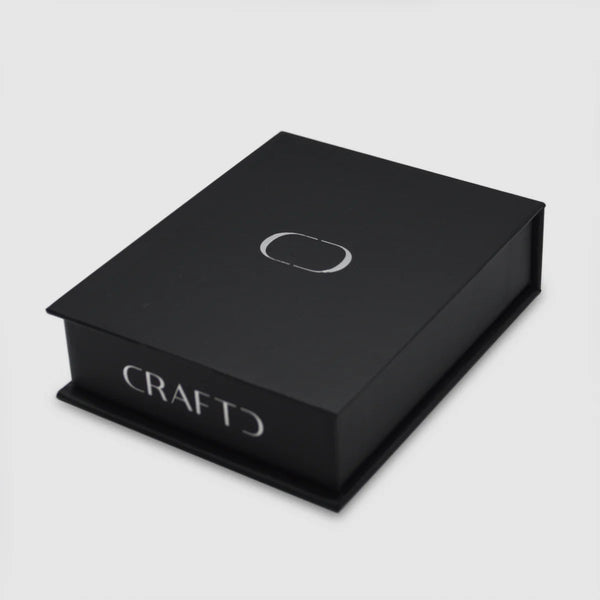
Luxury Gift Box (€5,99)
Choose your option
To My Boyfriend

To My Husband

To My Soulmate

To My Grandson

To My Brother

To My True Friend

To My Dad

A Symbol Of Strength

A Symbol of Luck

A Symbol Of Safe Travel

A Symbol Of Self Belief

A Symbol Of Adventure
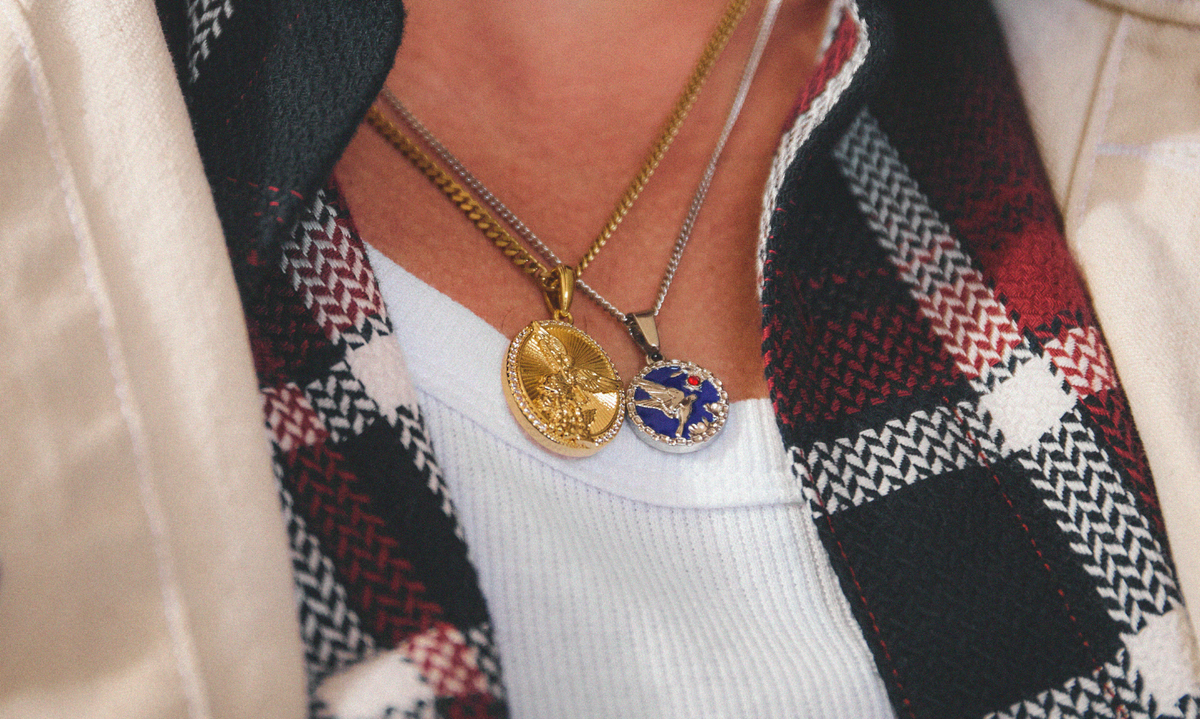
Some jewellery trends turn into things men wear for years without thinking about it. Others vanish so completely you forget they happened.
The difference between the two is more predictable than it looks. Trends that solve a practical problem stay. Trends that are interesting mainly because of who is wearing them don't. Once you know that, you can judge anything new in about ten seconds.
The rest of this page is that test, checked against our own homework. A few years ago we wrote up six trends we thought were worth paying attention to. Four held, one faded, and one changed shape into something we didn't see coming, so they make a decent set of worked examples, including the one we got wrong.
Jump to:
Verdict: the call that aged best.
When we called it, men wearing pearls still read as a statement borrowed from a red carpet. It felt like it might be a season. It wasn't.
What changed is that pearls stopped being a single dramatic strand and became a component. A few pearls set into a beaded bracelet, a pearl on a chain rather than a rope of them, pearls mixed with steel and stone rather than worn as a set. That reframing is what took it from costume to wearable, and it's why it stuck.
Why it lasted: it solved something. Men's jewellery had been almost entirely metal, and pearls introduced texture and a soft, warm colour without introducing anything fussy. They sit well against skin, they work with a plain t-shirt, and they don't shout.
We now make a full pearls range, and the pearl bracelet guide covers how real freshwater pearls are set and how to look after them.
Verdict: right, and it's now a category rather than a trend.
Beaded bracelets were already establishing themselves when we called it, and the prediction was that they'd keep going. They did, and they've broadened considerably: natural stone in more colours, more variety in bead size, and a lot more attention to what the stone actually is.
Why it lasted: they're the easiest possible entry point. A beaded bracelet costs less than a chain, it doesn't need sizing, it works with anything, and it's the piece most men own first. Anything that low-friction tends to stay.
The one real shift is that stone has moved from decorative to the point of the piece. Onyx, tiger's eye, malachite and the rest are now chosen for what they are rather than just their colour, which is why our gemstones range sits alongside the plain beaded pieces. The beaded bracelet and gemstone bracelet guides go through both.
Verdict: so right it stopped being a trend.
At the time, layering chains was something you did deliberately, and it read as a choice. Now it's simply how a lot of men wear necklaces, which is the strongest thing that can happen to a trend: it stops being noticeable.
Why it lasted: it makes a collection worth more than the sum of its parts. Once you own three chains you have far more than three looks, which is a genuinely good reason to buy a second one.
What has settled is the technique. Contrast in width and length is what makes a layered look read as intentional rather than accidental, and getting the lengths right matters more than the chains themselves. Our chain length guide covers where each length actually sits, and types of men's chains covers which styles layer well together.
Verdict: we got this one wrong, or at least early.
The colourful beaded choker, often with initials or small charms, was highly visible at the time and it has largely gone. It turns up occasionally, but it never became something men wear without thinking about it.
Why it faded: it was closely tied to a particular moment in music and to specific people wearing it, and it didn't do much beyond being noticed. It also sat awkwardly with everything else, since a bright multi-coloured piece doesn't layer with metal and doesn't work across a wardrobe.
Worth saying plainly, since we called it: the tell was that it depended on who was wearing it rather than on what it did. That's the most reliable warning sign in this whole piece.
Verdict: half right. The category grew, the specific prediction didn't.
We expected bold dangle and statement earrings to be the growth area. Men's earrings did grow substantially, but the shapes that won were the small ones: studs and huggie hoops rather than anything that hangs.
Why it went that way: comfort and repeatability. A stud can be worn every day, through work, sleep and the gym, and it doesn't catch on collars or headphones. A dangle earring is an occasion piece, and occasion pieces get worn a handful of times a year.
The hoop half of the call was right. Small hoops and huggies are now completely ordinary on men, which was much less true then.
If you're new to earrings, our guide to cleaning earring holes covers the part nobody talks about, which is that most sore-ear problems come from the earring rather than the ear. The earrings collection is where ours sit.
Verdict: broadly right, with the volume turned down.
Rings on men held up and became more normal. What didn't happen is the maximalist version. The rings that stuck are signets, plain bands and simple stone settings, worn one or two at a time rather than stacked across every finger.
Why it settled there: hands are in front of you all day, and they take more abuse than any other place you wear jewellery. Something you notice on yourself constantly needs to be something you like rather than something you're performing.
Line those six up and the same rule explains all of them.
Trends that lasted solved a practical problem. Pearls added texture to a category that only had metal. Beaded bracelets are cheap, easy and need no sizing. Layering makes a collection go further. Studs can be worn every day without thinking. In every case there's a functional reason underneath the aesthetic one.
Trends that faded relied on visibility. The beaded choker was interesting because of who wore it. The dangle earring was interesting because it was unusual. Neither made anything easier, and when the attention moved on there was nothing holding them up.
So the useful question when something new appears isn't "do I like this?" It's "what does this let me do that I couldn't do before?" If there's a real answer, it'll probably still be around in five years. If the answer is "be looked at", enjoy it, but buy accordingly.
Rather than call specific pieces, here are the shifts that look like changes in how men wear jewellery rather than seasonal noise.
Stone and colour. The clearest continuation of the beaded trend. Onyx, malachite, tiger's eye and pearl are doing what metal alone can't, which is bring warmth and variation.
Mixed metals. The rule against wearing gold and silver together has quietly collapsed. Mixing now reads as deliberate rather than careless, which opens up a collection considerably. Our guide to silver or gold jewellery covers the rules that make it work, and the useful one is to repeat each metal at least twice so it reads as a choice.
Weight and presence. Wider gauges and heavier pieces, worn singly rather than in a pile. A single substantial chain is doing what three thin ones did a few years ago.
Meaning over branding. Pendants chosen for what they represent rather than for a logo. That's the oldest thing in jewellery rather than a new one, but it's genuinely where attention has moved.
And the quiet one: materials. More people now ask what a piece is actually made of before buying it, which is a good development for anyone making things properly. Symbols stamped on jewellery is the full key to reading what a piece declares about itself.
Four rules that come straight out of the six calls above.
1. Ask what it does, not just how it looks. If a piece makes something easier, more versatile or more comfortable, it'll survive the trend it arrived on.
2. Buy the version you can wear on a Tuesday. The wearable form of a trend outlives the dramatic form almost every time. That's the whole story of studs beating dangles.
3. Check it plays with what you own. A piece that only works with one outfit gets worn once. A piece that layers with your existing chains gets worn constantly.
4. Buy something that lasts as long as your interest in it. The most expensive way to follow trends is buying cheap pieces that fall apart before you're bored of them. If you're going to wear something for a season, fine, but know that's the plan.
And one thing worth remembering: a trend you adopt early and keep wearing after everyone else stops isn't a trend any more. It's your style. That's usually the better outcome.
The directions that look structural rather than seasonal are stone and colour, mixed metals worn deliberately, heavier single pieces rather than many thin ones, and pendants chosen for meaning rather than branding. Pearls, beaded bracelets and chain layering have all moved from trend to established category.
Yes, and more so than when we first called it. What changed is the form: pearls are now used as a component in beaded bracelets and on chains rather than worn as a full strand, which is what took them from statement to everyday.
Layering is now the default way many men wear necklaces rather than a trend. The technique that makes it work is contrast in width and length, so the pieces read as a deliberate combination rather than an accident.
Yes, and it now reads as deliberate rather than careless. The rule that makes it work is to repeat each metal at least twice, so the mix looks chosen. Letting one metal dominate, rather than splitting evenly, also helps.
A beaded bracelet or a simple chain. Both are inexpensive, need no sizing, work with any wardrobe, and tell you quickly whether you enjoy wearing jewellery before you spend more.
They never really took hold. Men's earrings grew substantially, but studs and small huggie hoops won, because they can be worn every day without catching on anything. Dangle earrings remain an occasion piece.
Ask what it lets you do that you couldn't do before. Trends that solve something practical, like adding texture, layering better or being comfortable enough for daily wear, tend to stay. Trends that are interesting mainly because of who is wearing them tend not to.
Time, mostly. A classic is a trend that solved a real problem and then stopped being noticeable. Chain layering has more or less completed that journey in the last few years.
The trends that lasted all had a reason to exist beyond being noticed. The one that faded was interesting because of who wore it. That's most of what you need to judge whatever comes next.
If you're building rather than following, types of men's bracelets and types of men's chains are the two guides that cover the ground properly, and how to wear bracelets covers stacking without overdoing it.
How Much Is a Gold Ingot (Bar) Worth?
A gold ingot is worth its weight in troy ounces times the gold price times its purity. Here's how to do the sum, why gold uses its own ounce, and why you'll never get the spot price.
Read moreHow to Wear a Pocket Watch (Five Ways That Work)
A pocket watch is worn on a chain, anchored at one end, with the watch in a pocket. Here are the five arrangements that work, including the one for jeans, and how to read the hallmarks on an inheri...
Read more

Leave a comment
This site is protected by hCaptcha and the hCaptcha Privacy Policy and Terms of Service apply.