
GIFT SETS
SHOP NOW

Popular searches

Cart
Your cart is empty
Your gifting options
Make your gift extra special with our luxury packaging options. Select a gift bag, gift box or a combination to create the perfect presentation.

Luxury Gift Box, Gift Bag & Wrapping Kit (€9,44)

Meaning Card (€2,63)
Add more meaning to your gift with a meaning card included with your order.
15 variations available

Gift Bag, Ribbon & Wrapping (€6,29)
The full CRAFTD gifting experience.
Includes: Premium CRAFTD gift bag, Ribbon & Wrapping Paper.
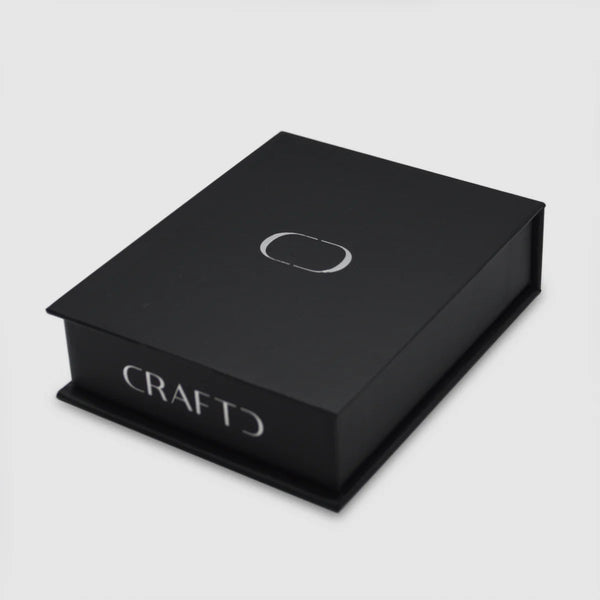
Luxury Gift Box (€6,29)
Choose your option
To My Boyfriend

To My Husband

To My Soulmate

To My Grandson

To My Brother

To My True Friend

To My Dad

A Symbol Of Strength

A Symbol of Luck

A Symbol Of Safe Travel

A Symbol Of Self Belief

A Symbol Of Adventure
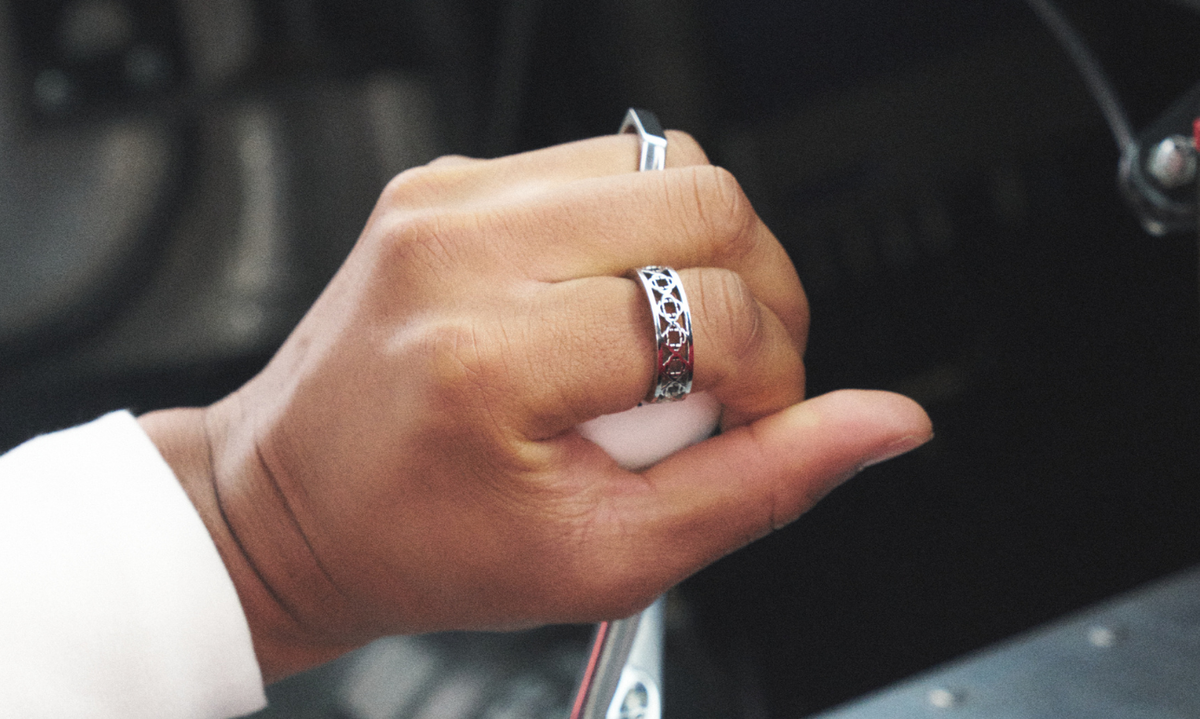
White gold isn't white.
That sounds like a technicality. It isn't. It's the single fact that explains almost everything people find confusing about white gold: why two pieces marked the same can look different, why a ring goes faintly yellow after a few years, and why the price doesn't behave the way you'd expect.
Underneath, white gold is a pale greyish-yellow. The bright, cold white you see in a jeweller's window is a coating. Once you know that, the rest of it makes sense.
Below we'll cover what white gold is actually made of, why the carat number changes its colour, how to read the hallmark, whether it contains nickel, and what it really costs to own.
Jump to:
White gold is real gold that's been mixed with pale metals to take the yellow out of it, then usually coated in rhodium to finish the job.
That's it. Two steps: an alloy, and a plating.
The gold content is the same as any other gold of the same carat. An 18 carat white gold ring contains exactly as much gold as an 18 carat yellow gold ring — 75% either way. Nothing has been removed. The remaining 25% is simply a different set of metals, chosen because they're pale rather than because they're yellow.
So white gold isn't a lesser gold, a substitute, or a cheaper alternative. It's the same gold wearing different company.
Gold is yellow. Aggressively so. And diluting it with pale metals doesn't turn it white, it just makes it less yellow.
What you actually get from the alloy alone is an off-white with a grey or faintly warm cast — closer to old pewter, or to slightly tarnished steel, than to anything you'd call bright. Some mixes come out greyer, some noticeably creamy. It's a perfectly attractive colour. It just isn't the colour people picture when they hear "white gold".
So the industry does something about it. Nearly every white gold piece sold at retail is plated in rhodium, a hard, brilliant, blue-white metal from the platinum family. The rhodium layer is what gives white gold that crisp, cold, mirror-bright white in the display case.
Which leads to the thing worth carrying away from this whole page: when you look at a white gold ring, you're mostly looking at rhodium. The gold is underneath, doing the structural and financial work, but the colour that sold you the piece is a coating a fraction of a micron thick.
And coatings wear. We've covered what that means in practice in white gold vs silver, because it's the fact that decides which of the two you'll be happier owning.
The 25% that isn't gold in an 18 carat piece varies by maker, and it isn't usually disclosed. Four metals do most of the work:
A piece described only as "white gold" tells you the carat and nothing about which of these is in it. That's not an oversight in the labelling so much as an industry habit, and it's why the same phrase covers pieces that behave quite differently on skin and in the hand.
If you're being sold white gold and it matters to you, the question worth asking is simply: palladium or nickel? A good jeweller will know.
Carat measures gold content, and it works identically for white and yellow gold.
Here's the counter-intuitive bit, and it's the part that's genuinely useful:
Lower carat white gold is naturally whiter. Less gold means more alloy, and it's the alloy doing the whitening. A 9 carat white gold piece is paler on its own than an 18 carat one, because the 18 carat piece is three quarters yellow metal fighting back.
Which means the trade-off runs in an unexpected direction. 18 carat white gold is worth more and is the more prestigious buy, but it's the one that shows a warmer cast sooner when the rhodium wears, because there's more yellow sitting underneath. A 9 carat piece has less gold in it and holds a whiter appearance for longer without help.
Neither is better. But if someone tells you higher carat is straightforwardly the better choice in white gold, they're describing value rather than colour, and those two answers pull in opposite directions here.
There is no "white gold" hallmark. This trips people up constantly, and the reason is simple: a hallmark certifies how much gold is in a piece, not what colour it is.
So white gold carries the ordinary gold fineness marks:
A silver-coloured piece stamped 750 is 18 carat white gold. A silver-coloured piece stamped 925 is sterling silver, which is a different metal entirely.
In the UK, hallmarking gives you more than a number. Hallmarking is legally required on gold items above 1 gram sold as precious metal, and a full UK hallmark carries three compulsory marks together:
That's a stronger guarantee than most countries offer, and it's independently applied rather than self-declared. Worth knowing that a piece above that weight being sold to you as solid gold, with no hallmark at all, is a fair question to raise.
For the silver equivalent, what 925 means covers the sterling hallmark in the same detail.
Yes, and not in a hedged way.
White gold is solid gold throughout, at whatever carat it's marked. It isn't plated gold, it isn't gold-filled, and it isn't an imitation. An 18 carat white gold chain and an 18 carat yellow gold chain of the same weight contain the same quantity of gold and carry the same material value.
The confusion comes from the rhodium, and it's an understandable mix-up. Because white gold has a plating on it, people assume the gold itself must be a surface treatment too. It isn't. The rhodium is cosmetic; the gold underneath is the object.
This is a genuinely different thing from gold plating, where a base metal carries a thin gold coating and the gold is only ever a surface. What gold plated means covers that side, and 18K gold vs gold vermeil covers the third arrangement, where gold sits over solid sterling silver.
Three different constructions, routinely confused, and the difference is worth understanding before you spend.
Up front, white gold is priced against yellow gold of the same carat. Sometimes slightly higher, because palladium is expensive and rhodium plating is an extra manufacturing step. The gold content is identical, so the material floor under the price is the same.
Over time is where white gold differs from every other solid gold, and it's the part that doesn't get mentioned at the counter.
The rhodium wears through. On a ring worn daily it can go within a year or two, because hands take more abrasion in a week than a neck does in a year. On a pendant or a chain it can last many years. When it goes, the piece doesn't look broken — it looks slightly tired, and takes on a faint warm cast, usually unevenly and usually at the back of a band or on high points first.
Restoring it means re-plating at a jeweller. Routine work rather than a repair, but it costs money and it recurs. Yellow gold has no equivalent; it just gets polished.
So the honest summary is that white gold has a small ongoing cost of ownership that yellow gold, sterling silver and steel don't. It isn't a reason to avoid it. It's a reason to know before you buy, rather than being surprised in year three. If you own white gold rings, how to clean gold rings covers keeping the finish for as long as possible, and how to clean gold jewellery handles every other type.
Sometimes. And "sometimes" is the entire problem, because the label never says.
Nickel white gold uses nickel as the whitening alloy. It's cheaper, it whitens strongly, and nickel is the most common contact allergy there is.
Palladium white gold uses palladium instead. It costs more and is far better tolerated.
While the rhodium plating is intact, neither will bother you, because rhodium is inert and nothing beneath it touches skin. Trouble starts when the plating wears through on a nickel piece — and that's precisely when people stop suspecting the jewellery, because they've worn it happily for two years and nothing has visibly changed.
UK and EU rules limit how much nickel jewellery in prolonged skin contact may release, so a hallmarked piece from a reputable UK seller is far less likely to cause a problem than something unmarked bought cheap online. But if you know you react to nickel, treat "white gold" as an incomplete answer and ask which kind before you buy.
Four metals compete for the same silver-toned look, and they're genuinely different propositions.
White gold is solid gold with a rhodium coat. Real material value, and a recurring re-plating cost.
Platinum is naturally white all the way through, denser and rarer than gold, and the most expensive of the four. It doesn't need plating, and it develops a soft matte patina over the years that some people prefer and some have polished off.
Sterling silver is 92.5% silver, its colour goes all the way through, and it tarnishes — which polishes off at home in a couple of minutes, for free. A real precious metal at a fraction of the price. Ours sit in the sterling silver collection.
Stainless steel isn't precious and has no material value, but it doesn't tarnish, corrode, fade or need plating, and it's the most durable of the four in daily wear.
The useful question isn't which is best. It's whether you're buying the metal or the look. If it's the metal, that's white gold, platinum or sterling. If it's the look, and you want it to stay that way with nothing asked of you, white gold is an expensive route to it. White gold vs silver takes that comparison properly.
We don't make white gold, so treat this as context rather than a pitch.
Our silver-toned pieces come two ways. Genuine 925 sterling silver, for anyone who wants a real precious metal — it'll tarnish eventually and polish straight back, because the silver goes all the way through. And solid 316L stainless steel finished in rhodium, for anyone who wants the look with almost no upkeep at all. It has a finish, but unlike white gold that finish sits on a metal that's already silver-coloured and already inert — so there's nothing yellow waiting underneath and nothing to re-plate.
Our gold pieces are real 18 carat gold over a steel core, with rhodium as the barrier layer rather than the nickel much of the industry uses, and we make gold vermeil over solid sterling silver for anyone who wants a precious metal underneath.
None of it needs a jeweller on a schedule. That's a deliberate choice about what men actually want from jewellery they wear every day, rather than a comment on white gold, which is a fine material if you go in knowing how it works.
Real gold alloyed with pale metals such as palladium, nickel, silver and zinc to reduce its yellow colour, then usually plated in rhodium to make it properly white. The gold content is the same as yellow gold of the same carat.
Yes. It's solid gold throughout at whatever carat it's marked, not a plating or an imitation. An 18 carat white gold piece contains exactly as much gold as an 18 carat yellow gold piece of the same weight, and carries the same material value.
Because gold is strongly yellow, and alloying it with pale metals reduces the yellow rather than removing it. What the alloy alone produces is a greyish, faintly warm off-white. The bright white you see in a shop is a rhodium plating on top.
Gold plus whitening alloys. Palladium is the premium choice, nickel the cheap and effective one, with silver, zinc and manganese also used. The proportions vary by maker and aren't usually disclosed, so “white gold” on its own doesn't tell you what's in the alloy.
Usually 9, 14 or 18 carat — 375, 585 and 750 respectively. There's no such thing as 22 or 24 carat white gold, because at that purity there isn't enough alloy left to take the yellow out.
It depends what you mean by better. 18 carat has more gold and more value. 9 carat is naturally whiter, because more alloy means more whitening, so it holds a white appearance longer once the rhodium wears. Value and colour pull in opposite directions here.
The standard gold fineness marks: 375 for 9 carat, 585 for 14 carat, 750 for 18 carat. There's no separate white gold hallmark, because a hallmark certifies gold content rather than colour. A silver-coloured piece marked 925 is sterling silver, not white gold.
Sometimes. Nickel white gold uses nickel as the whitening alloy; palladium white gold uses palladium and is much better tolerated. Neither causes problems while the rhodium plating is intact. If you react to nickel, ask which type you're being sold.
Yes, periodically. The rhodium plating wears through, faster on rings than on chains, and the piece takes on a warmer cast as the gold beneath shows. Re-plating is routine jeweller's work rather than a repair, but it costs money and it recurs.
The rhodium has worn through and you're seeing the gold alloy underneath, which is naturally a greyish, faintly yellow colour. Nothing is wrong with the piece and it hasn't been mis-sold. It needs re-plating.
White gold is real gold that's been persuaded to look like something else, and the persuading is done by a coating rather than by the gold.
Know the carat, ask whether it's palladium or nickel white, and go in expecting to re-plate it now and then. Do that and it's a good material. Buy it thinking it's a permanently white metal and it'll quietly disappoint you around year three.
If you're choosing between metals, white gold vs silver is the comparison in full. Or have a look through our sterling silver collection if you're after a white metal that asks nothing of you.

White Gold vs Silver: What's the Difference? (And the Cost Nobody Mentions)
White gold and sterling silver look nearly identical and age completely differently. Here's what each one actually is, the rhodium plating nobody mentions at the counter, and which is genuinely low...
Read more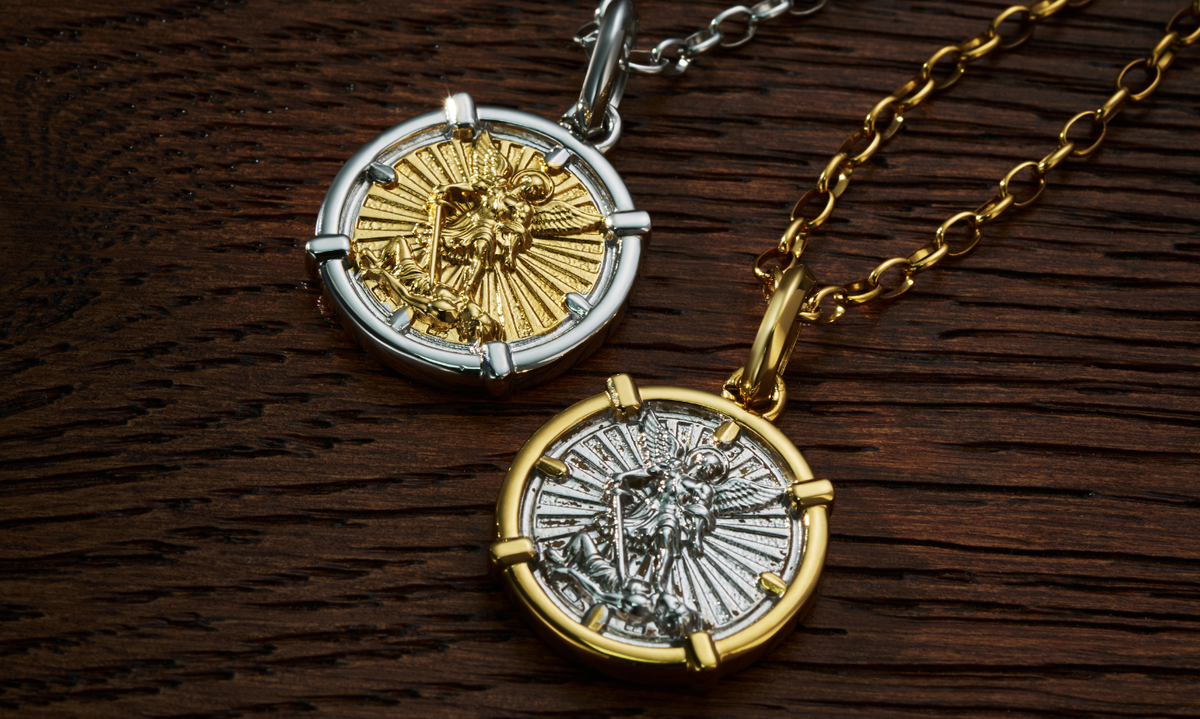
Silver or Gold Jewellery: How to Choose (And Why You Might Not Have To)
Silver or gold is the wrong question. Here's what actually decides which suits you, what skin tone really tells you, and why mixing the two is now the most deliberate thing you can wear.
Read more

Leave a comment
This site is protected by hCaptcha and the hCaptcha Privacy Policy and Terms of Service apply.