

GEMSTONES






Broken Chain? What to Do Before You Replace It
If your chain breaks, take it off, gather every piece, including the clasp and any loose rings, and find where it gave way. A broken clasp or an opened jump ring is usually a quick fix, and a snapped link can almost always be joined again. If the chain is under warranty, claim before anyone repairs it.
That last point catches more people out than you'd think. Below, we go through the next steps in order: what to do straight away, how to read the break, what our warranty covers, the one repair worth trying yourself and when to hand it to a jeweller.

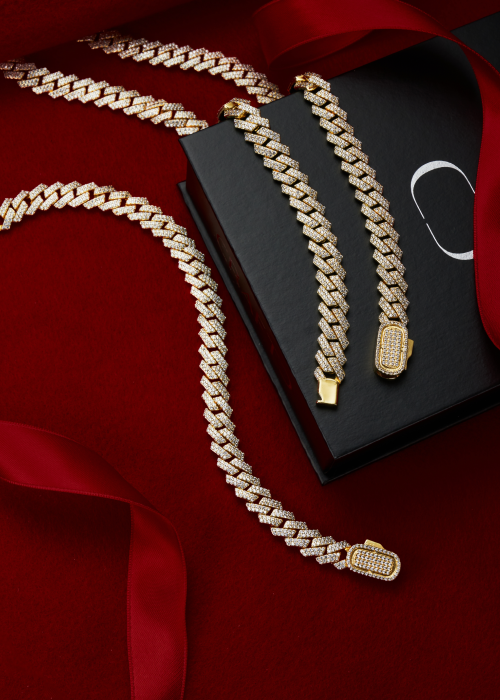
Heavier links, and a clasp made to carry them. Featured: Cuban (Gold) 8mm.
Jump to:
- The first few minutes
- Clasp, jump ring or link
- Claiming on our warranty
- The one fix to try at home
- Handing it to a jeweller
- Why chains snap
- Choosing a chain that holds
- FAQs
Stop Wearing It and Keep Every Piece
When a chain gives way, the instinct is to knot the two ends together, or hook the clasp through whichever link is nearest, and carry on with your day. Don't. A knot puts a kink in the links that may never come out, and a clasp hooked through the wrong spot loads a single link until that fails too.
- Search where you were standing. Check your collar, your pockets, your bag and the floor. The clasp and the tiny rings are what make a repair simple, and they're easy to lose.
- Bag it up. Put everything in a small zip bag or an envelope so no part goes missing between now and the fix.
- Don't squeeze anything shut. Pressing a bent link or ring closed with your fingers or teeth can crack it, particularly on a fine chain.
- Take a photo now. A sharp picture of the break, before anyone handles it, is exactly what a warranty claim or a jeweller will want to see.
If the chain has knotted as well as snapped, deal with the knot first; our necklace untangling guide covers the gentle methods.
Clasp, Jump Ring or Link: Where Did It Give Way?
A chain can only fail in a handful of places, and every one needs a different fix. If the names are unfamiliar, our anatomy of a necklace guide labels every one.
| Where it broke | What you'll notice | The usual fix |
|---|---|---|
| Clasp | It won't close, the spring feels slack or the trigger sticks | A replacement clasp fitted by a jeweller |
| Jump ring | The chain is in one piece but has come away from its clasp or end ring, often leaving a small open ring behind | Closing or swapping the ring, sometimes possible at home |
| Link | A link along the length has split or pulled apart, leaving two separate pieces of chain | Rejoining the link with solder or a laser weld, done by a jeweller |
| Pendant bail | The chain is fine, but the pendant has dropped off | Closing or replacing the bail, or the ring that holds it |
The reassuring part is the top half of that table. Clasp and ring failures tend to be the most common breaks, and they're the simplest to put right, because the body of the chain hasn't been touched.

The clasp and the rings beside it are where most breaks start. Featured: Cuban (Gold) 4mm.
Is It Covered? Claiming on Our Lifetime Warranty
Every CRAFTD piece is backed by our lifetime warranty against manufacturing defects, and snapped chains, broken clasps and faulty mechanisms are all named in what it covers. If one of ours breaks through a fault, we'll repair or replace it, and the replacement carries exactly the same cover.
To start a claim, email hello@craftdlondon.com with three things:
- A clear, new photo of the break. We can't process a claim without one, and photos from an earlier claim aren't accepted.
- Your order number.
- A short description of what happened.
We'll come back to you with the next steps.
Claim first, repair later. Any change to the original piece, including resizing, engraving or other modifications, voids the warranty. A repair carried out elsewhere changes the piece, so speak to us before you take it anywhere, even if there's a repair shop round the corner.
The warranty doesn't extend to pieces that are lost or stolen, damaged on purpose or by someone else, or worn far beyond normal use. Outside of that, it's there for life.

Photograph the break before anyone touches it. Featured: Cuban (Sterling Silver) 4mm.
The One Fix Worth Trying at Home
On a chain that isn't under warranty, there's one repair you can safely do yourself: closing a jump ring that has opened up. The chain slides out through the gap, but the ring itself is usually fine.
- Use two pairs of flat-nosed pliers. Pliers with ridged jaws will mark the metal, so wrap the tips in tape if they're all you've got.
- Thread the ring back on. Pass it through the last link and through the clasp's loop.
- Bring the ends back together sideways. Hold each side of the gap with one pair of pliers and rotate them back towards each other. Pulling the ring outwards into an oval weakens it.
- Check the join. The two ends should meet flush, with no gap a link could work its way through.
Everything beyond that belongs with a professional. A split link, a clasp with a broken spring or a ring that has cracked rather than bent all need proper tools, and superglue only makes the eventual repair harder.
Repairs That Need a Jeweller
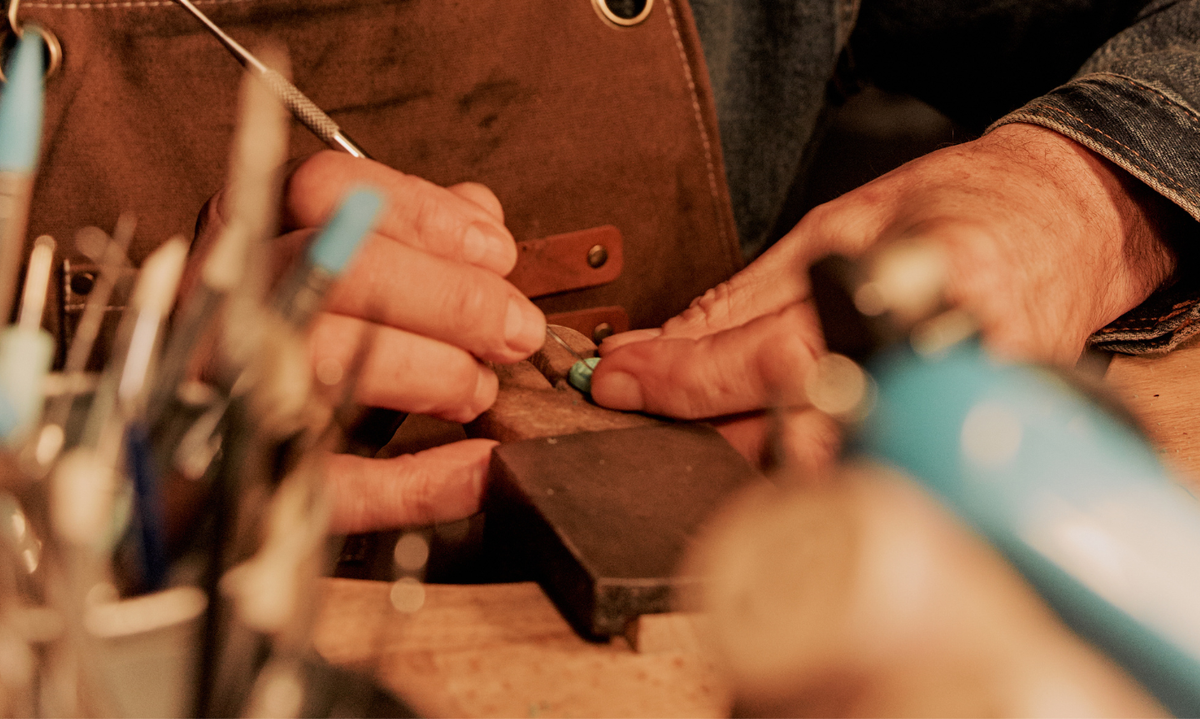
A jeweller can rejoin a snapped link, fit a new clasp or replace a worn ring, often while you wait or within a few days. How straightforward it is comes down to the metal.
- Solid gold and 925 silver. Both take solder well, so a broken link can be joined and polished until the repair is hard to spot. That makes sterling chains like our Cuban (Sterling Silver) 4mm among the simplest to repair.
- Gold vermeil. The silver underneath solders like any sterling piece, but the gold around the join may need refreshing afterwards.
- Plated stainless steel. Steel resists ordinary solder, so a link is usually laser welded instead, and the plating around the join may need redoing. Not every high-street jeweller offers laser welding, so ask before you leave it.
Get a quote first, and ask exactly what they plan to do: a new clasp, a new ring or a rejoined link. If the chain is one of ours and the break is a fault, the warranty route costs you nothing at all.

Wide, closed links leave nothing to pull open. Featured: Cuban (Silver) 12mm.
Why Chains Snap in the First Place
Chains rarely break out of nowhere. Most failures come down to one of the following:
- A sudden snag. A jumper collar, a seatbelt, a child's grip or a bag strap can put more force through a chain in one second than months of ordinary wear.
- Sleeping in it. Turning over at night twists and drags the chain against the pillow for hours, tiring the clasp and the smallest rings.
- A pendant too heavy for the chain. A weighty pendant hung from a thin chain loads one point, the bail, every time you move. Our chain width guide shows which widths suit which pendants.
- Wear where parts meet. Where a jump ring rubs against a clasp or a bail day after day, the metal slowly thins.
- Training and contact sport. Lifting, grappling and ball games are where chains get caught. Take it off first.
- Loose storage. Chains dropped into a drawer together tangle, and tangles get yanked. Our advice on storing necklaces properly keeps each one apart.

Our most popular width, and a sensible everyday margin. Featured: Cuban (Gold) 4mm.
Choosing a Chain That Holds
If you're replacing a chain that let you down, look past the price and check three things: the width, the style of link and the fastening.
- Width for the job. Anything under 2mm is delicate by nature. For everyday wear, or anything carrying a pendant, 4mm and above gives you a margin.
- Closed links. On a well-made Cuban, each link is closed shut rather than left with a split, so there's no opening that could spread under strain.
- A clasp matched to the weight. Our Cuban (Gold) 4mm and Cuban (Silver) 4mm fasten with snap-proof lobster clasps. At 6mm and wider, chains like the Cuban (Gold) 8mm and Cuban (Silver) 8mm carry our signature snap-proof clasp, made to handle heavier links, and the Cuban (Gold) 12mm and Cuban (Silver) 12mm go wider still.

Snap-proof lobster clasp, worn every day. Featured: Cuban (Silver) 4mm.
Underneath the colour, each of these chains is stainless steel under a layer of 18K gold or rhodium. It shrugs off showers and rain, the steel releases very little nickel, and every piece carries the same lifetime warranty. If you'd prefer a precious metal any jeweller can work on for decades, the Cuban (Sterling Silver) 4mm is hallmarked 925 silver throughout. For the full range, browse our silver chains or gold chains.

The signature snap-proof clasp on our 8mm, made for heavier links. Featured: Cuban (Silver) 8mm.

Made to stay closed, and covered for life. Featured: Cuban (Gold) 12mm.
Broken Chain FAQs
Can a snapped chain be repaired?
Almost always. A jeweller can rejoin a broken link, fit a new clasp or replace a jump ring. Very fine and hollow chains are harder to work on, but most solid chains can be put right.
What does a chain repair usually cost?
The price comes down to the metal and what failed. Closing a jump ring or fitting a new clasp is usually a small job, while rejoining a link on plated steel costs more because it often needs laser welding and fresh plating. Ask for a quote before any work starts.
Can I fix a broken chain myself?
Only if a jump ring has opened, which two pairs of flat-nosed pliers will close. A split link or a broken clasp needs a jeweller, and glue won't hold either for long.
Does a lifetime warranty cover a broken chain?
Ours does when the break is a manufacturing defect. Snapped chains, broken clasps and faulty mechanisms are all covered with a repair or a replacement. Loss, theft, deliberate damage and excessive wear are not.
Should I get my chain repaired before making a warranty claim?
No. Any modification to the original piece voids our warranty, so email us a photo, your order number and a description first, and we'll tell you what happens next.
Can a stainless steel chain be soldered?
Not easily. Steel resists ordinary solder, so jewellers usually laser weld it instead. Check that a jeweller offers laser welding before you leave a steel chain with them.
Why does my chain keep breaking at the clasp?
Usually because the jump ring has worn thin or the clasp spring has lost its tension. Both are under strain whenever the chain goes on or comes off, and replacing them together normally ends the problem.
Is it safe to sleep in a chain?
It's best not to. Hours of twisting against a pillow strain the clasp and the smallest rings, and a fine chain can catch and snap. Take it off at night and keep it flat or hanging.
Back Where It Belongs
A broken chain feels final, but it rarely is. Keep the pieces, work out what gave way, and if it's one of ours, send us a photo before anything else.
A good chain is worth mending. So are plenty of other things, and we make that case in full in Fix It or Bin It? The Case for Things Worth Mending.
Whether you're mending a favourite or starting again, our chains are made to go the distance, and a little cleaning keeps a new one looking right.
Read more
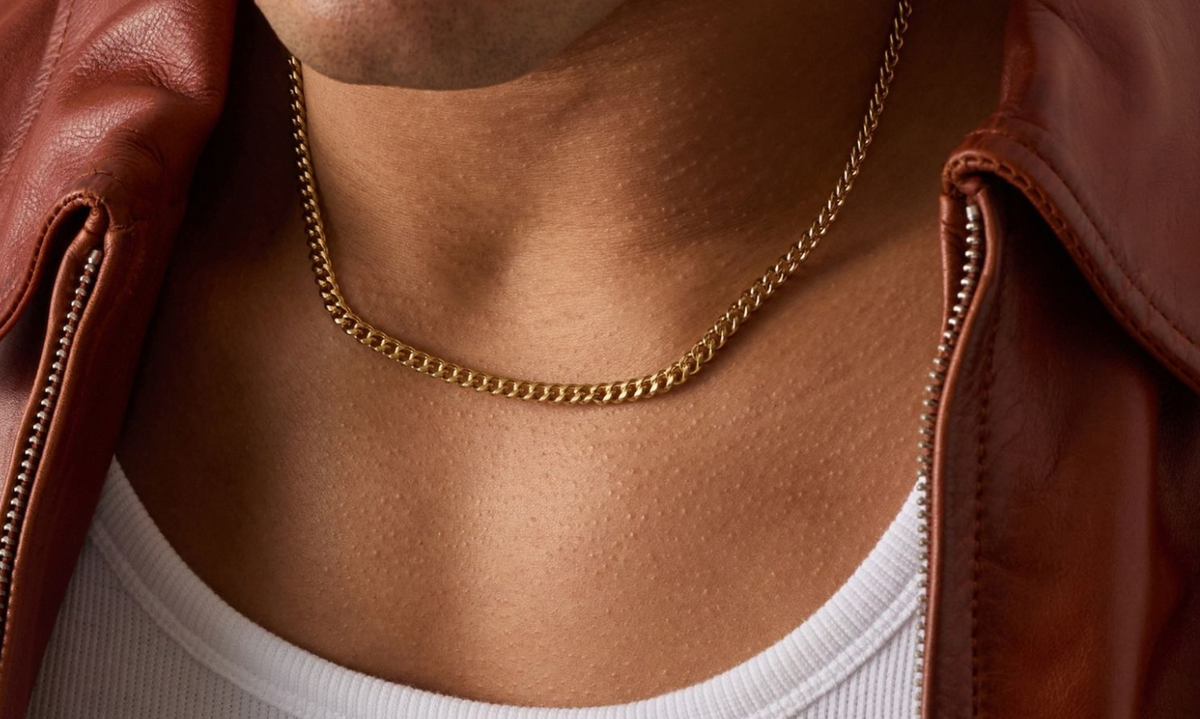
Why Does Jewellery Turn Your Skin Green?
That green line on your finger or neck has a simple cause. Here’s what it is, which metals leave it, how to wash it off and how to choose jewellery that won’t do it.
Read more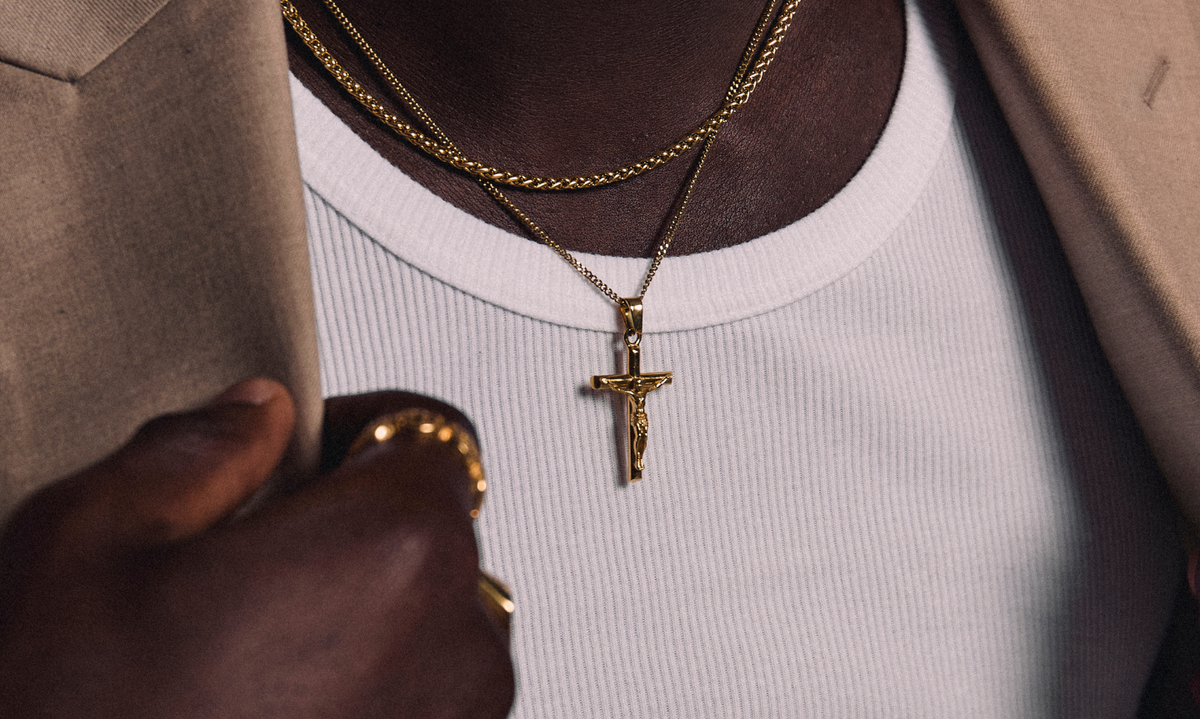
How to Layer Necklaces for Men
Two or three chains, worn well, say more than any single piece ever could. Here’s how to space them, mix widths and metals, choose where a pendant goes and keep everything from tangling.
Read more
Leave a comment
This site is protected by hCaptcha and the hCaptcha Privacy Policy and Terms of Service apply.