

Edelsteine




Artikel: Which Ear Should a Man Wear an Earring In? Left, Right or Both


Which Ear Should a Man Wear an Earring In? Left, Right or Both
Men can wear an earring in the left ear, the right ear or both. There's no rule and no hidden meaning today: the right side is simply whichever suits your face, your hair and the way you carry yourself. If you can't decide, choose the ear people see most when they talk to you.
Below, we trace how the notion of a correct ear began, a simple way to pick your side, whether to wear one earring or two, and which styles hold their own on a single ear.

One earring, one side, no rules. Featured: Dagger Earring (Silver).
Jump to:
- Either ear works
- How the notion began
- What it means today
- Choosing your side
- One earring or a pair
- Matching style to ear
- Beyond the lobe
- New piercing care
- FAQs
The Short Answer: Either Ear Works
Left, right or both: all three are normal, and nobody reads anything into the choice any more. What matters far more is the earring itself, how it sits on your lobe, and whether it works with everything else you have on.
If you're starting out, one small earring in one ear makes a gentle start. Every one of our earrings is sold singly or as a pair, so you only pay for what you'll actually wear.
How the Notion of a Correct Ear Began
Men wearing earrings is nothing new. In Elizabethan England, a single earring, often a pearl or a small gold hoop, was a fashionable mark of a well-dressed man, and several surviving portraits from the time show a man wearing just one. Sailors were long said to wear a gold earring as a charm against drowning, a story that is more folklore than fact but has lasted for centuries.
As earrings moved back into men's style during the twentieth century, people liked to claim that the side carried some sort of message. The supposed rules changed from place to place and decade to decade, which says a lot about how much they ever meant.
Does the Side Mean Anything Now?
No. Today the side is a style decision and nothing more. Footballers, musicians and men in every kind of job wear a single earring on whichever side they like, and plenty switch sides over the years. If anyone asks, the best answer is the simplest: it's the side you prefer.
How to Choose Your Side
If you'd still like a reason to pick one ear over the other, these are the practical ones:
- Your best angle. Most people have a side they favour in photos or the mirror. An earring draws the eye, so put it where you'd want attention to land.
- Your hair. A side parting or a fade that's shorter on one side leaves that ear more open, so the earring shows. Longer hair over an ear hides it.
- Your phone and headphones. If you always take calls on one side, a hoop or charm on that ear will knock against the handset. Wear it on the other ear, or keep a flat stud there.
- The side you sleep on. A fresh piercing is more comfortable on the side you don't lie on, so this matters most for a first hole.
- Your stronger hand. Fastening a stud back is easier on the ear nearest your dominant hand, which helps if you change earrings often.
None of these are rules. If two point different ways, go with whichever ear you like looking at.

A small, flat stud makes an easy first earring. Featured: Round Stud Earring (Gold).
One Earring or a Pair?
One earring feels relaxed and a little individual; a matching pair feels balanced and finished. Neither is more correct. A single works well when you want one point of focus, perhaps next to a chain or ring, while a pair suits cleaner, smarter looks where symmetry counts.
Because our earrings are sold singly or as a pair, you can start with one and add its partner later. The Round Stud Earring (Gold) and Round Stud Earring (Silver) are the simplest starting point either way.

A hoop brings more presence when it's worn alone. Featured: Cuban Hoop Earring (Gold).
Matching the Earring to the Ear
The style you pick changes how a single earring comes across.
- A small stud. Quiet and easy to wear anywhere. A Diamond Stud Earring (Gold) adds a point of light; a Cross Stud Earring (Silver) adds meaning without adding size.
- A hoop. More presence, especially worn alone. The Cuban Hoop Earring (Gold) carries the interlocking link of our Cuban chains, while the Chunky Hoop Earring (Silver) is wider and smoother.
- A charm hoop. A slim hoop carrying a small charm, like the Cross Earring (Gold), Crucifix Earring (Gold) or Dagger Earring (Silver). These swing as you move, so they look best as the only earring on that side.
Wearing both ears? They don't have to match. Pairing a stud with a charm or hoop on the opposite ear is a relaxed way to wear two, provided the metals sit well together. For the full line-up, our earring styles guide compares them all.

Meaning without size. Featured: Cross Stud Earring (Silver).

Wider and smoother, for a bolder single. Featured: Chunky Hoop Earring (Silver).

Charm earrings move as you do, so give them a side of their own. Featured: Crucifix Earring (Gold).
Beyond the Lobe: Second Holes and Upper-Ear Piercings
Once one earring feels natural, some men add a second hole in the same lobe, just above the first, or go higher into the upper ear. A compact stud or snug hoop suits those spots best, where there's less room and less movement. Two pieces in one ear look deliberate when one is clearly smaller than the other.
Upper-ear piercings go through cartilage rather than the soft lobe, so they usually take longer to settle. Have them done by a professional piercer, and follow their advice on when the hole is ready for a new earring.

Two in one ear works when each has its own space. Featured: Dagger Earring (Silver).
Looking After a New Piercing
A new hole needs a little patience before you start swapping styles. Follow the aftercare your piercer gives you, keep your hands off it as much as possible, and wait until they say it has healed before changing earrings.
Once it has settled, a quick clean keeps the piercing and the earring comfortable. Our guides to cleaning earring holes and keeping earrings clean cover the routine, and if your ears are sensitive, our explainer on hypoallergenic metals is worth a read.

A flat stud is the easiest piece to live with day to day. Featured: Diamond Cross Stud Earring (Gold).
Which Ear: FAQs
Is it better to wear an earring in the left or right ear?
Neither is better. Choose the side that faces people most, the side your hair leaves open, or simply the one you prefer looking at.
Does the ear a man wears an earring in mean anything?
Not today. Any meaning once attached to a particular side has long faded, and the choice is now purely about style.
Should my first earring be a stud or a hoop?
A small stud is the gentlest first choice. It sits flat, catches less on clothes and phones, and goes with everything. Try a hoop once you're used to wearing one.
Can I wear just one earring if both ears are pierced?
Yes. Plenty of men with two healed piercings wear a single earring, and you can switch sides whenever you like.
Do men wear earrings in both ears?
Many do. Two matching earrings give a balanced look, while different styles on each side, such as a stud and a charm hoop, look more relaxed.
Can I buy a single earring rather than a pair?
Yes. All our earrings are sold singly or as a pair, so you can start with one and add the second later.
Should my earring match my other jewellery?
The metals should sit well together, but they don't have to match. Mixing gold and silver works when it looks intentional, such as a silver earring worn with a gold chain and silver rings.
Which earrings look best worn on their own?
A stud with a bit of presence, like a diamond stud, or a compact hoop holds its own as a single. Very tiny studs can look as though they're missing a partner.
Pick a Side and Wear It Well
Left, right or both, the best side is the one you'll wear with confidence. Start with one piece, see how it sits, and build from there.
When you're ready to choose yours, explore every style in our earrings collection.
Read more
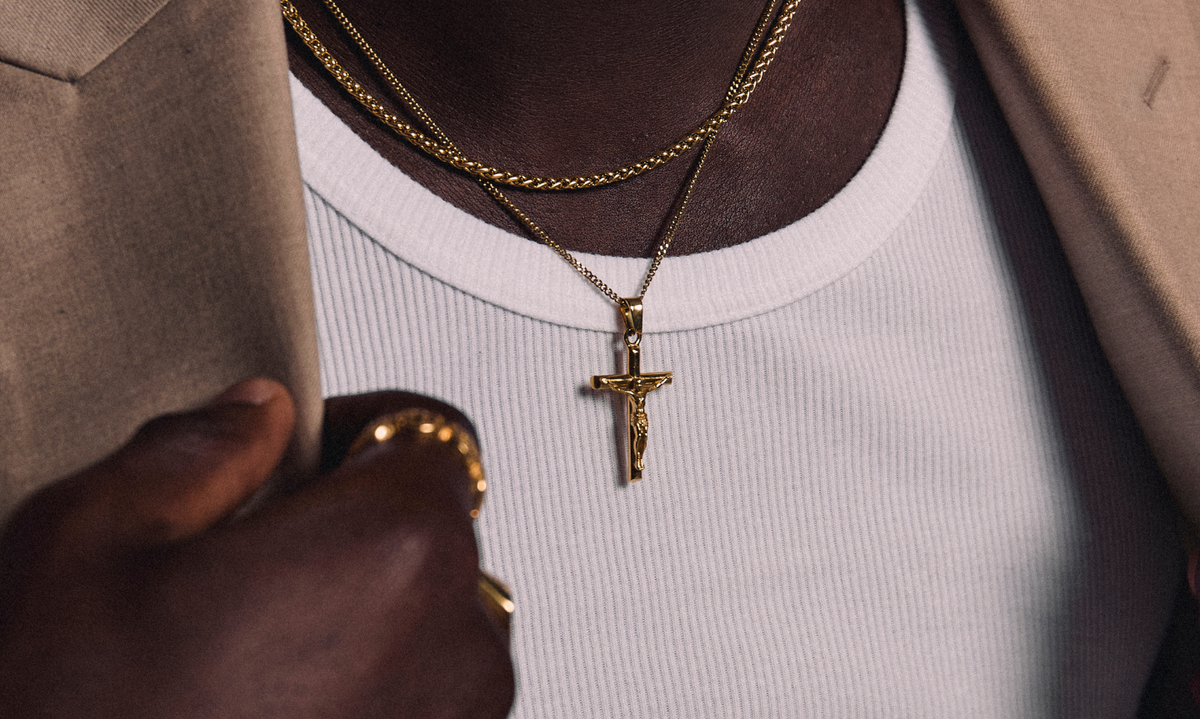
How to Layer Necklaces for Men
Two or three chains, worn well, say more than any single piece ever could. Here’s how to space them, mix widths and metals, choose where a pendant goes and keep everything from tangling.
Weiterlesen
Hinterlasse einen Kommentar
Diese Website ist durch hCaptcha geschützt und es gelten die allgemeinen Geschäftsbedingungen und Datenschutzbestimmungen von hCaptcha.