
Most gifted
Shop now


Cesta
La cesta está vacía
Your gifting options
Haz que tu regalo sea aún más especial con nuestras opciones de embalaje de lujo. Selecciona una bolsa de regalo, una caja de regalo o una combinación para crear la presentación perfecta.

Caja de Regalo de Lujo, Bolsa de Regalo y Kit de Envoltura (€8,99)

Tarjeta de significado (€2,50)
Añade más significado a tu regalo con una tarjeta con mensaje incluida en tu pedido.
15 variations available

Bolsa de Regalo, Cinta y Envoltura (€5,99)
La experiencia completa de regalo CRAFTD.
Incluye: Bolsa de regalo CRAFTD premium, cinta y papel de regalo.
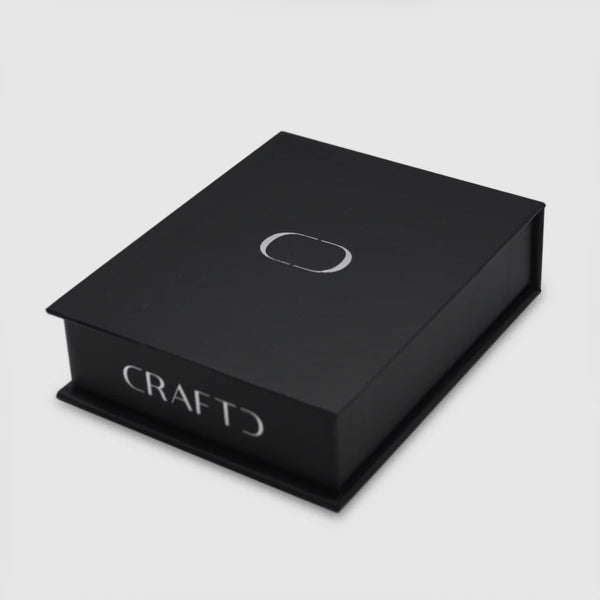
Caja de Regalo de Lujo (€5,99)
Choose your option
Para Mi Novio

Para Mi Esposo

A Mi Alma Gemela

Para Mi Hijo

Para mi nieto

Para Mi Hermano

A Mi Verdadero Amigo

Para mi papá

Un Símbolo De Fuerza

Un Símbolo De Fe

Un símbolo de protección

Un símbolo de suerte

Un símbolo de viaje seguro

Un Símbolo De Creencia En Uno Mismo

Un símbolo de aventura
Most men have something they're saving. A watch that lives in its box, a shirt still folded in its packaging, a ring that only comes out for weddings and the odd big birthday. It's the good stuff, and that's exactly why it rarely gets worn. We tell ourselves we're looking after it, waiting for an occasion that deserves it.
It's a very British habit, and most of us picked it up without ever deciding to. But it's worth asking properly. When we keep our best things for best, are we respecting them, or just making sure they never really become ours?

Gold rings and bracelets, worn on a normal day.
The idea has deep roots. In Victorian Britain, people of every class had their everyday clothes and their Sunday best: the outfit kept clean, pressed and set aside for church. As fewer people went to church, the habit didn't disappear, it just moved. Sunday best became wedding best, christening best, the outfit for the day out or the big dinner. The good things stayed in the wardrobe until something important enough came along to earn them.
Jewellery fell into the same pattern. The everyday pieces got worn, and the good ones got kept, in a box or a case or at the back of a bedside table, for proper occasions. Plenty of men own a ring they love and have worn it fewer than a dozen times.
Some of it is respect. If something cost a lot, or means a lot, wearing it on a normal day can feel careless. Some of it is worry about a scratch or a knock. But a lot of it is something quieter, and it's been studied.
Researchers Jacqueline Rifkin and Jonah Berger found that every time we choose not to use something, it starts to feel a little more special, which makes us even less likely to use it the next time. In their experiments, people who passed up an ordinary notebook or bottle of wine once began treating it as something worth saving. They called it a "specialness spiral". Berger first noticed it with a pair of shoes he loved but kept leaving in the cupboard, and the longer he left them, the harder they were to wear.
That's how a ring ends up in a box for ten years. Not because anyone decided it should, but because each time it wasn't worn, the next time got a little harder to justify.
There's a fair argument on the other side, and it deserves a proper hearing.
Ceremony matters. A piece you only wear on big days becomes part of how you mark them. Put on the same ring for every wedding, every christening and every important dinner, and over time it starts to carry those days with it. One Swiss watchmaker built an entire advertising campaign around the idea that you never really own their watches, you just look after them for the next generation. For some pieces, that kind of care is the whole point.
We'd agree with part of that. Some things deserve an occasion. But there's a difference between choosing to keep something for a moment and simply never getting round to wearing it. Most pieces sitting in most boxes aren't being saved for anything in particular. They're just being saved.
Jewellery isn't like most of what we own, because it becomes personal through wearing it. A ring slowly settles to the hand it lives on. A chain softens and finds its place. The clasp becomes familiar, the edges lose their sharpness, and somewhere along the way the piece stops being something you bought and starts being something that's yours.
None of that happens in a box. A ring worn ten times a year is still, in a sense, new. It's been to the big days, but it's missed everything in between: the early starts, the long weeks, the nights that weren't planned and turned out to be the good ones. Those are the days that make up most of a life, and they're the ones a piece should be there for.

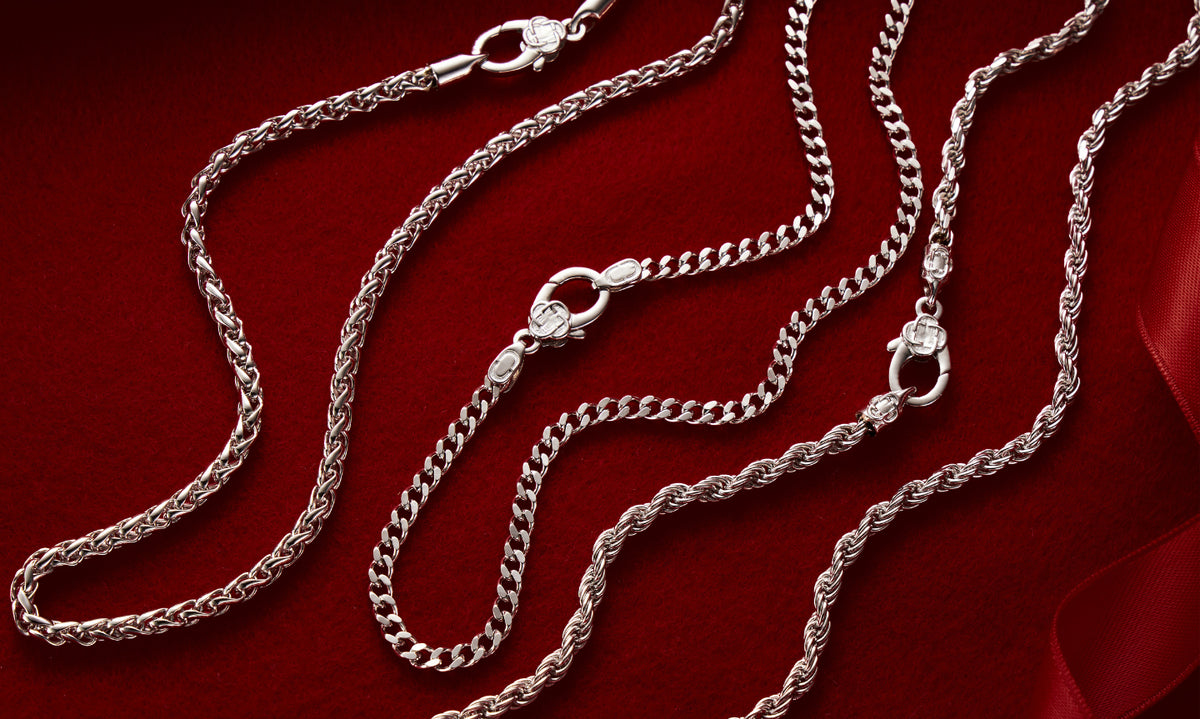
Silver pendants and rings, made to be worn rather than kept.
That's why we've always made pieces to be lived in rather than looked after. Sterling silver and solid everyday pieces are built for daily wear, not just for the big days. A little care keeps them looking right, and our sterling silver guide covers the basics. But the odd mark along the way isn't damage. It's a sign the piece is actually being worn.

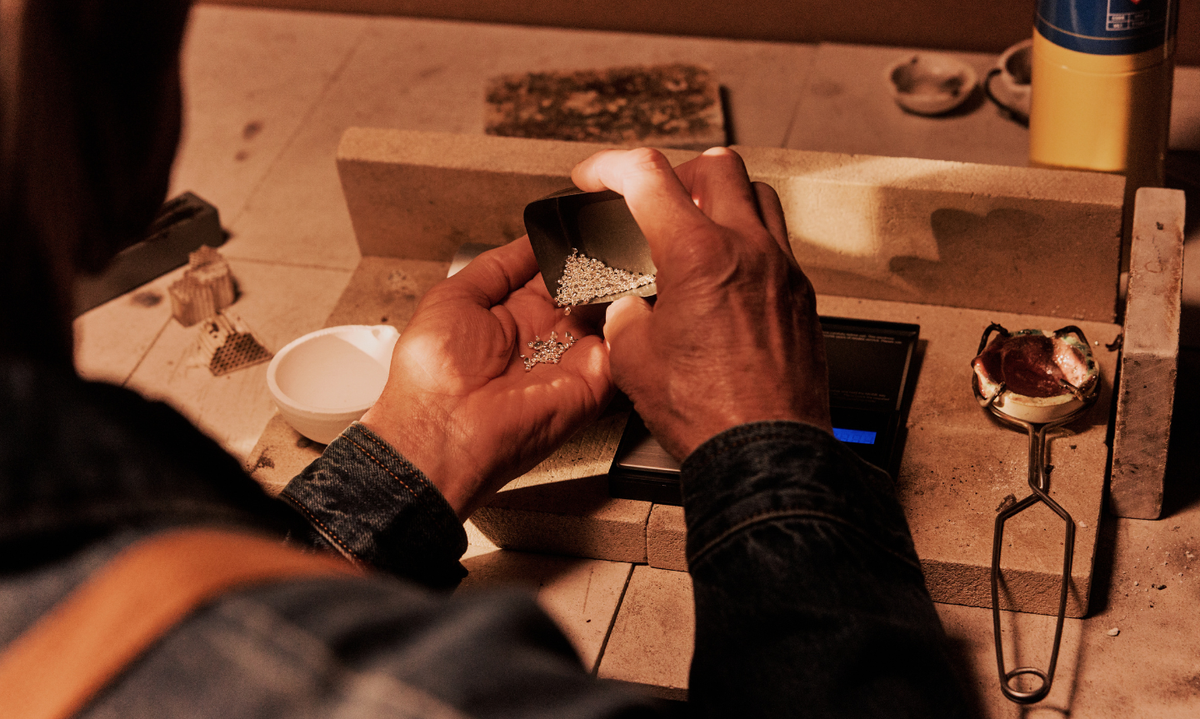
Sterling silver Virtues pendants on the workbench.
So if there's something you've been saving, take it out. Wear it to work, to the pub, to the school gates, wherever this week takes you. It won't feel any less special. If anything, it'll start to mean more.
What are you still keeping for best?
Fix It or Bin It? Why Some Things Are Worth Mending
Every man has a drawer of broken things. When a chain snaps or a ring wears thin, do you fix it or bin it? Here’s the case for mending, and what makes a piece worth keeping going.
Leer más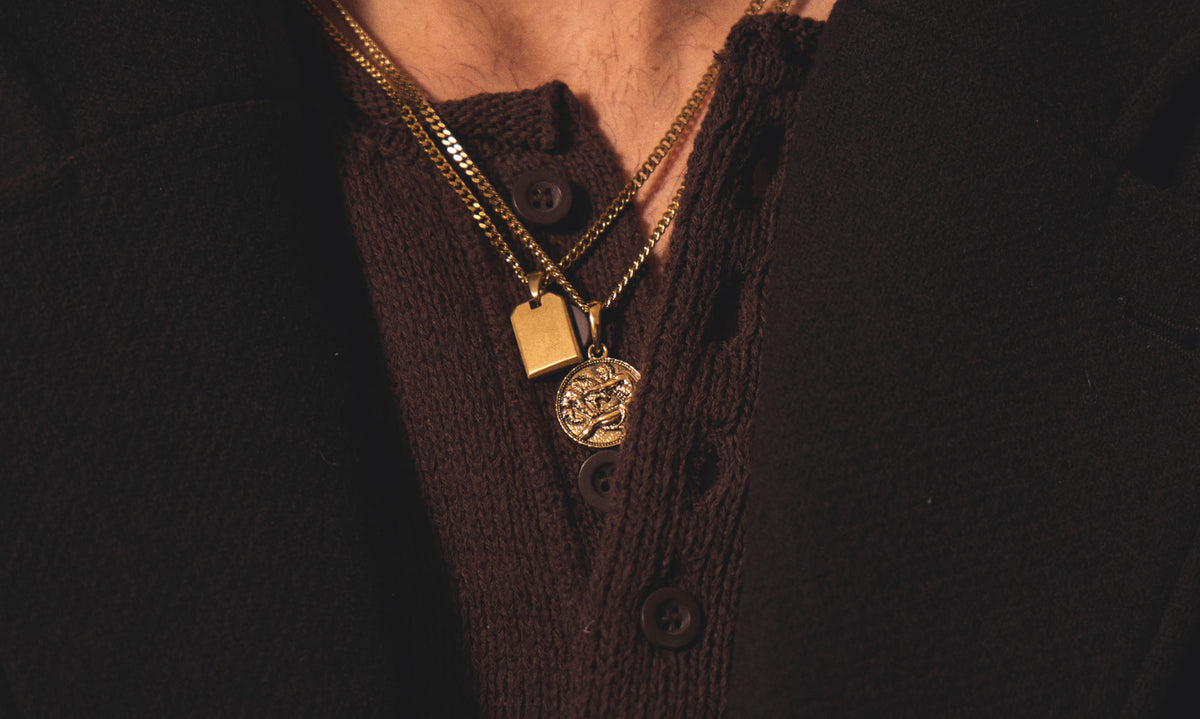
Why Does Wearing Jewellery Make Us Feel More Confident?
You put on the chain, take one last look in the mirror and something feels different. So if confidence comes from within, why can what you wear make such a difference?
Leer más
 Ready to give.
 Hand-finished chains.
 Pendants with meaning.
 Neck and wrist, done.
 The clover collection.
 Crea tu propio conjunto (Oro)
 Crea tu propio conjunto (Plata)
 Crea un Conjunto de Colgantes (Oro)
 Crea un Conjunto de Colgantes (Plata)

Dejar un comentario
Este sitio está protegido por hCaptcha y se aplican la Política de privacidad de hCaptcha y los Términos del servicio.