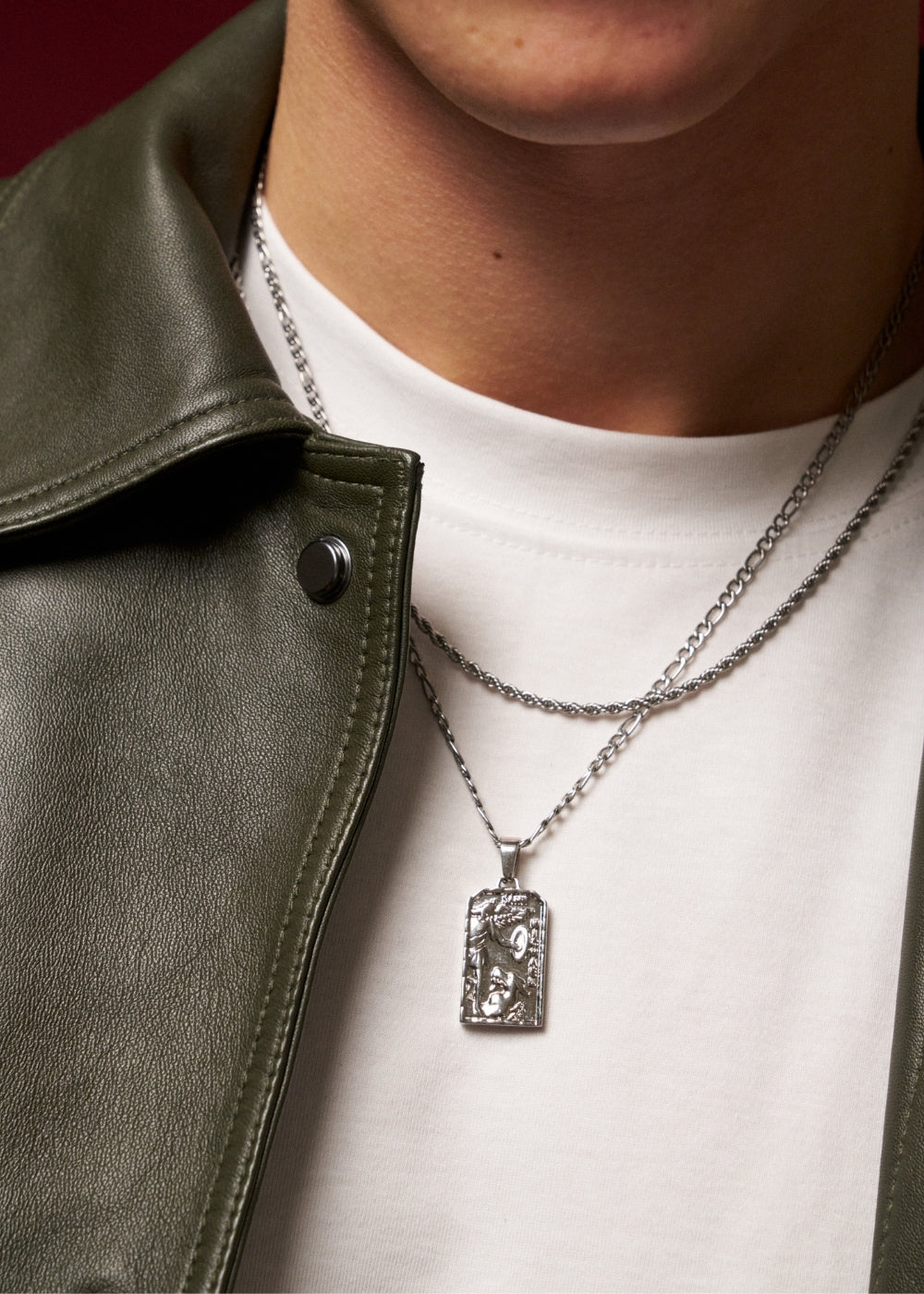
COLLIERS EN ARGENT
ACHETEZ MAINTENANT


Panier
Votre panier est vide
Your gifting options
Sublimez votre cadeau avec nos options d’emballage de luxe. Choisissez un sac cadeau, un coffret ou un assortiment des deux pour une présentation impeccable.

Coffret cadeau de luxe, sac cadeau et kit d'emballage (€9,44)

Carte de signification (€2,63)
Donnez plus de sens à votre cadeau grâce à une carte de signification incluse dans votre commande.
15 variations available

Sac cadeau, ruban et emballage (€6,29)
L'expérience cadeau complète CRAFTD.
Comprend : un sac cadeau CRAFTD de qualité supérieure, un ruban et du papier d'emballage.
Coffret cadeau de luxe (€6,29)
Choose your option
À mon copain

À mon mari

À mon âme sœur

À mon fils

À mon petit-fils

À mon frère

À mon ami sincère

À mon papa

Un symbole de force

Un symbole de foi

Un symbole de protection

Un symbole de chance

Un symbole de voyage sûr

Un symbole de confiance en soi

Un Symbole d'Aventure
Think about the last time something you were sure of didn't work out. The job you were certain you'd get, the idea you'd have bet anything on, the moment you'd been building towards. Most of us remember that feeling far more clearly than any of the wins.
That's because belief is easy when things are going your way. When it keeps working, nobody questions it, least of all you. It's only the first time it doesn't work that you find out whether the belief was real, or whether it was just confidence that hadn't been tested yet.
Two fighters have been living that question in public this year. Ilia Topuria lost his unbeaten record, and his UFC lightweight title with it, in June's title fight, and he's now on the longer road back. Fabio Wardley lost his WBO heavyweight title in May, and this Saturday, 17 October, he goes straight back in for the rematch.
So it's worth asking properly. Does a first defeat expose you? Or is it the thing that finally shows what you're made of?

Until June, Ilia Topuria had never lost as a professional. Then came June's title fight, and the record and the belt went together.
The statement he put out afterwards started with two words: "No excuses."
They're worth sitting with for a second, because they're a lot harder to say than they look. After a loss there's always something to point at, whether it's the preparation, the build-up or the night itself. Topuria didn't reach for any of it. He put the defeat on himself, said he'd come back "stronger, wiser, and far more dangerous", and promised there'd be a rematch.
His team are now targeting a return early next year, which makes his a very different kind of comeback to the one Wardley is attempting this weekend. It isn't about going straight back in. It's about going back to the start: the gym, the work, and all the bits nobody films. In some ways that's harder, because for months there's nothing to prove anything with. There's just the belief, and whether it survives the wait.

And look closely at the pictures of him in training and you'll notice something small. Around his neck, through all of that work, is a clover.
The first thing to know about Fabio Wardley is that he was never supposed to be here.
He came to boxing late, with no amateur career at all, by way of the white-collar circuit. There were no national titles and no golden-boy build-up, just a long way round, one fight at a time, until he'd worked his way to a heavyweight world title. He's called his route "a non-school", and he's never pretended it was anything else.
Back when he was still unbeaten, he put it simply: "All the bumps in the road have been what's made me." And when he was asked what kept him going, he said, "I believe in me and I know the people around me believe in me."
Then, in May, Daniel Dubois stopped him in the 11th round in Manchester, and the title was gone.
Normally, that's the point where a story like his goes quiet for a while. You'd expect a rebuild, maybe a couple of safer fights, and some time to work out what went wrong. Instead, five months later, Wardley is going straight back in with the same man at The O2.
That's the part worth noticing. Asking for the rematch says more than anything he could have said in a press conference. It tells you the belief he talked about before the loss was still there after it, and that he'd rather find out than spend the next few years wondering.
Whatever happens on Saturday night, the question this piece is asking has already been answered. He chose to walk back in.
Of course, it would be easy to turn every defeat into the start of something. Real life isn't that tidy.
Losses aren't romantic. Plenty of fighters go back in and get exactly the same result, because they come back as the same fighter with the same plan. That isn't a comeback, it's a rerun. And it's worth remembering that the comeback stories we all love are told by the people who won it back. The ones who didn't rarely get the documentary.
Belief on its own doesn't win anything, either. Wanting it more is a nice line, but it doesn't change a fight. The work does.
So what's the difference between the two? Mostly, it's whether anything changed in between. A rerun is going back in and hoping it goes better this time. A comeback is going back in having learned something, and being honest enough to admit there was something to learn in the first place. That's why "no excuses" matters so much. It's where the learning starts.
You don't need a title belt to know what any of this feels like.
Most of us will never lose a world title, but everyone has a first real knock at some point. It might be the job that didn't work out, the business that nearly went under, or the year that went sideways for reasons you couldn't control. And when it happens, the same question turns up: was I as good as I thought I was, or was I just lucky until now?
Here's where we come down on it. Belief that's never been tested is really just confidence, and it's the next morning that turns it into something more. It isn't about whether you win the next one. It's about whether you're willing to go back in.
Which brings us back to that clover.
We can't tell you what it means to Topuria, and we wouldn't try. But it's hard not to notice it on a man who's just had his first taste of things not going his way, and who's spent the months since doing the slow, unglamorous work of getting it back.
Men have worn the clover for luck for a very long time, and we've written before about why. But the kind of luck we've always connected it with isn't the kind that finds you. It's the kind you make. The early mornings, the extra rounds, the decision to go again when nobody would blame you for stopping. A clover doesn't do any of that for you. It just sits there as a reminder that you can, a bit like the rituals we hold on to before the big moments.
Nobody shows that better than Bilal Fawaz, who wears the same clover pendant in silver. His story is one we keep coming back to: a fighter who kept backing himself for years when the odds, and most of the system around him, gave him every reason not to. Nobody would call what he's done luck. He made his own.

That's what Back Yourself has always meant to us. Not that you'll never lose, but that you'll back yourself to go again when you do.
Because in the end, the first loss doesn't decide who you are.
The next morning does.

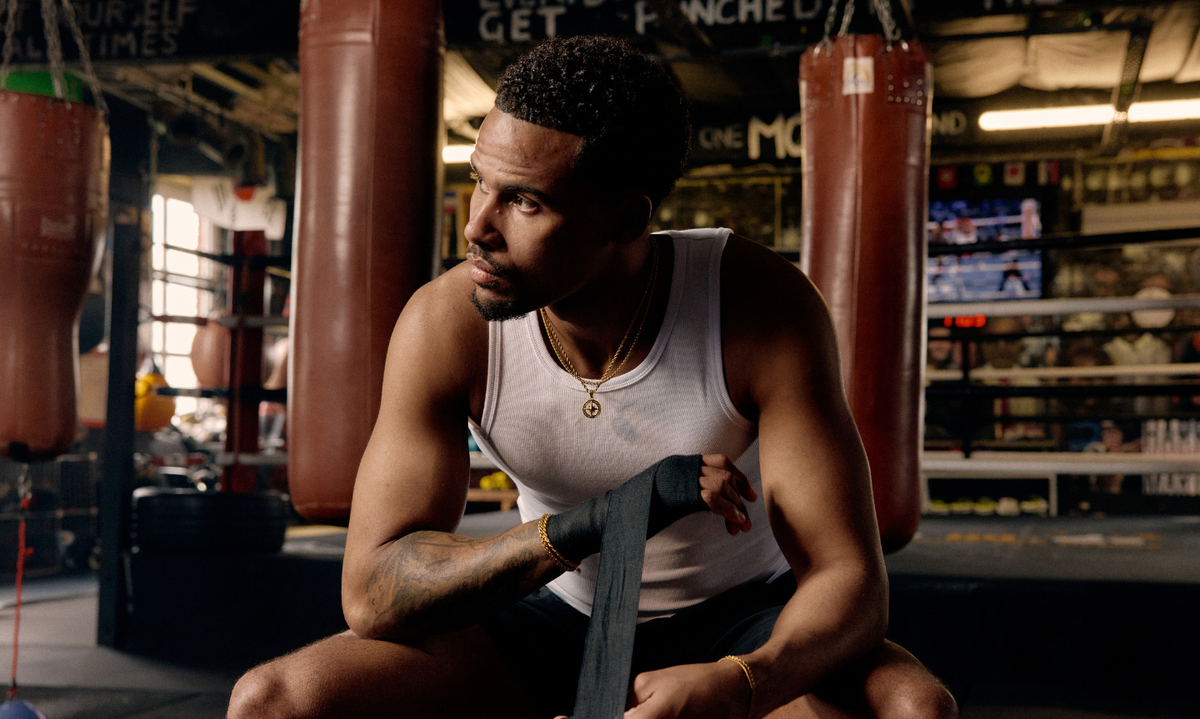
Is Jewellery the New Tie? What Men Wear to Work Now
Shirt on, collar open, no tie. So does the chain stay on? With the tie all but gone from the office, we look at why one good piece of jewellery now does the job it used to.
En savoir plus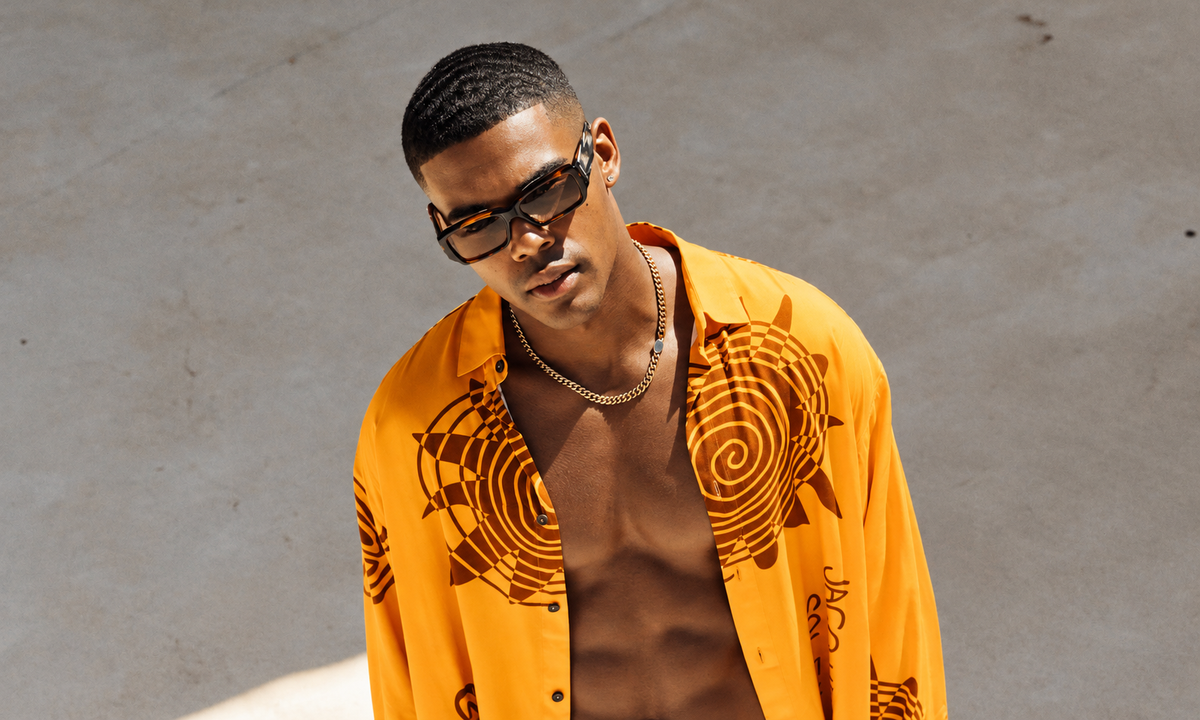
In Hip-Hop, a Chain Meant You’d Made It. What Does It Mean Now?
Is a chain still proof you’ve made it? In hip-hop, it was the receipt for a career. Now anyone can buy one on day one. So where has the meaning gone, and what should yours say?
En savoir plus


Laisser un commentaire
Ce site est protégé par hCaptcha, et la Politique de confidentialité et les Conditions de service de hCaptcha s’appliquent.