
Most gifted
Shop now


Panier
Votre panier est vide
Your gifting options
Sublimez votre cadeau avec nos options d’emballage de luxe. Choisissez un sac cadeau, un coffret ou un assortiment des deux pour une présentation impeccable.

Coffret cadeau de luxe, sac cadeau et kit d'emballage (€9,44)

Carte de signification (€2,63)
Donnez plus de sens à votre cadeau grâce à une carte de signification incluse dans votre commande.
15 variations available

Sac cadeau, ruban et emballage (€6,29)
L'expérience cadeau complète CRAFTD.
Comprend : un sac cadeau CRAFTD de qualité supérieure, un ruban et du papier d'emballage.
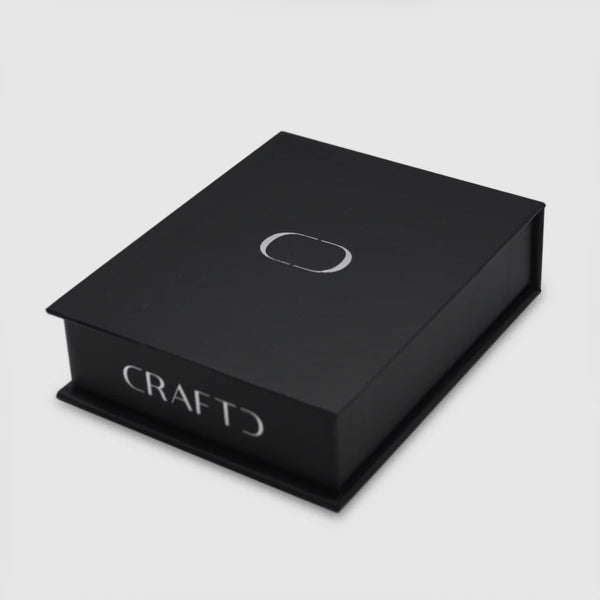
Coffret cadeau de luxe (€6,29)
Choose your option
À mon copain

À mon mari

À mon âme sœur

À mon fils

À mon petit-fils

À mon frère

À mon ami sincère

À mon papa

Un symbole de force

Un symbole de foi

Un symbole de protection

Un symbole de chance

Un symbole de voyage sûr

Un symbole de confiance en soi

Un Symbole d'Aventure

Everyone knows a man who's recognised by what he wears. The one who's always in a navy overshirt and white trainers. The one nobody's seen wearing anything but black for as long as they can remember. Say his name and the outfit comes to mind almost as quickly as his face.
There's something interesting about that kind of recognition. At some point, he found a look that suited him, kept wearing it and made it his own. What started as a personal preference became something other people associated with him.
But is that something we should all be aiming for? Is there something to be said for finding your look and sticking with it, or is wearing the same thing for years just another way of playing it safe?

A look you'd know from across a room.
Some of the world's most recognisable men have built their entire wardrobes around wearing essentially the same thing. In a 2012 Vanity Fair interview, Barack Obama explained that he deliberately limited his wardrobe to grey and blue suits. As president, he had enough decisions to make every day. Choosing what to wear wasn't going to be another one.
Steve Jobs took the idea even further. According to Walter Isaacson's biography, Jobs became interested in the idea of a uniform after visiting Sony in Japan during the 1980s, where employees wore company jackets. He later asked designer Issey Miyake to make him around a hundred black turtlenecks. Paired with jeans and trainers, they became his signature look, so much so that even today it's difficult to picture Jobs wearing anything else.
There's often a psychological explanation attached to these stories: the idea of decision fatigue, where making too many small decisions supposedly leaves us less capable of making important ones. But the science behind the broader theory of depleted willpower has faced serious challenges, and a large replication study in 2016 found little support for one influential version of it.
Perhaps the appeal of a signature style doesn't need a complicated scientific explanation anyway. Sometimes, knowing what works for you is reason enough.
A signature works because people remember what they see repeatedly. Wear the same jacket, watch or chain often enough and it stops being something people notice as new. Instead, it becomes something they associate with you. It's part of your look, something they'd recognise across a room.
And while clothes eventually wear out or get replaced, a good piece of jewellery can stay with you for years. That's why the chain a man wears every day, or the ring he rarely takes off, can become one of the most recognisable things about his style.

Whatever the outfit, the rings stay.
There's a certain confidence in that. When you know what suits you, there's less pressure to chase whatever's popular, and you're not constantly looking for the next thing to replace what you already own. You know what you like. You wear it because you like it. And you don't need anyone else to tell you whether it's still in fashion.
There's a practical benefit, too. Getting dressed becomes easier, you buy fewer things that don't suit you, and the pieces you own actually get worn instead of sitting in a wardrobe waiting for the right occasion. But there's a difference between knowing your style and becoming stuck in it.
Because here's the other side of it. A signature can become a habit, and sometimes a habit is just another way of avoiding change. We've all seen men who found a look at 25 and are still wearing almost exactly the same thing at 45. Sometimes that's because it still suits them. Other times, it's because they stopped thinking about it. Those are two very different things.
People change. Our tastes develop, our lifestyles shift and the things that suited us ten years ago don't necessarily feel right today. There's also something enjoyable about experimenting: trying a different fit, wearing a colour you wouldn't normally consider, finding something that surprises you. If your signature becomes a set of rules you're afraid to break, it starts working against you.
Even Steve Jobs discovered that a uniform isn't for everyone. As Isaacson recounts, Jobs originally wanted Apple employees to wear matching vests designed by Miyake. When he presented the idea, the reaction was overwhelmingly negative. What worked for Jobs as a personal choice wasn't something everyone else wanted imposed on them.
That's an important distinction. A signature should be something you choose, not something you feel obliged to maintain.
So perhaps the answer isn't to wear the same thing forever. It's to find one thing that stays with you while everything else changes.
You can experiment with the rest. Try the wider trousers. Buy the jacket you'd never have considered a few years ago. Change your trainers, your hairstyle or your entire wardrobe if you want. But keep one piece that's yours. Maybe it's a chain you've worn since your twenties, a signet ring that's moved house with you three times, or a bracelet that's become so familiar you barely notice it's there until you take it off.
That piece doesn't need to be the boldest thing you own. In fact, sometimes the most recognisable part of someone's style is the thing they rarely draw attention to. It's just always there, and that's what makes it a signature: not because it defines everything you wear, but because it remains familiar even as the rest of your style develops.
Put a photograph of yourself from ten years ago next to one from last week. Different haircut. Different clothes. Probably a few other things you'd rather not discuss. But there it is, the same chain around your neck. Two very different versions of you, with one familiar detail connecting them.

Different haircut, different clothes, same chain.
There's something quite powerful about that, and it's one of the reasons we design our jewellery at CRAFTD to be worn every day, for years to come. Not just with one outfit or for one particular occasion, but through whatever comes next. Because when one piece feels like yours, the rest of your style is free to change.
If someone had to describe your style using just one detail, what would they choose? The jacket you always wear? Your favourite pair of trainers? The chain that's been around your neck for as long as anyone can remember?
You might already have a signature without ever consciously choosing one, and there's nothing wrong with that. But what matters isn't how long you've been wearing something. It's whether it still feels right for the person you are today.
After all, a signature isn't supposed to hold you in one place. It's supposed to be something you can take with you. The best signature isn't necessarily the piece you've worn the longest. It's the one you'd choose to put on again tomorrow.
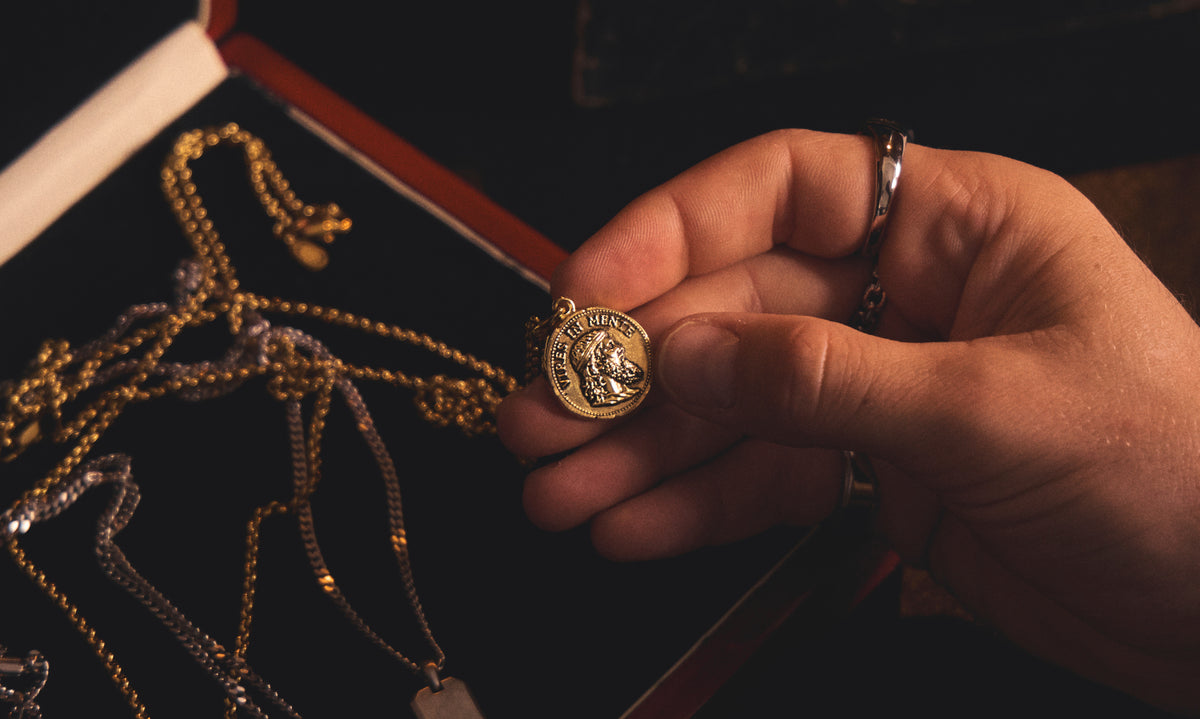
Does Every Piece of Jewellery Need a Meaning?
Someone always asks what your chain means. But is “I just like how it looks” a good enough answer? Why the reason you buy a piece and the reason you keep it aren’t always the same.
En savoir plus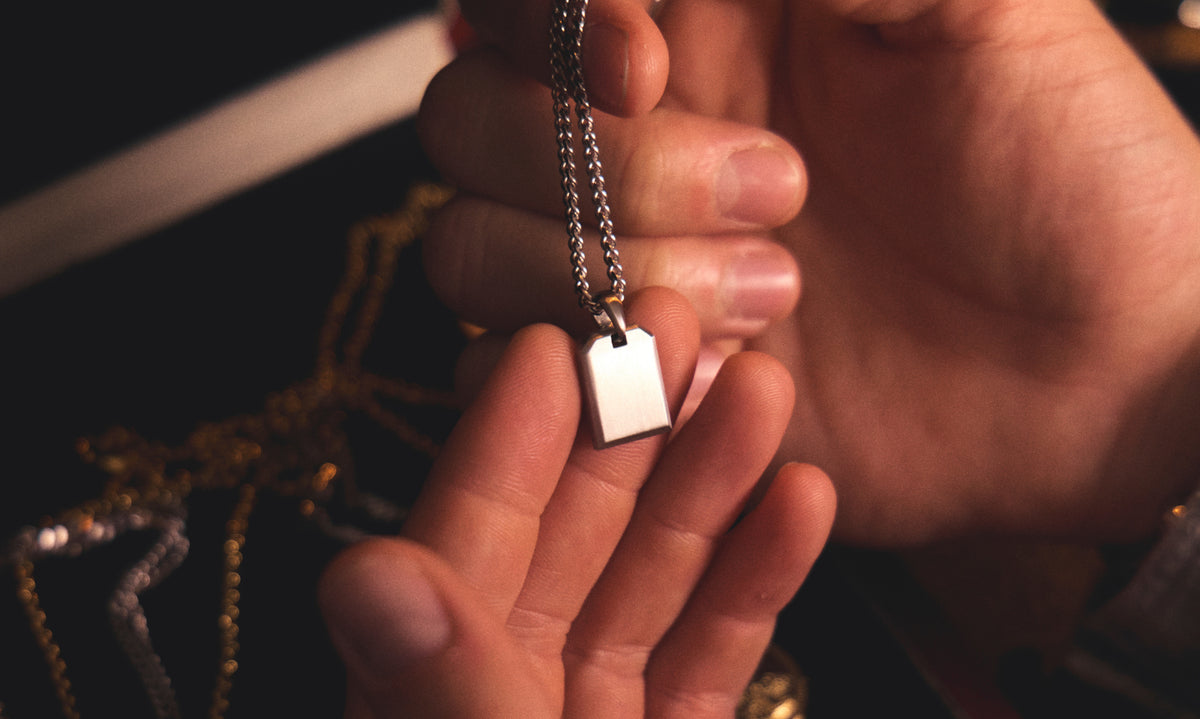
Do British Men Play It Too Safe With Style?
Ever taken a chain off before leaving the house in case someone says something? When British understatement is style, and when it’s just fear.
En savoir plusCommon searches
Top selling products

 Ready to give.
 Hand-finished chains.
 Pendants with meaning.
 Neck and wrist, done.
 The clover collection.
 Créez votre propre ensemble (or)
 Créez votre propre ensemble (argent)
 Fabriquer un ensemble de pendentifs (or)
 Fabriquer un ensemble de pendentifs (argent)

Laisser un commentaire
Ce site est protégé par hCaptcha, et la Politique de confidentialité et les Conditions de service de hCaptcha s’appliquent.