
Most gifted
Shop now


Carrello
Il tuo carrello è vuoto
Your gifting options
Rendi il tuo regalo ancora più speciale con le nostre opzioni di confezionamento di lusso. Scegli una borsa regalo, una scatola regalo o una combinazione per creare la presentazione perfetta.

Confezione regalo di lusso, borsa regalo e kit per incartare (€9,44)

Carta del Significato (€2,63)
Aggiungi più significato al tuo regalo con una carta di significato inclusa nel tuo ordine.
15 variations available

Borsa regalo, nastro e confezione (€6,29)
L'esperienza completa di regalo CRAFTD.
Include: Borsa regalo CRAFTD premium, nastro e carta da regalo.
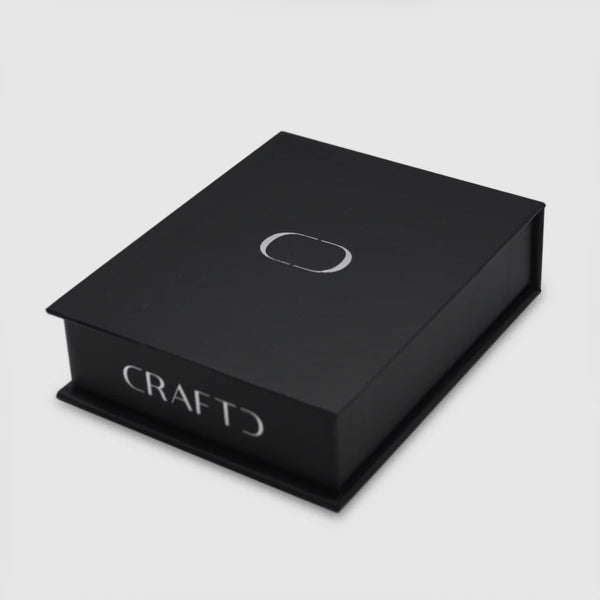
Scatola Regalo di Lusso (€6,29)
Choose your option
Al mio ragazzo

Al mio marito

Alla mia anima gemella

Al mio figlio

Al mio nipote

Al mio fratello

Al mio vero amico

Al mio papà

Un simbolo di forza

Un Simbolo di Fede

Un simbolo di protezione

Un simbolo di fortuna

Un simbolo di viaggio sicuro

Un simbolo di fiducia in se stessi

Un Simbolo di Avventura

A dress watch is a slim, simple watch made to be worn with tailoring. Think a thin case, a clean dial with very little on it and a leather strap, all sized to tuck beneath a shirt cuff with room to spare. It tells the time and not much else, and holding back like that is the whole idea.
Below, we look at what sets a dress watch apart, where the style came from, whether one can be your only watch, when to wear it, and the jewellery that sits best beside it.

Gold and black onyx: the same quiet contrast as a dress watch on black leather. Featured: Onyx Rectangle Stone Signet Ring (Gold).
Jump to:
There's no official rulebook, but most dress watches share the same handful of traits.
Within those rules there's plenty of variety. Cases can be round, square or rectangular, and rectangular shapes have a long history in formal watchmaking. Dials range from plain white or black to a sunray finish, where fine lines spread out from the middle and shimmer as the wrist moves. Roman numerals are another traditional touch, giving a dial a classic, almost architectural feel.
For much of the 19th century, a gentleman's watch lived in his pocket, on a chain. Wristwatches were widely seen as something women wore until the early 20th century, when soldiers found them far more practical than a pocket watch, and attitudes shifted quickly from there.
As the wristwatch became normal for men, a quieter version settled in for formal dress. It kept the refinement of the pocket watch it replaced: thin, plain and elegant. Details still linked with dress watches today, such as slim rectangular cases and Roman numeral dials, are often traced back to that era. For the original, our guide to wearing a pocket watch picks up the story.
A dress watch and a typical sports watch are built for different jobs. Here's how they usually compare.
| Feature | Dress watch | Typical sports watch |
|---|---|---|
| Case profile | Thin, sits close to the wrist | Thicker and heavier |
| Dial | Clean, with few details | Busier, with bezels, lume or subdials |
| Strap | Leather, sometimes a slim bracelet | Metal bracelet, rubber or fabric |
| Water resistance | Usually modest | Often much higher |
| Looks best with | Tailoring, shirts, smart knitwear | Casual clothes, sport, travel |
So can a dress watch be your only watch? For plenty of men, yes. If your week involves a desk, a shirt or a jacket, a simple leather-strap watch looks right far more often than a bulky diver does. Where it falls short is water and rough treatment, so take it off for swimming, the gym and anything likely to knock it about. If you're still weighing up styles, our guide to choosing a men's watch compares the main ones.
The name suggests black tie and nothing else, but a dress watch is more flexible than that. Think of it as the watch that looks right whenever you've made an effort.
Most of what defines a dress watch comes back to the shirt cuff. A formal cuff is cut close to the wrist, and a thick watch either props it open or stops it falling at all. A slim case lets the cuff hang naturally, so the watch appears as you reach forward and disappears once your arm is back at your side.
A dress watch is quiet, so the jewellery around it should be too. A few well-chosen pieces work far better than a stack.
A signet ring is the most natural partner, because its flat face and clean lines echo the simplicity of the dial. A Rectangle Signet Ring picks up the shape of a rectangular case, while a Square Signet Ring gives a slightly bolder face. For evenings, the black stone of an Onyx Rectangle Stone Signet Ring ties in with a black strap. Our guide to styling a signet ring explains where it sits best on the hand.

Clean lines that echo a rectangular case. Featured: Rectangle Signet Ring (Gold).
Cufflinks sit right beside the watch, so they're worth thinking about. Matching the metal of the case is the classic approach: Rope Cuff Links in gold with a gold watch, the silver Rope Cuff Links or Round Cuff Links with a silver one. Mixing metals works too, as long as it looks intentional. A Rope Tie Clip completes the set, and our cufflinks and tie clips guide explains how to wear both.
If you'd like something beside the watch, keep it thin and in a matching metal, or give it the opposite arm. For spacing and balance, see how to pair bracelets with your watch.

Silver to match a silver case and cufflinks. Featured: Rectangle Signet Ring (Silver).
No. It's designed for tailoring, but it looks just as good with a shirt and chinos, smart knitwear or dark jeans. It only looks out of place with sportswear or very casual clothes.
Yes, with dark denim and a shirt, knit or jacket. With faded jeans and trainers, a sportier watch usually looks more natural.
Not always, but leather is the traditional and most formal option. A slim metal bracelet can work with a suit, though it reads a little more casual.
Either works. Many men simply pick whichever metal they already wear in rings and cufflinks.
Usually only lightly. Most will handle rain and the odd splash, but they aren't made for swimming, so check the rating and take it off before you go in.
It looks most polished when they do, because the two sit side by side at the cuff. Mixing gold and silver can work too, as long as it looks deliberate.
Yes. If you mostly wear shirts and smart clothes, a simple dress watch on a leather strap is a sound first choice. Just keep it away from the pool and the gym.
The appeal of a dress watch lies in doing less. Choose a slim case, a clean dial and a good leather strap, and it will look right with a suit on Monday and a knit on Saturday.
To build the rest of the look around it, browse our men's signet rings.
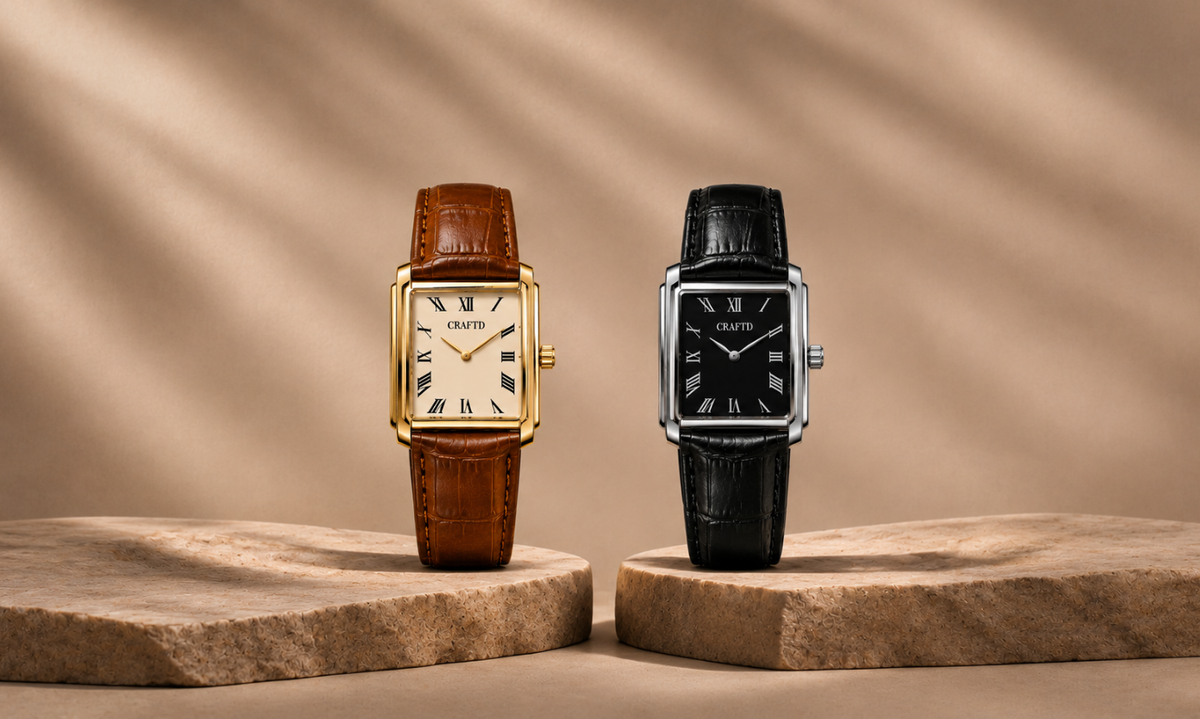
Black or Brown Leather Watch Strap? How to Choose and Care for One
Stuck between a black and a brown leather strap? Here’s when each one works, how to match it to your outfit and case, and how to keep the leather looking good for years.
Per saperne di più
Rectangular Watches for Men: How to Wear One
Round watches have always been the default. But there's something about a rectangular case that feels different. Here's how to find the right fit and make the shape work with your style.
Per saperne di piùCommon searches
Top selling products

 Ready to give.
 Hand-finished chains.
 Pendants with meaning.
 Neck and wrist, done.
 The clover collection.
 Crea il tuo set (Argento)
 Crea il tuo set (Oro)
 Crocefisso (Argento)
 Crocifisso (Oro)

Commenta
Questo sito è protetto da hCaptcha e applica le Norme sulla privacy e i Termini di servizio di hCaptcha.