
Most gifted
Shop now


Carrello
Il tuo carrello è vuoto
Your gifting options
Rendi il tuo regalo ancora più speciale con le nostre opzioni di confezionamento di lusso. Scegli una borsa regalo, una scatola regalo o una combinazione per creare la presentazione perfetta.

Confezione regalo di lusso, borsa regalo e kit per incartare (€9,44)

Carta del Significato (€2,63)
Aggiungi più significato al tuo regalo con una carta di significato inclusa nel tuo ordine.
15 variations available

Borsa regalo, nastro e confezione (€6,29)
L'esperienza completa di regalo CRAFTD.
Include: Borsa regalo CRAFTD premium, nastro e carta da regalo.
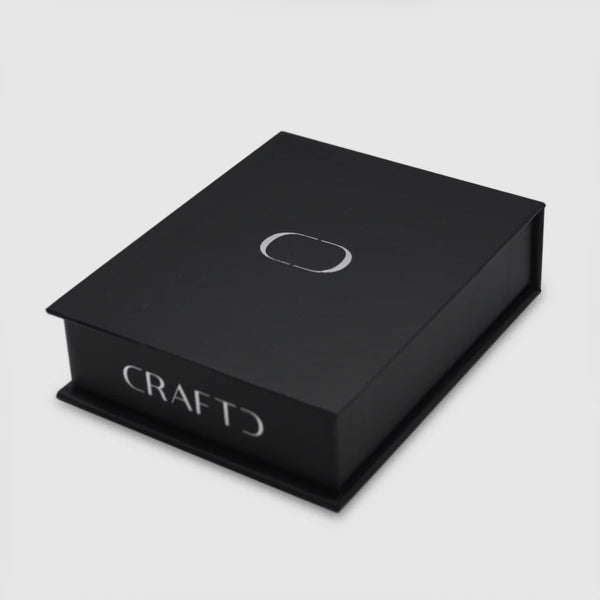
Scatola Regalo di Lusso (€6,29)
Choose your option
Al mio ragazzo

Al mio marito

Alla mia anima gemella

Al mio figlio

Al mio nipote

Al mio fratello

Al mio vero amico

Al mio papà

Un simbolo di forza

Un Simbolo di Fede

Un simbolo di protezione

Un simbolo di fortuna

Un simbolo di viaggio sicuro

Un simbolo di fiducia in se stessi

Un Simbolo di Avventura

A sunray dial has a pattern of very fine lines running out from its centre, and those lines turn ordinary light into movement. Tilt your wrist and a bright band sweeps across the face, so the dial seems to change colour as you go about your day. Few details make a watch look this considered without adding size.
This guide explains what a sunray dial is, how the finish is made, why it behaves the way it does, how it compares with other dials, and how to style it.

A warm gold dial with a soft sheen, picked up by gold rings. Featured: Crown Ring (Gold) and Inception Ring (Gold).
Jump to:
The dial is the face of the watch, the surface that sits behind the hands. On a sunray dial, that surface is covered in hundreds of tiny grooves that all start at the middle and fan outwards to the edge, like spokes on a wheel or rays from the sun, hence the name.
You'll also hear it called a sunburst dial. Some makers use the French word soleil. All three describe the same thing.
From a distance the grooves are invisible. What you notice is the effect: the dial has a soft sheen, and that sheen moves.
A sunray dial starts as a flat metal disc. While it turns, a brush or fine abrasive is usually worked across it, cutting the fine radiating lines into the surface. Because the disc is spinning, every line points back to the same central point.
Once the pattern is in place, the colour goes on top, as a plated, painted or lacquered layer thin enough for the grooves to show through. That's why the same finish can come in silver, gold, blue, green or almost anything else: the lines create the movement, and the top layer sets the shade.
Markers and numerals are then usually applied over the finish, which keeps them crisp and readable against the moving background.
Each tiny groove reflects light along its own direction. With lines pointing every way around the dial, only some of them face the light at any moment, and those form a bright streak running from the centre. Move your wrist and a different set of lines takes over, so the streak sweeps round like the hand of a clock.
This is also why a sunray dial looks good on a simple watch. The finish does the work that extra features or a bigger case would otherwise have to do.

A plain band lets a silver sunray dial do the shining. Featured: Flat Band Ring (Silver).
Sunray is one of several ways to finish a dial. Each gives a watch a different personality.
A flat, non-reflective surface. Very easy to read and calm to look at, which is why it's common on sports and field watches. It stays the same colour in any light, so it never surprises you, but it never lifts either.
A smooth, glassy surface, often lacquered or enamelled. It looks rich and deep, especially in black or white, and reflects like a mirror rather than in a sweeping band. It reads as classic and formal.
Engraved or stamped patterns such as waves, grids or fine stripes. These add detail you can see up close and tend to look busier than a sunray, which keeps its pattern almost invisible until the light hits it.
Sunray sits between them: livelier than matte, softer than gloss, and simpler than a textured pattern.
Because the finish changes with the light, some shades show it off more than others.
| Dial | How it looks | Easiest with |
|---|---|---|
| Silver | Bright and crisp, almost white in sunlight | Steel or silver cases, black or brown straps |
| Gold | Warm, with a soft champagne glow | Gold cases and brown or black leather |
| Blue | Shifts from bright to navy as you move | Silver cases, navy and grey clothing |
| Grey | Cool and understated, never flat | Almost anything |
| Green | Deep and rich, with flashes of brightness | Gold cases and brown leather |
| Black | Subtle; the rays show only in direct light | Formal outfits and black straps |
Silver and gold are the most classic pairings, matched to a case in the same metal. For a full comparison of the two metals on your wrist, see our guide to choosing your first watch.
Both. The finish itself is neutral; the rest of the watch decides how formal it feels.
For a more traditional, less reflective look, a dial with Roman numerals is the other classic route for a dressier watch.
Strap colour sets the tone as well. Black keeps a sunray dial sharp; brown warms it up. Our black or brown strap guide goes through each combination.

Gold on the wrist and gold on the fingers keeps the light consistent. Featured: Inception Ring (Gold) and Crown Ring (Gold).
A sunray dial already brings shine and movement, so the jewellery around it works best when it stays calm.
Adding a bracelet to the same wrist? Our guide to watches and bracelets together covers how to space them.

Smooth and simple: a quiet partner for a gold dial. Featured: Round Band Ring (Gold).
Yes. The two names describe the same finish: fine lines running out from the centre of the dial. Some makers say sunray, some say sunburst, and you'll occasionally see soleil.
No, and that's the appeal. In bright light the lines flare and the colour looks lighter; in shade or low light the same dial can look several tones darker.
Not usually. The finish sits underneath the hands and markers, which are normally polished or printed to stand out. In harsh direct light the glare can briefly make a very shiny dial harder to read.
It works in both directions. On a slim case and a leather strap it looks dressy; on a sportier case it simply adds some life to an everyday watch.
Silver and grey are the easiest to wear, because they sit well with both black and brown straps and with either metal. Blue is a close second when you'd like more colour.
The dial sits under the watch glass, so it's protected from everyday knocks. Look after the case and glass and the dial itself should stay as it was.
A sunray dial is proof that a watch doesn't need to be bigger or busier to stand out. Choose a colour you like in every light, keep the case slim, then leave the rest to one or two polished pieces.
To find them, browse our men's signet rings.

Rectangular Watches for Men: How to Wear One
Round watches have always been the default. But there's something about a rectangular case that feels different. Here's how to find the right fit and make the shape work with your style.
Per saperne di più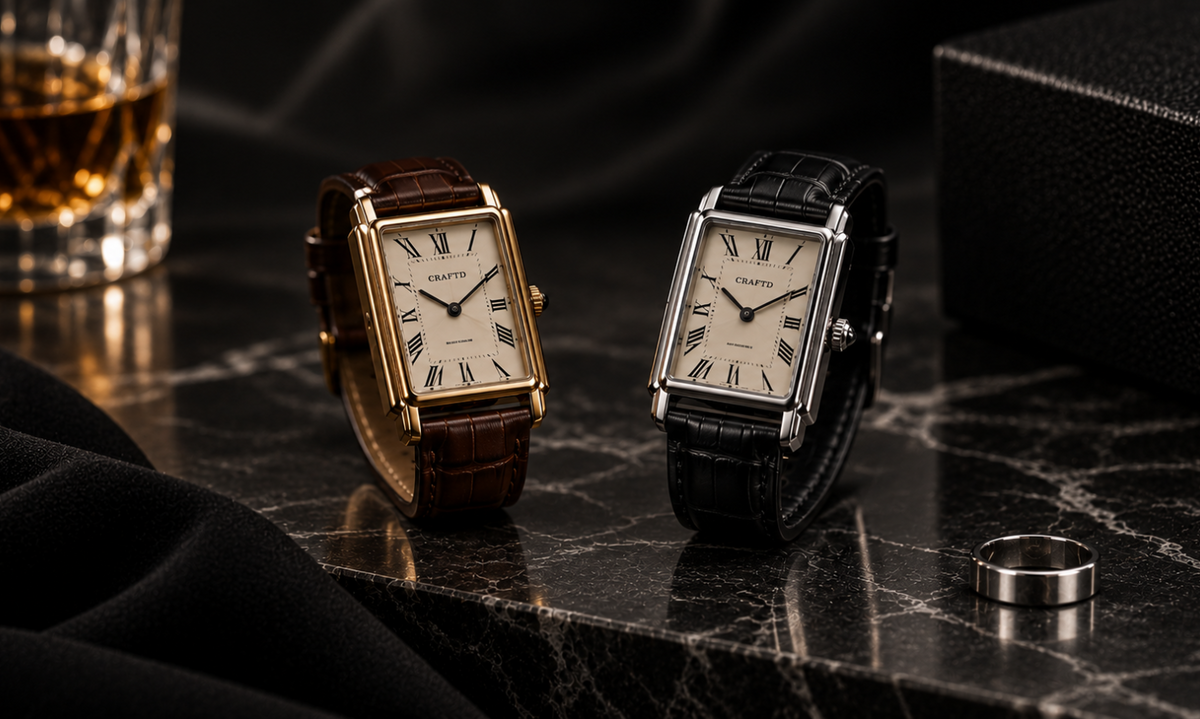
Gold or Silver Watch? How to Choose the Right One
Stuck between a gold and a silver watch? Start with the jewellery you already wear. Here’s how each metal looks, what to wear it with, and when mixing the two works.
Per saperne di piùCommon searches
Top selling products

 Ready to give.
 Hand-finished chains.
 Pendants with meaning.
 Neck and wrist, done.
 The clover collection.
 Crea il tuo set (Argento)
 Crea il tuo set (Oro)
 Crocefisso (Argento)
 Crocifisso (Oro)

Commenta
Questo sito è protetto da hCaptcha e applica le Norme sulla privacy e i Termini di servizio di hCaptcha.