COLARES DE PRATA
COMPRAR AGORA


Carrinho
O seu carrinho está vazio
Your gifting options
Torne o seu presente ainda mais especial com as nossas opções de embalagem de luxo. Selecione um saco de presente, uma caixa de presente ou uma combinação para criar a apresentação perfeita.

Caixa de Presente de Luxo, Saco de Presente e Kit de Embrulho (€8,99)

Cartão de Significado (€2,50)
Dê mais significado ao seu presente com um cartão de significado incluído na sua encomenda.
15 variations available

Saco de Presente, Fita e Embrulho (€5,99)
A experiência completa de oferta CRAFTD.
Inclui: Saco de oferta CRAFTD premium, Fita e Papel de embrulho.
Caixa de Presente de Luxo (€5,99)
Choose your option
Para o Meu Namorado

Para o Meu Marido

Para a Minha Alma Gémea

Para o Meu Filho

Para o Meu Neto

Para o Meu Irmão

Ao Meu Verdadeiro Amigo

Para o Meu Pai

Um Símbolo de Força

Um Símbolo de Fé

Um Símbolo de Proteção

Um Símbolo de Sorte

Um Símbolo de Viagem Segura

Um Símbolo de Autoconfiança

Um Símbolo de Aventura
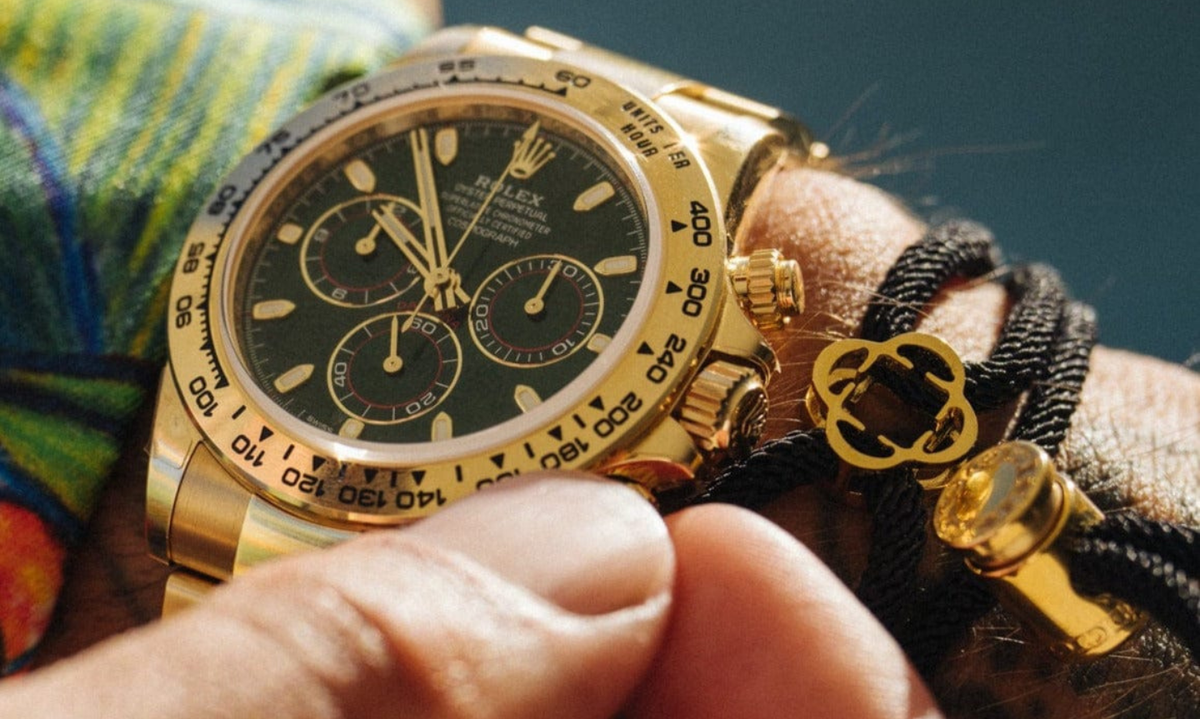
Your first proper watch is something you'll wear nearly every day. That makes it worth getting right, and easy to overthink, because the watch world comes with its own language of movements, complications and case sizes.
This guide strips it back to the decisions that matter: which style suits your life, what's ticking inside, what size fits your wrist, which metal and strap to choose, and how your watch will sit alongside the pieces you own.

A gold watch sets the tone, and the rings follow it. Featured: Crown Ring (Gold), Inception Ring (Gold) and St. Christopher Signet Ring (Gold).
Jump to:
Before you look at a single model, settle these five things. Together they narrow the field more than any review will.

Gold at the wrist, gold on the fingers. Featured: Crown Ring (Gold) and Inception Ring (Gold).
Most watches fall into a handful of families. Each grew out of a job, and that history still shapes how they look and wear.
Thin, simple and quiet, usually with a plain dial and a leather strap. It's designed to disappear beneath a shirt cuff, making it a natural match for tailoring. The catch: it rarely handles water or knocks well.
Built for the water, with a rotating bezel for timing dives, bold luminous markers and serious water resistance. That toughness and legibility explain their popularity as everyday watches, even for men who never go near the sea. They tend to be thicker, so they don't always sit under a cuff.
Born in the military, the field watch is all about reading the time at a glance: clear Arabic numerals, a simple case and a canvas or leather strap. It's understated, hard-wearing and very easy to live with.
A chronograph adds a stopwatch, controlled by pushers on the side of the case and shown on small subdials. It has a sporty, technical look that suits casual clothes, though the busier dial takes up more visual space.

A chronograph with a cord bracelet tucked in behind it. Featured: Black Cord Bracelet (Gold).
If none of these feels right on its own, look at a steel watch on a matching metal bracelet with a clean dial. It's the all-rounder: smart enough for a suit, tough enough for the weekend, and the reason it's such a common first choice.
The movement is the engine inside the case, and it decides how your watch keeps time and what it asks of you.
For a first watch, there's no wrong answer. Quartz suits a busy routine; automatic suits someone who's already a little curious about what's going on inside.
Watch sizes are given as the case diameter in millimetres, excluding the crown. Wrap a soft tape measure (or some thread, marked and measured flat) around the spot your watch will sit, just past the bone, then use this as a starting point:
| Wrist size | Case size to try |
|---|---|
| Under 16cm | 36mm to 38mm |
| 16cm to 17.5cm | 38mm to 40mm |
| 17.5cm to 19cm | 40mm to 42mm |
| Over 19cm | 42mm to 44mm |
Diameter is only part of the story. Check the lug-to-lug length, the distance between the tips of the lugs, top to bottom: if the lugs reach past the edges of your wrist, the watch will look too big however the diameter reads. Thickness matters too. Anything around 10mm or slimmer hides neatly beneath a cuff; chunkier sports watches sit on top of it.
Most men's wrists measure around 17cm to 18cm, which is why 38mm to 40mm is such a safe place to start.
The case metal is the decision that connects your watch to everything else you wear.

Two-tone steel and gold, the easiest case metal to wear with everything. Featured: Rounded Ring (Gold) 7mm.
Look at what you already own. If silver dominates your collection, start with steel. If gold does, go gold or two-tone. Our silver bracelets and gold bracelets are sorted by metal for exactly this reason.

Silver for a steel watch. Featured: Classic Cuff 3mm (Silver).
The strap changes a watch's character more than you'd think. The same case can look formal on leather and relaxed on fabric.
Many straps now use quick-release pins, letting you swap the look in seconds without tools. Two straps make one watch feel like two.
Water resistance is shown in metres, but the number comes from a pressure test in a lab rather than a depth you can safely dive to. As a rough guide:
Check the maker's own guidance, keep the crown pushed in or screwed down, and remember that a leather strap won't thank you for a swim, whatever the case can handle.
A watch is the anchor on your wrist, so let your other pieces take their cue from it. Match the metal, keep bracelets slimmer than the watch, and decide which wrist each piece belongs on.
The simplest setup splits them: watch on the left, bracelet on the right, or the reverse. To wear both together, a fine chain such as the Connell or Snake, or a slim Classic Cuff, sits behind a watch without crowding it. Our micro bracelets are fine 2mm chains, slim enough to sit alongside a watch. For the basics, see the watch section of our bracelet styling guide, and for the full picture, read how to wear a watch with bracelets.

Fine enough to sit on the same wrist as a watch. Featured: Connell Bracelet (Silver) 2mm.

Smooth links that won't fight a watch for attention. Featured: Snake Bracelet (Gold) 2mm.

A thin gold line at the cuff, nothing more. Featured: Connell Bracelet (Gold) 2mm.

Clean, square links in silver. Featured: Box Bracelet (Silver) 2mm.
On your hands, keep your rings in the watch's metal. A plain signet like the Square Signet Ring, also in silver, is the easy route; a fuller hand, with the Crown Ring and Inception Ring in gold beside a gold watch, can carry it off when everything is in one tone. Want to see every bracelet style first? Our bracelet breakdown lays them out side by side, and if you're tempted by a watch worn on a chain instead, read about pocket watches.

A plain signet is the easy place to start. Featured: Square Signet Ring (Gold).

A slim cuff tucks under a shirt sleeve the way a dress watch does. Featured: Classic Cuff 3mm (Gold).
A simple, three-hand watch in stainless steel, around 38mm to 40mm, on a metal bracelet or leather strap. It suits most outfits and teaches you what you like before you spend more.
Quartz is the practical pick: accurate, affordable and happy to sit in a drawer for weeks. Choose automatic if the craft appeals and the watch will be on your wrist most days, since it runs on your movement.
Most men suit a case between 38mm and 42mm. The better test is whether the lugs stay within the edges of your wrist; if they hang over, the watch is too big for you.
Absolutely; most watches are built for exactly that. A steel case on a metal bracelet copes best with daily wear, while leather wants gentler treatment and time to dry if it gets wet.
The left, for most right-handed men, since tradition puts it on the less-used hand. That keeps the watch out of the way when you write and makes the crown easier to reach.
It's a smart one if you wear both gold and silver jewellery. Steel and gold together let you wear either metal next to it without anything looking out of place.
For everyday wear, 30m to 50m copes with rain and hand washing. If you plan to swim in it, look for 100m or more, and always follow the maker's guidance.
Yes. The easiest way is to give each its own wrist. Slim chains and cuffs can share the watch wrist too, provided they sit behind the watch rather than against it.
The best first watch is the one you reach for without thinking. Get the size right, choose the metal your rings and chains already use, and let the rest follow.
To build around it, start with our bracelets.
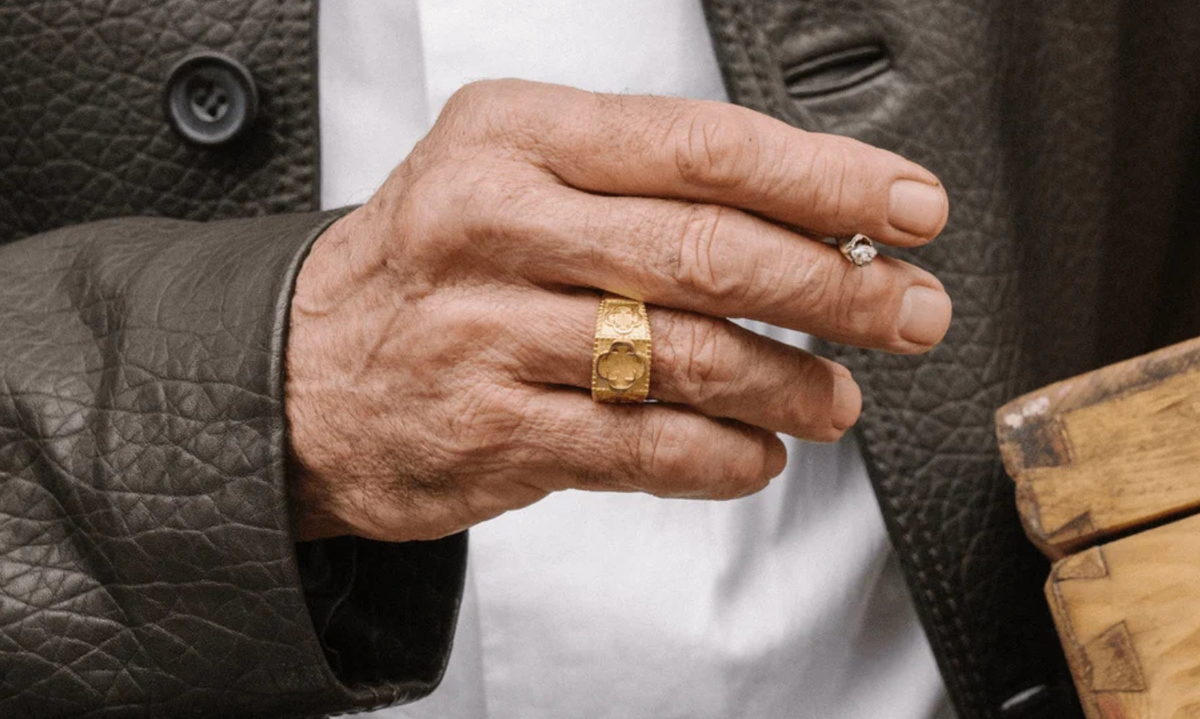
Signet Ring vs Sovereign Ring: What’s the Difference?
They look alike from across a room, but signet and sovereign rings come from very different places. Here’s how to tell them apart at a glance, where pinky rings fit in, and which one suits you.
Ler mais
How to Wear a Watch With Bracelets
A watch and a bracelet can share a wrist without fighting for attention. Here’s how: where each piece sits, how wide to go, and which bracelets suit leather, metal and rubber straps.
Ler mais


Deixe um comentário
Este site está protegido pela Política de privacidade da hCaptcha e da hCaptcha e aplicam-se os Termos de serviço das mesmas.