
Most gifted
Shop now


Carrinho
O seu carrinho está vazio
Your gifting options
Torne o seu presente ainda mais especial com as nossas opções de embalagem de luxo. Selecione um saco de presente, uma caixa de presente ou uma combinação para criar a apresentação perfeita.

Caixa de Presente de Luxo, Saco de Presente e Kit de Embrulho (€8,99)

Cartão de Significado (€2,50)
Dê mais significado ao seu presente com um cartão de significado incluído na sua encomenda.
15 variations available

Saco de Presente, Fita e Embrulho (€5,99)
A experiência completa de oferta CRAFTD.
Inclui: Saco de oferta CRAFTD premium, Fita e Papel de embrulho.
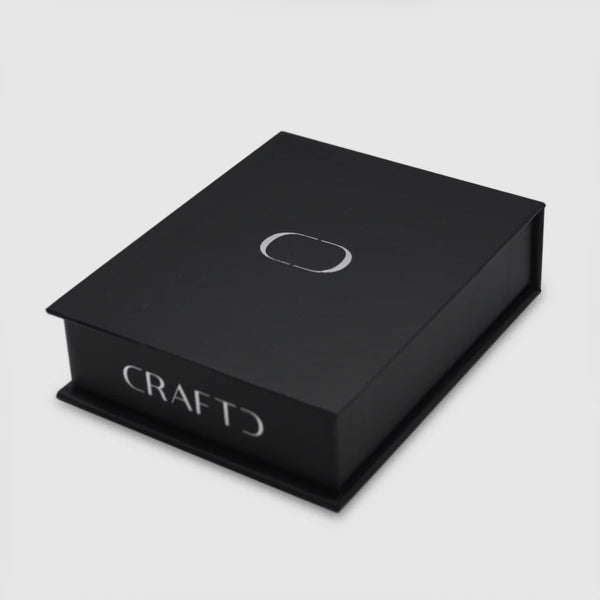
Caixa de Presente de Luxo (€5,99)
Choose your option
Para o Meu Namorado

Para o Meu Marido

Para a Minha Alma Gémea

Para o Meu Filho

Para o Meu Neto

Para o Meu Irmão

Ao Meu Verdadeiro Amigo

Para o Meu Pai

Um Símbolo de Força

Um Símbolo de Fé

Um Símbolo de Proteção

Um Símbolo de Sorte

Um Símbolo de Viagem Segura

Um Símbolo de Autoconfiança

Um Símbolo de Aventura
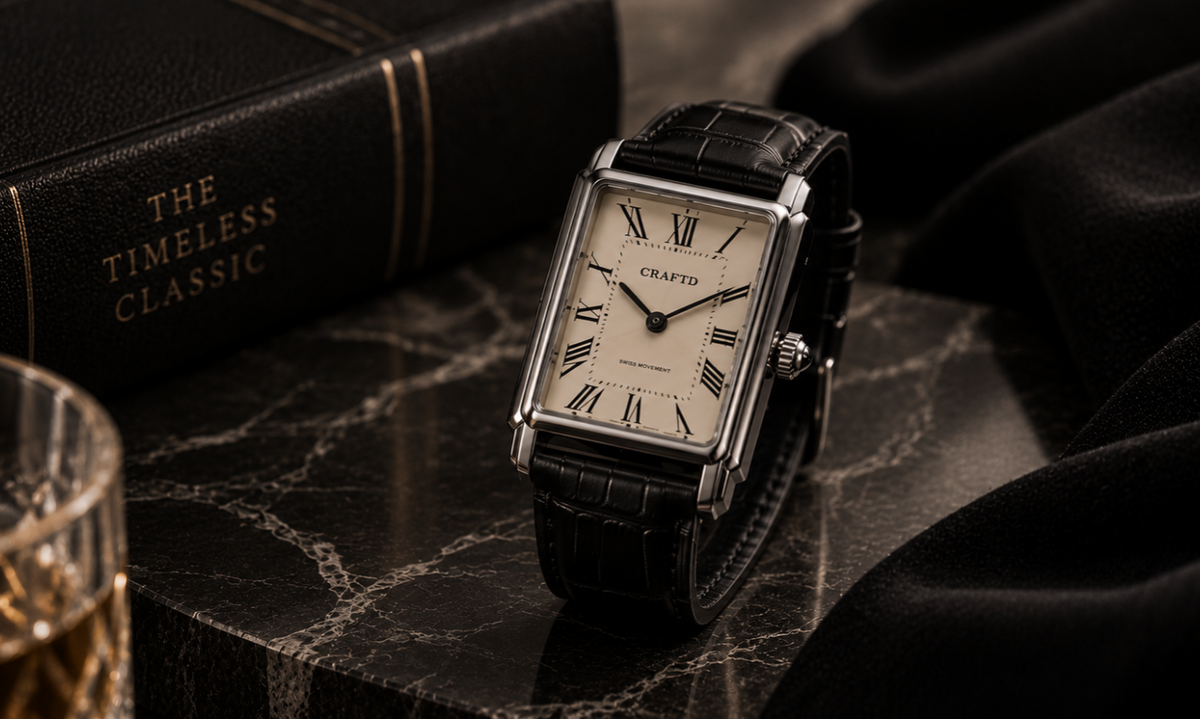
A watch with Roman numerals swaps ordinary numbers for I, V and X, and that small change gives the dial a sense of history. Few ways of marking the hours are older: the style came from church towers and pocket watches, and it still looks right on a modern wrist.
This guide covers what a Roman numeral watch is, its history, the odd details to look out for, how it stacks up against other dials, and how to style it.

Cream dials, black Roman numerals: a look that has barely changed in centuries.
Jump to:
It's any watch that marks the hours with Roman numerals instead of Arabic numbers (1, 2, 3) or plain markers. Twelve o'clock becomes XII, three becomes III, six becomes VI and nine becomes IX.
Some dials show all twelve numerals around the edge. Others use numerals only at the quarters and plain markers in between, which gives a cleaner, more open face. Either way, the effect is the same: the watch looks traditional, considered and a little more formal than one with ordinary numbers.
Roman numerals were the standard way of writing numbers in Europe for centuries, so when public clocks began appearing on churches and town halls, it was natural to mark their faces that way. Those big, readable dials set the look that clocks and watches would follow.
When timekeeping shrank into the pocket, many pocket watches kept the same numerals, and the style followed when watches moved onto the wrist. Arabic numerals and simple markers became common too, but Roman numerals never went away. They remain the shorthand for a classic, formal watch.
Look closely at many Roman numeral dials and four o'clock is written IIII, not IV. It isn't a mistake. It's a long-standing clockmaking convention, and there are several explanations for it: IIII is easier to read when the dial is upside down at the bottom, it visually balances the heavy VIII opposite, and once enough clocks used it, it simply became tradition. Both forms are correct, so it comes down to taste.
On some dials, the numerals around the bottom half are turned so they all point towards the centre. That means VI appears upside down. It's a design choice that makes the dial look symmetrical, not an error.
A full set of twelve numerals gives a busier, more traditional face. Numerals at just XII, III, VI and IX feel lighter and more modern while keeping the classic character.
| Dial style | The feel | Best for |
|---|---|---|
| Roman numerals | Traditional, formal, elegant | Tailoring, smart casual, a timeless look |
| Arabic numerals | Clear and practical | Field and pilot styles, everyday wear |
| Baton markers | Clean and understated | Minimal outfits, a modern feel |
| No markers | Very minimal, almost design-led | Wearers who value looks over legibility |
Roman numerals sit at the dressiest end. They add detail without clutter, which is why they pair so naturally with slim cases and leather straps.
The colour behind the numerals shapes how the watch comes across.
For a dial with a little more movement, a sunray finish brings shimmer to the same classic layout.

Cream feels warm and traditional; black feels sharper and more modern.
A Roman numeral watch shines brightest with smarter clothes, but it isn't limited to them.
Case shape changes the mood too. Roman numerals fill a longer dial neatly, which is one reason they're so often found on rectangular watches. For the strap, our black or brown leather guide goes through each combination.

A Roman numeral dial on brown leather: made for tailoring, easy to dress down.
Either metal suits it. A gold case with a cream Roman numeral dial is the most traditional pairing, warm and quietly confident. A silver case, especially with a black or white dial, looks cleaner and more contemporary.
The best guide is the jewellery you already wear. Our guide to choosing a gold or silver watch covers it in full, from your rings to your wardrobe.
A Roman numeral watch gives you an easy styling link: repeat the numerals once and everything connects.

Roman numerals on the finger as well as the wrist. Featured: Inception Ring (Gold).

The same numerals in silver, for a silver case. Featured: Inception Ring (Silver).
It's a long-standing clock and watch tradition. Explanations vary: IIII is easier to read upside down, it balances the VIII opposite it on the dial, and it simply became the convention. Both are correct.
They lean formal, especially with a cream or white dial on leather. On a steel bracelet or with casual clothes they feel classic rather than dressy.
Not once you're used to them. Most people read a dial by the position of the hands rather than the numbers, so the style of numeral matters less than you'd think.
Yes. The look is traditional, but on a slim, simple case it looks assured, not old-fashioned. Pair it with modern clothes and it feels current.
Cream and white are the most classic, with black numerals for contrast. A black dial with white or silver numerals is the sharper, more modern alternative.
Yes. Few dial styles are as versatile, as it works with tailoring, smart casual and weekend clothes. A plain case on leather keeps it easy.
Roman numerals have marked the hours for centuries, and they still give a watch more character than almost any other dial. Choose a colour you love, keep the case simple, and let one well-chosen ring carry the theme.
To find it, browse our men's rings.
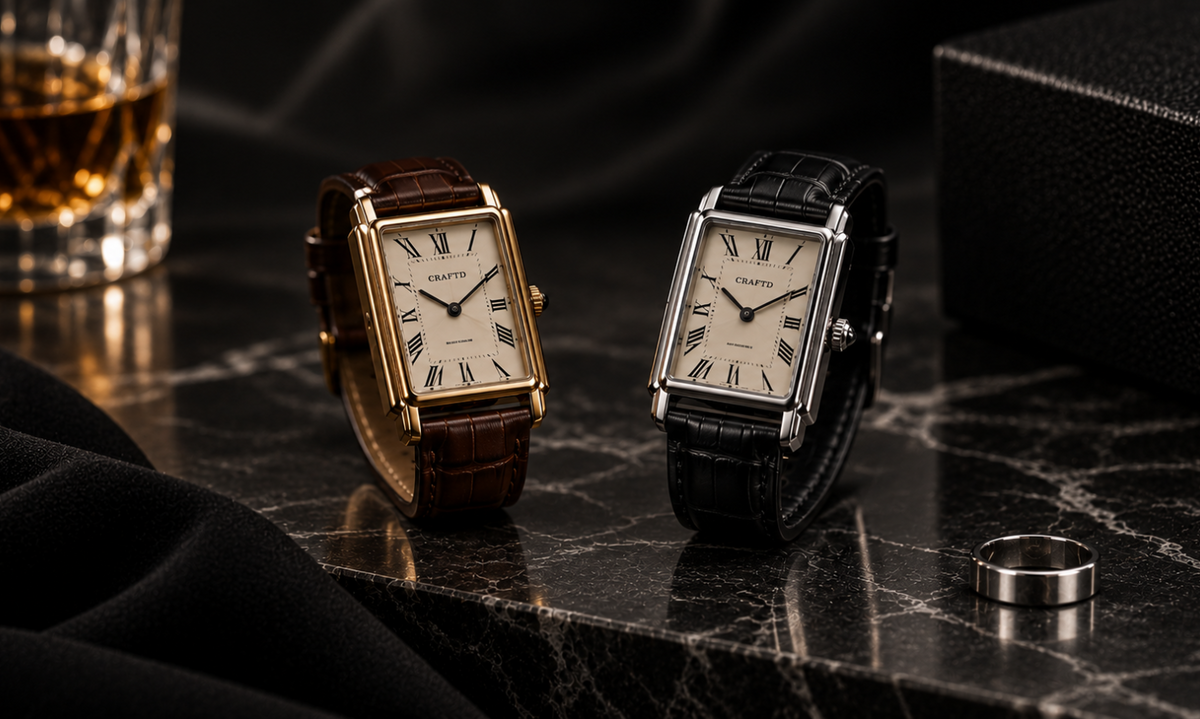
Gold or Silver Watch? How to Choose the Right One
Stuck between a gold and a silver watch? Start with the jewellery you already wear. Here’s how each metal looks, what to wear it with, and when mixing the two works.
Ler mais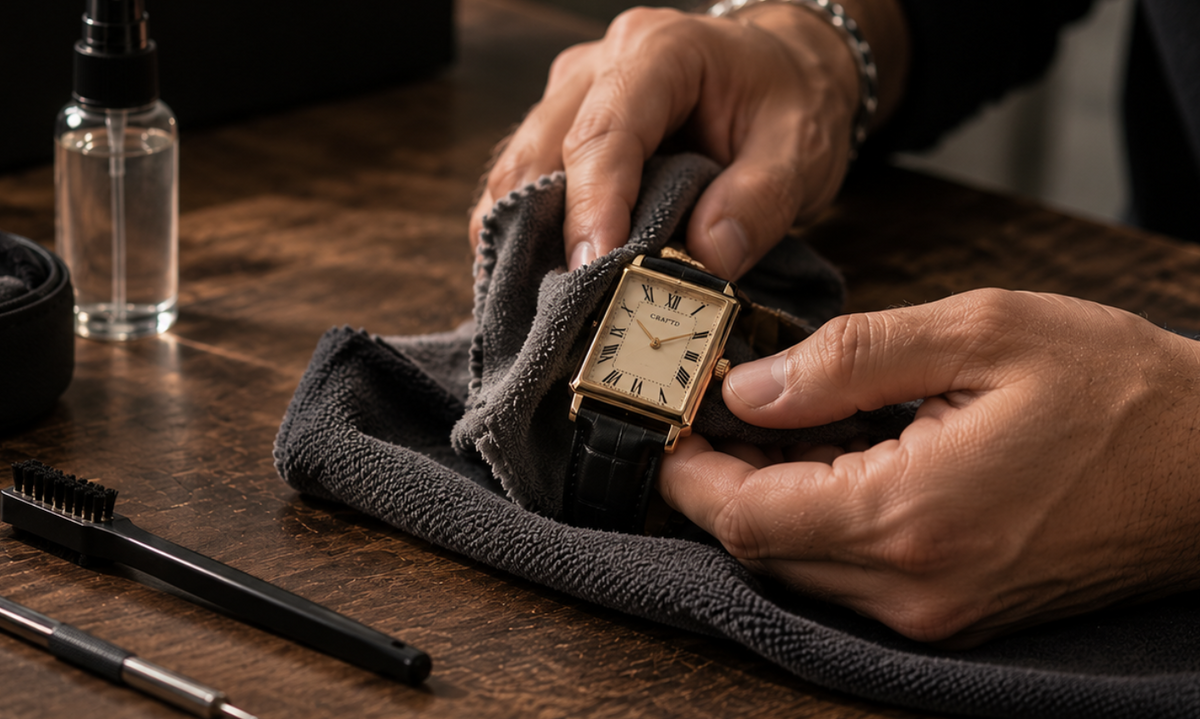
How to Look After a Watch: Cleaning, Storage and Servicing
A good watch should last a lifetime, and most of that comes down to small habits. Here's how to clean it, store it and keep it running well, without overdoing it.
Ler mais
 Ready to give.
 Hand-finished chains.
 Pendants with meaning.
 Neck and wrist, done.
 The clover collection.
 Crie o Seu Próprio Conjunto (Prata)
 Crie o Seu Próprio Conjunto (Ouro)
 Crucifixo (Prata)
 Crucifixo (Ouro)

Deixe um comentário
Este site está protegido pela Política de privacidade da hCaptcha e da hCaptcha e aplicam-se os Termos de serviço das mesmas.